
Rio de Janeiro rewards thoughtful solo planning. Traveling alone gives you control over your schedule, but it also makes transportation and safety decisions more important. The metro provides a useful backbone for crossing the city, while current travel guidance calls for added care at night, on beaches after dark, in nightlife venues, and on public transportation. A strong plan balances daylight exploration with deliberate evening arrangements.
Rio solo travel at a glance
- Choose accommodation that simplifies the journeys you expect to make most often.
- Use the metro as a core transport option and plan the first few routes before leaving your accommodation.
- Keep beach visits and independent neighborhood exploration to daylight hours.
- Avoid displaying valuables, and separate essential cards or cash from your everyday spending money.
- Arrange a clear plan for nightlife rather than improvising transportation late in the evening.
- Leave room in the itinerary for weather, energy levels, and changing local conditions.
The easiest approach is to organize each day around one area or one major activity. This reduces unnecessary transfers and limits the number of times you need to consult a phone on the street. Before going out, save your destination, return route, accommodation address, and any booking details where you can reach them offline.

Rio's Full Day: Selarón Steps, Christ & Sugarloaf – Tickets & Lunch Included
Discover the best of Rio de Janeiro in a full-day tour that combines convenience, comfort, and expert guidance. This experience includes lunch, admiss...

Private Rio Tour: Christ the Redeemer & Sugar Loaf Essentials
Enjoy a personalized visit to Rio de Janeiro’s essentials with a private guide and driver. The tour covers key highlights such as Christ the Redeeme...
Is Rio de Janeiro suitable for solo travelers?
Rio can suit an independent traveler who enjoys making decisions and is willing to plan ahead. The city is easier to manage when days have a clear shape: a known route, a limited number of stops, and a sensible return plan. Solo travel becomes more complicated when a traveler relies on late improvisation or moves between unfamiliar areas without checking transportation first.
The current U.S. travel advisory places Brazil at Level 2 and identifies robbery, assault, and drink-spiking among the risks relevant to Rio. That calls for increased caution rather than panic. Keep valuable items out of sight, stay aware when entering or leaving transportation, and avoid becoming isolated while distracted by directions or messages.
Traveling alone also has useful advantages. You can start early, change plans when conditions shift, and spend longer at places that interest you. Build structure around the parts of the day that carry more risk, particularly after dark. During daylight, allow more freedom for planned sightseeing and meals.
Before departure, give a trusted person your accommodation details and a simple outline of the trip. Keep digital copies of essential documents, plus an accessible record of emergency contacts. U.S. travelers can also review Brazil’s country-information page, which includes Rio de Janeiro consular information and access to the live travel advisory.
Where to stay when visiting Rio alone
Choose a base for convenience rather than trying to optimize every possible attraction. List the activities you care about most, identify the routes they require, and compare accommodation options against that plan. A well-positioned room can reduce transfers, simplify evening returns, and make it easier to pause during the day without abandoning the itinerary.
Many first-time visitors begin by comparing Ipanema and Copacabana as possible bases. A focused Ipanema or Copacabana comparison can help you think through which setting better matches your beach plans and daily routes. If Copacabana is on your shortlist, the detailed notes on where to stay in Copacabana offer a narrower starting point for accommodation research.
Before booking, examine the immediate location rather than relying only on a neighborhood name. Consider how you will return after dinner, where your first morning begins, and whether the property offers the check-in arrangements you need. Review recent booking details for cancellation terms, access instructions, and any facilities that matter to you.
Getting around Rio without a travel companion
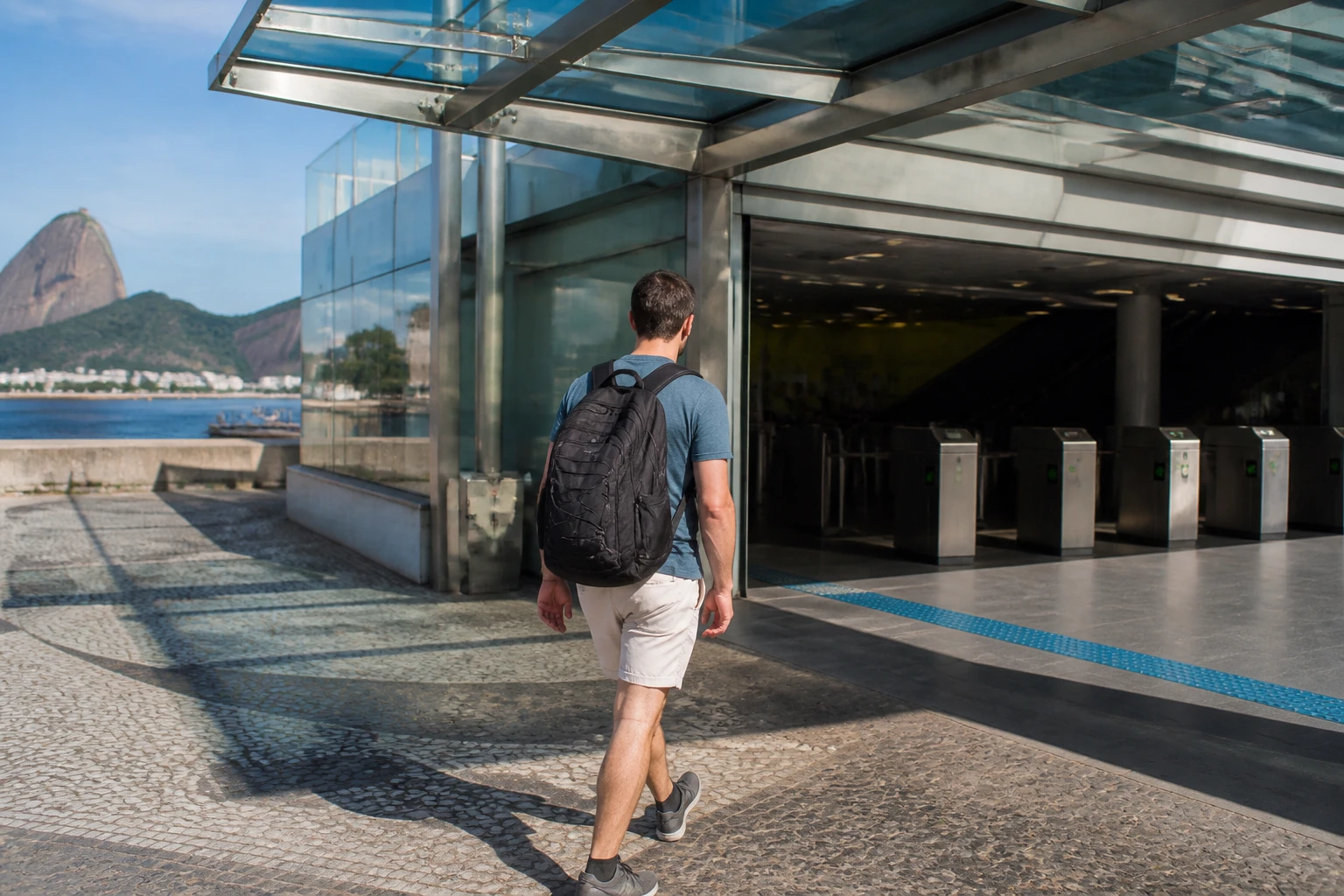
MetrôRio operates three lines that cross the city and connect with buses and trains. Maps and operational staff are available at stations. For a solo itinerary, the system can serve as the main transport framework, especially when you identify the relevant station and final walking segment before setting out.
Plan the complete journey, not just the train ride. Know which exit or onward connection you expect to use and what you will do if the route feels confusing. Station staff can help with the system, but saving the route in advance reduces the need to stand still with a phone in hand.
MetrôRio supports card-based and contactless payment. The operator presents its cards as a way to save time and add security, making prepaid or contactless travel a lower-friction choice than repeatedly handling cash. Accepted methods and fares can change, so check the current payment information shortly before the trip.
Discount and gratuity programs have eligibility rules and can require a particular card, renewal, or revalidation. Visitors should not build a budget around receiving a reduced fare automatically. Use the standard published fare unless you have confirmed that you qualify and possess the required payment credential.
| Transport decision | Practical solo approach |
|---|---|
| Routine daytime route | Check whether the metro covers the main part of the journey, then save the final walking segment. |
| Connecting journey | Review the bus or train connection before leaving and avoid adding unnecessary transfers. |
| Unfamiliar evening return | Arrange a direct transport plan before the evening begins. |
| Payment | Use an accepted card or contactless method and keep a backup payment option. |
| Station assistance | Use station maps or ask operational staff when the route is unclear. |

Full Day in Rio: Christ by Train, Sugarloaf, Selarón & Barbecue
Discover the best of Rio de Janeiro in a single day! Begin with a scenic train ride up Corcovado Mountain to visit C...

Best of Rio in One Day: Christ Redeemer, Sugarloaf & Local Lunch
Discover the best of Rio de Janeiro in just one day with a complete, well-organized itinerary designed to provide co...

The Best Half Day in Rio with Christ Redeemer and Sugar Loaf Hill
Enjoy a small-group tour to visit the most iconics landmarks in Rio de Janeiro. First visit the Christ the Redeemer...
A practical safety strategy for solo travel
Good safety planning should shape the itinerary without dominating it. Current guidance identifies robbery, assault, and drink-spiking as concerns in Rio. It recommends particular caution at night, on beaches after dark, when alone in bars or nightclubs, and while using public transportation. The practical response is to make each evening deliberate rather than leaving return arrangements until the last moment.
- Carry only what you expect to use that day.
- Keep phones and cameras out of sight when they are not needed.
- Step into a suitable indoor place before studying directions for an extended period.
- Watch drinks throughout the evening and do not accept an unattended drink.
- Share nightlife plans with someone you trust and check in after returning.
- Change course if a street, station exit, or pickup point feels wrong.
Beaches should be treated as daytime destinations when you are alone. The advisory specifically warns against beaches after dark. Plan an exit before daylight fades, keep possessions limited, and avoid leaving valuables unattended while entering the water.
Official guidance also advises avoiding informal housing developments. Do not enter an unfamiliar community because a shortcut, driver, or casual suggestion points that way. If a route changes unexpectedly, pause in a suitable place and choose a clearer alternative rather than pressing ahead.
For a deeper look at situational awareness and common planning mistakes, the practical Rio safety tips article can support your pre-trip checklist. Read current government advice again near departure because advisory levels and local conditions can change.
Build sightseeing days around daylight and simple routes
Start with one priority each day, then add nearby or route-compatible stops. This protects the experience from becoming a race across the city. The best things to do in Rio de Janeiro for first-time visitors can help you identify potential anchors before you group them into manageable days.

Reserve time-sensitive activities before filling the surrounding hours. If the Sugarloaf Cable Car interests you, use a dedicated Sugarloaf Cable Car guide to understand the visit before committing the rest of that day. Keep the later schedule flexible enough to accommodate lines, transportation delays, or a slower pace.
Urban walking is easier when the route has a clear beginning and end. A planned Selarón Steps and Centro walk provides a more coherent framework than collecting isolated stops without considering the route between them. Schedule this type of exploration during daylight and decide in advance how you will leave the final stop.
Plan Rio nightlife before the sun goes down
A solo night out needs more structure than a daytime walk. Decide where you are going, how you will arrive, and how you will return before leaving your accommodation. Current guidance urges travelers to be cautious when alone in bars and nightclubs and warns about drink-spiking, so keep control of your drink and avoid becoming isolated.
A group activity or organized evening can be useful when you want company without redesigning the whole trip. Check the meeting point, end point, duration, and included transportation before booking. The Rio de Janeiro by night guide can help frame the choices, but your return plan should remain independent of any spontaneous invitation.
If you decide to leave early, do so without worrying about missing part of the night. Solo travel works best when changing plans feels normal. Keep enough battery and a backup payment method available for the journey back, then message your chosen contact once you have returned.
Eating alone without overplanning every meal
Solo dining becomes easier when meals support the day’s route. Save several options near your planned activity or accommodation rather than selecting one restaurant on the opposite side of the city. The where to eat in Rio de Janeiro guide can help organize possible meals by area while leaving room for appetite and timing.
For evening meals, decide how you will return before ordering. Keep your drink under your control, particularly if you continue to a bar or club afterward. If you prefer a more social setting, consider a structured food experience and confirm its meeting point, ending location, and cancellation conditions before booking.

Arraial do Cabo Day Trip from Rio de Janeiro: Boat Tour & Beach
Set out on a full-day Arraial do Cabo tour from Rio de Janeiro and see why it’s called the “Brazilian Caribbean...

Jeep Adventure: Guided Tour through Tijuca Rain Forest
Hop in an open Jeep for a morning tour of the Tijuca Forest in Rio de Janeiro, also known as Tijuca National Park. T...

Exploring Angra Dos Reis and Ilha Grande in One Day
Discover the magic of a tropical paradise by booking the Angra dos Reis and Ilha Grande tour. These stunning destina...
Budgeting for a solo Rio trip
Solo travelers cannot divide accommodation or private transportation costs with a companion, so flexibility matters more than a single daily figure. Build the budget in categories: accommodation, local transport, meals, admission or tours, evening transportation, and a reserve for changed plans. This makes it easier to see where convenience is worth paying for.

Do not depend on old fare lists when estimating metro costs. Payment methods, fares, and eligibility programs can change. MetrôRio supports cards and contactless payment, while reduced or free travel can require specific credentials and revalidation. Check current terms and budget for the standard fare unless eligibility is certain.
Keep a modest reserve separate from daily spending. Its purpose is practical: an earlier return, a changed booking, a replacement item, or a more direct journey when the original plan no longer feels sensible. Avoid storing every card and all available cash in the same place.
When comparing tours or tickets, examine the complete booking rather than the headline amount. Meeting points, transportation, cancellation rules, group size, and the finishing location can matter more to a solo traveler than a small price difference. Review the confirmation once and add essential details to the day plan.
Accessibility and mobility planning
Accessibility across the metro is not uniform. MetrôRio publishes an accessibility guide identifying accessible stations and notes the use of platform gap-fillers designed to reduce the boarding gap and the risk of tripping. Travelers with mobility needs should check the specific stations involved rather than assuming every route has identical features.
Examine the whole journey, including station access, transfers, the final street segment, and entry to the destination. A route that works well inside the metro can still present difficulties before or after the train. Build extra time into transfers and identify a backup route before departure.
When booking accommodation, attractions, or tours, confirm the particular feature you require instead of relying on a general accessibility label. Useful questions concern step-free entry, bathroom access, seating, boarding assistance, and the exact meeting point. Requirements differ, so keep the questions focused on your needs.
Choosing travel dates and checking conditions
There is no single travel period that suits every solo itinerary. Select dates around the activities and pace you value, then review current conditions close to departure. Safety advice, metro operations, payment rules, and access arrangements are more useful when checked near the trip than when copied into a fixed plan months earlier.
Recheck the live travel advisory before leaving and again if local circumstances change during the visit. U.S. travelers can use the Brazil country-information page for Rio consular details. Travelers of other nationalities should save the relevant contact information issued by their own government.
Keep the final day less rigid than the middle of the trip. A flexible morning or afternoon creates room for a rescheduled activity, a slower start, or a favorite place you want to revisit. It also reduces the temptation to force a complicated journey before departure.
A flexible four-day solo itinerary framework
- Day one: Settle in and learn the immediate area. Confirm the nearest useful transport point, obtain or prepare an accepted payment method, and take a short daylight outing. Keep the first evening close to your accommodation while you adjust to the surroundings.
- Day two: Choose one major attraction, such as the Sugarloaf Cable Car, and build the day around it. Add only stops that fit the same route. Return with enough time to rest before deciding on dinner or an organized evening.
- Day three: Plan a structured daylight route, such as a Selarón Steps and Centro walk. Save every stop and the departure route before leaving. Keep possessions limited and avoid extending an urban walk into unfamiliar areas after dark.
- Day four: Use a first-time visitor activity list to select the experience that best matches your remaining energy. Leave part of the day open for a repeat visit, a meal, or an activity postponed earlier in the trip. Confirm departure logistics before the final evening.
This framework is intentionally simple. It limits cross-city movement, puts independent walking into daylight, and creates space for rest. Extend it by adding one main activity per additional day rather than packing several unrelated districts into the same schedule.
Leave room for confidence to grow
Rio is best approached with curiosity supported by structure. Choose a practical base, learn the transport system, protect your evenings with clear plans, and keep daytime routes manageable. The main limitation of solo travel is that every logistical decision rests with you, but that responsibility becomes lighter once the first routes and routines are familiar.
Start by booking accommodation, identifying two or three priority experiences, and checking the routes between them. Review current safety and metro information shortly before departure. With those foundations in place, the itinerary can remain flexible without becoming careless.
Frequently asked questions
Is Rio de Janeiro safe for solo travelers?
Rio can be visited alone with increased caution and a deliberate plan. Current U.S. guidance places Brazil at Level 2 and identifies robbery, assault, and drink-spiking as concerns, with added warnings about nights, beaches after dark, solo visits to bars or clubs, public transportation, and informal housing developments.
Can a solo traveler use the Rio metro?
Yes, the metro can provide a practical backbone for a solo itinerary. MetrôRio operates three lines, connects with buses and trains, and provides maps and operational staff at stations. Plan the final walking segment or connection before beginning each journey.
How can visitors pay for the metro?
MetrôRio supports card-based and contactless payment options. The operator says its cards can save time and add security, but accepted methods and fares can change. Check current payment details before travel and keep a backup payment method.
Should a solo traveler visit Rio beaches at night?
No, independent beach visits should be kept to daylight hours. Current travel guidance specifically advises against going to beaches after dark, so decide on your return route before daylight fades.
What is the best area to stay in Rio when traveling alone?
The best base is the one that simplifies your planned routes and evening returns. Compare the areas you are considering against your priority activities, transportation needs, check-in arrangements, and the immediate location of each property.
Is Rio’s metro accessible?
Parts of the metro system have accessibility provisions, but access is not uniform across every station. MetrôRio identifies accessible stations and notes platform gap-fillers at relevant locations, so check the particular stations required for your journey.
Should solo travelers go to Rio nightlife venues alone?
Solo nightlife requires extra caution and a firm return plan. Current guidance warns about being alone in bars or nightclubs and identifies drink-spiking as a risk. Consider a structured group activity, maintain control of your drink, and arrange transportation before going out.
When should travelers recheck Rio safety and transit information?
Check current guidance shortly before departure and again if conditions change during the trip. Travel advisories, metro operations, payment methods, fares, and accessibility arrangements can change over time.
Rio's Full Day: Selarón Steps, Christ & Sugarloaf – Tickets & Lunch Included
Discover the best of Rio de Janeiro in a full-day tour that combines convenience, comfort, and expert guidance. This experience includes lunch, admiss...
Private Rio Tour: Christ the Redeemer & Sugar Loaf Essentials
Enjoy a personalized visit to Rio de Janeiro’s essentials with a private guide and driver. The tour covers key hig...
Still comparing Rio De Janeiro Solo Travel?
Ask for tour ideas, hotel suggestions, or a simple trip plan that combines both.
