
Rio changes character after sunset. The glare softens, evening meals stretch out, and music becomes part of the city’s soundtrack. A good night here does not require a frantic checklist. It requires a clear neighborhood plan, a realistic journey home, and enough flexibility to linger when dinner, a performance, or a conversation runs longer than expected.
- Choose one main neighborhood for the evening instead of crossing the city repeatedly.
- Use the metro for journeys that fit comfortably inside its operating window, then keep a door-to-door backup in mind.
- Check the last useful train for your route, including any transfer, before settling into a late venue.
- Confirm event details, admission rules, accessibility, and the return plan directly with each venue.
- Carry only what you expect to use and keep your phone charged for navigation and transport.
- Leave extra room in the budget for a later-than-planned ride home.
The simplest way to plan Rio de Janeiro by night is to build the evening around one anchor. That might be live music, dinner, a cultural performance, a beachside stroll, or a city view near sunset. Add one nearby activity before or after it. This keeps more time for the experience itself and reduces the number of unfamiliar journeys late at night.

Food Tour Rio de Janeiro - The Best Typical Brazilian Dishes
Discover Brazil through its flavors, history, and rhythm on this immersive food tour in Rio de Janeiro. Explore the authentic Little Africa district a...

Rio: Copacabana Food Tour with 7 Tastings and Local Flavors
Discover the vibrant flavors of Rio de Janeiro with Secret Food Tours! Your local expert guides will take you throug...

Cooking Class in Rio with 9 Recipes & Unlimited Caipirinhas
Wander into our Ipanema hideout and let the culinary capers begin. Whether you're a kitchen newbie or a seasoned fo...
How to build a smooth night in Rio
Start with the activity that has the least flexible timing. A ticketed show, reservation, guided outing, or scheduled performance should shape the rest of the plan. Place flexible activities such as dinner, drinks, or a walk around it. Before leaving your accommodation, save the destination and return address, check the route, and decide when you will reassess transport.
Aim for an evening with two or three parts rather than five. A workable sequence could be an early meal, one main activity, and a final stop close to your accommodation. If the main event is likely to continue past metro service, treat the metro as an outbound option only. Your return journey should be decided before the night becomes noisy, crowded, or distracting.
| Evening style | Simple structure | Main planning concern |
|---|---|---|
| Samba or live music | Nearby meal, main venue, direct return | Confirm the program and plan for a late finish |
| Beachside evening | Sunset period, dinner, short local walk | Keep the return route simple after dark |
| Food-focused night | One neighborhood, two planned stops | Check reservations and payment methods |
| Cultural evening | Early activity, dinner nearby, return | Verify the venue’s current closing time |
| Relaxed first night | Meal near accommodation, brief walk | Avoid adding a cross-city journey after travel |
Choose the neighborhood before choosing every stop
Rio’s map can make two places look temptingly close while the actual journey adds friction. Pick a district that suits the evening and keep secondary stops nearby. If you are deciding between the two famous beach districts as a base, the guide to Ipanema or Copacabana explains the practical differences. Your accommodation location will shape every night more than an ambitious list of venues.
Visitors staying near Copacabana, Ipanema, Leblon, Botafogo, Centro, São Conrado, or Barra da Tijuca can use stations named for or serving those areas. However, station proximity alone does not guarantee that every final destination is an easy walk. Check the complete route in both directions and look closely at the last part between the station and the venue.
Lapa calls for a more deliberate plan. If samba is the reason for your night out, read the detailed guide to samba nights in Lapa while shaping the evening. Choose the performance or venue first, confirm its current information, and then arrange dinner and transport around it. Avoid arriving with only a vague instruction to find music somewhere in the district.
MetrôRio hours and the last-train problem
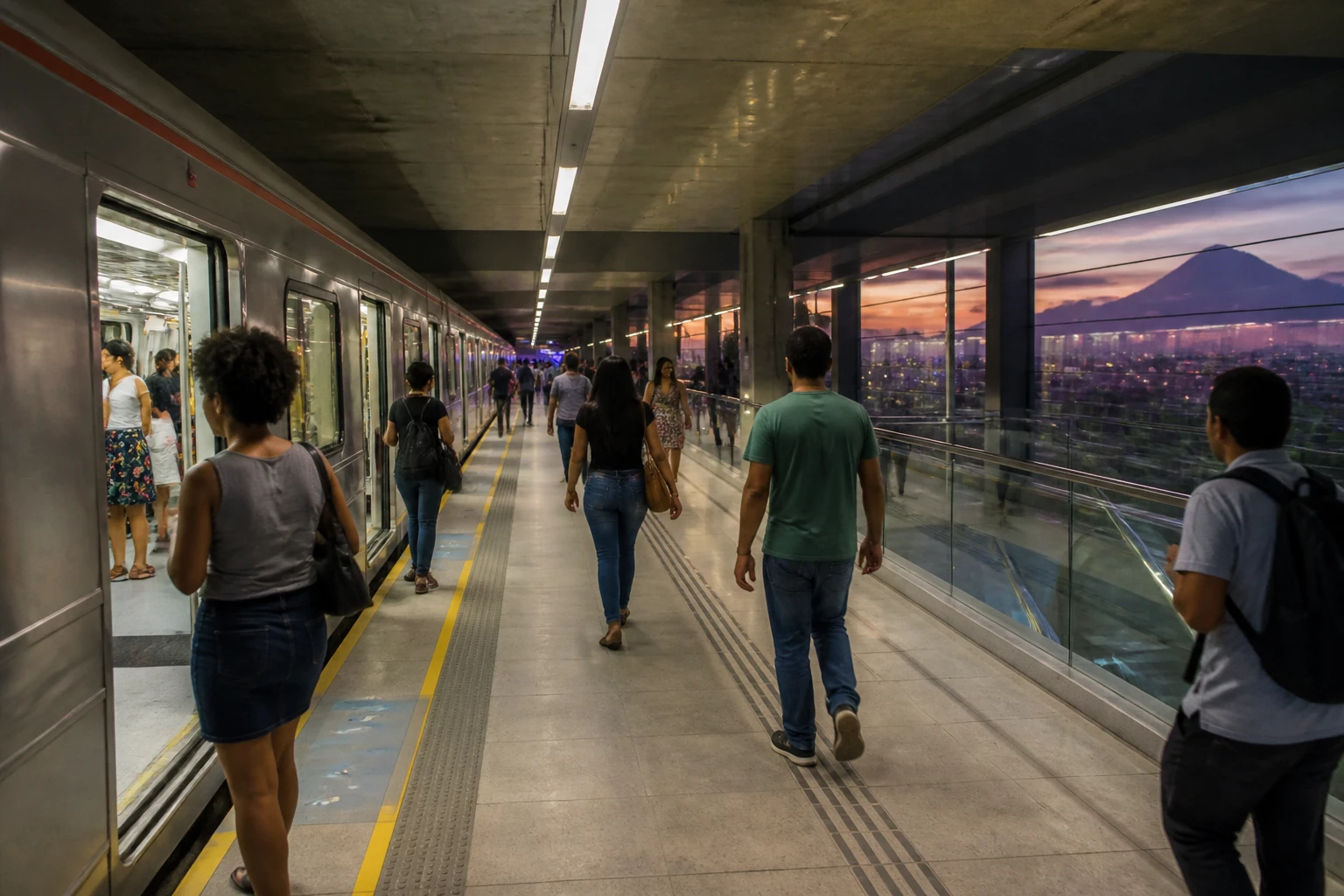
MetrôRio Lines 1, 2, and 4 are listed as operating from 05:00 until 00:00 on Monday through Saturday. On Sundays and holidays, the listed hours are 07:00 until 23:00. These times make the network useful for many early-evening journeys, but they are less forgiving when dinner or a performance ends late.
| Day | Listed service window | Night-planning implication |
|---|---|---|
| Monday to Saturday | 05:00 to 00:00 | Do not assume a midnight departure works if a transfer is required |
| Sunday and holidays | 07:00 to 23:00 | Arrange the return earlier or prepare another transport option |
A closing time is not the same as a safe target for entering the system. The operator states that passengers completing a transfer must be on the transfer platform by the end of service. If your journey involves changing lines, leave enough margin for walking through the station, waiting on the platform, and finding the correct direction.
Special operations and external factors can alter normal hours. MetrôRio also notes that weekends and holidays may use a shared section between lines. Check current operating information on the day of travel, especially before a Sunday night, holiday, major event, or return close to the final service.
Food Tour Rio de Janeiro - The Best Typical Brazilian Dishes
Discover Brazil through its flavors, history, and rhythm on this immersive food tour in Rio de Janeiro. Explore the authentic Little Africa district a...
Rio: Copacabana Food Tour with 7 Tastings and Local Flavors
Discover the vibrant flavors of Rio de Janeiro with Secret Food Tours! Your local expert guides will take you throug...
Brazilian Dinner Show: Cultural Experience in Rio de Janeiro
The Top Brazilian Show is the perfect immersive cultural experience for who wants to enjoy the brazilian culture and...
Plan around the last train you can comfortably catch, not the last train that may technically exist.

Brazilian Dinner Show: Cultural Experience in Rio de Janeiro
The Top Brazilian Show is the perfect immersive cultural experience for who wants to enjoy the brazilian culture and...

3 Hour Rocinha Favela Walking Tour with a Local Guide
Visiting the Rocinha favela, one of Rio's hundreds of "favelas" (the Brazilian term for a slum or shantytown) and th...

Private Rio Tour: Christ the Redeemer & Sugar Loaf Essentials
Enjoy a personalized visit to Rio de Janeiro’s essentials with a private guide and driver. The tour covers key hig...
When the metro makes sense
The metro is generally the strongest value choice when both ends of the journey fit the network and the trip sits well inside operating hours. It is less convenient as the final service approaches, particularly when a transfer is necessary. Door-to-door transport may be the more practical choice after service ends or when the last station leaves an awkward final leg.
Build a transport checkpoint into the evening
Set a reminder roughly an hour before the last useful train for your route. At that point, decide whether to leave, continue and use another form of transport, or move closer to your accommodation. This small checkpoint prevents the familiar late-night mistake of noticing the time only after a venue empties and many people request rides at once.
Metro fares and payment options
The public MetrôRio fare shown for riders is R$7.90. The operator also lists a Giro card option costing R$11.90, which consists of a R$4.00 card deposit and R$7.90 in stored credit. These figures are subject to change, so verify the current fare shortly before traveling.
Payment methods vary by channel. MetrôRio states that ticket windows may accept cash and debit depending on the booth. The operator also highlights app or website recharging without a minimum amount and contactless boarding. Do not assume every payment method will work at every sales point. Carrying a small backup payment option can reduce delays.
Your night budget should have three separate lines: the planned activity, food and drinks, and transport home. The third line deserves extra room. A missed final train, changed plan, or venue farther from the station can turn an inexpensive outbound journey into a more costly return. No fixed estimate works for every route, time, or demand level.
Four practical ways to spend an evening
1. A samba-centered night
Choose one performance or music venue as the anchor. Verify the program, start time, entry arrangements, dress expectations, accessibility, and accepted payment methods directly. Eat nearby before the music begins, then use a preselected return method. If the event can continue beyond the metro window, avoid building a plan that depends on catching the final train.
2. Dinner and a short beachside walk
Keep this evening compact. Select a restaurant near your accommodation or near the stretch you intend to walk, then return along a familiar route. The site’s guide to eating in Rio, including feijoada, kiosks, and botecos by neighborhood, can help narrow the food decision. Confirm the restaurant’s current schedule, reservation policy, and accessibility before setting out.
3. Sunset followed by dinner
A sunset plan works best when the viewpoint and dinner are reasonably close or connected by a straightforward route. Check the attraction’s current admission requirements and final access time rather than assuming sunset determines closing. The Sugarloaf Cable Car guide can support planning for that specific sight, but its current operating details should still be verified before departure.
4. An early cultural evening
Travel to the main sight while public transport is comfortably available, then have dinner nearby. This pattern reduces the pressure of reaching an attraction close to closing and makes the final journey easier to manage. If the plan includes Centro, the Selarón Steps and Centro walk offers a coherent daytime route that can be completed before shifting to an evening venue elsewhere.
Still comparing Rio De Janeiro Evening Food Tour?
Ask for tour ideas, hotel suggestions, or a simple trip plan that combines both.
Trip Helper
Safety habits that preserve the fun
Night safety begins with reducing uncertainty. Know the full address, entrance, route, meeting point, and return method. Share the plan with companions, keep the group together, and agree on what to do if someone becomes separated. Avoid displaying items you do not need, and step into an appropriate staffed place if you need time to check directions.

Use a charged phone, but avoid standing distracted at the edge of a road or station exit. Check the vehicle details shown in your chosen transport service before boarding. If a route feels confusing, return to a staffed or populated setting and reassess. The broader Rio safety tips guide provides practical citywide planning without turning normal caution into alarm.
Alcohol can quietly dismantle a sensible transport plan. Decide who will request the ride, confirm the destination, and check that everyone has their belongings before leaving. Save your accommodation address in a form you can show if pronunciation or background noise becomes a problem. A screenshot can also help when mobile data is unreliable.
- Carry one payment card, limited cash, identification, and essential medication.
- Keep valuables in a closed bag positioned where you can monitor it.
- Save the accommodation address and the evening venue before leaving.
- Agree on a meeting point if traveling with other people.
- Use a trusted, traceable transport method for the return journey.
- Do not let a nearly empty phone become your only route home.
Accessibility and comfort after dark
MetrôRio lists public bathrooms at several stations useful to evening travelers. These include Botafogo, Cantagalo/Copacabana, Carioca/Centro, General Osório/Ipanema, Nossa Senhora da Paz/Ipanema, Jardim de Alah/Leblon, Antero de Quental/Leblon, São Conrado, and Jardim Oceânico/Barra da Tijuca. Check current station information if restroom availability is essential to your route.
Eligible riders can use an official gratuity or revalidation process, but the customer-service point shown by the operator runs during weekday daytime hours, from 08:00 to 18:00. It is therefore unsuitable for solving a spontaneous eligibility issue late at night. Complete any required process in advance and carry the relevant approved documentation.
Station facilities do not answer every accessibility question. Contact the venue about step-free entry, seating, accessible toilets, companion policies, and the exact pickup point. Ask for a clear description of curbs, stairs, slopes, or uneven surfaces between the vehicle and entrance. A door-to-door route may be preferable when the final walking segment is uncertain.
What to bring for a Rio night out
Pack lightly enough that you can keep track of everything. A small secure bag, charged phone, portable battery, identification, limited cash, payment card, and any essential medication cover most needs. Add water and a light layer if they suit your plans. Comfortable footwear matters when the route includes station corridors, waits, or an unplanned walk to a pickup point.
Save information before departure rather than relying entirely on a mobile signal. Useful screenshots include the venue address, reservation confirmation, route, accommodation address, and a recognizable pickup location. Do not store sensitive card or identity information in an unsecured image. The goal is a compact offline backup, not a complete digital copy of your wallet.

Full Day in Rio: Christ, Sugarloaf, Selarón & Barbecue Lunch
Experience a full-day tour of Rio de Janeiro, visiting all the city’s must-see attractions in a single day! See t...

Christ the Redeemer & Sugarloaf: Rio City Tour with Lunch
Discover Rio de Janeiro’s top attractions on a guided small-group tour. Visit Christ the Redeemer and Sugarloaf Mo...

Full Day in Rio: Christ by Train, Sugarloaf, Selarón & Barbecue
Discover the best of Rio de Janeiro in a single day! Begin with a scenic train ride up Corcovado Mountain to visit C...
A decision timeline for the day of your night out
- In the morning, confirm the venue program, reservation, admission conditions, and accessibility.
- In the afternoon, check MetrôRio service notices and the route in both directions.
- Before leaving, charge phones and save addresses, tickets, and the return route.
- On arrival, identify the entrance and a suitable pickup point before the area becomes busier.
- Before the final useful train, decide firmly between leaving by metro and staying for a later door-to-door return.
- At the end of the night, check companions, belongings, destination, and vehicle details before departure.

Common planning mistakes to avoid
The first mistake is treating midnight as a universal weekday departure time. It is the listed end of service Monday through Saturday, not a promise that a passenger can begin any journey at that moment. Transfers must be reached before service ends, and Sunday or holiday service is listed to finish earlier at 23:00.
The second mistake is scheduling distant activities back to back. Even when the route appears possible, waiting, navigating an unfamiliar station, or locating an entrance can consume the margin. A more enjoyable plan gives one experience enough time and keeps the next stop nearby. Save cross-city sightseeing for the daytime unless the journey itself is essential.
The third mistake is relying on unverified venue information. Nightlife programs, admission systems, and closing times can change. The available research for this guide did not verify attraction-specific schedules or prices. Confirm these details directly before traveling, particularly when a reservation, performance, cable car, viewpoint, or late dinner is central to the evening.
The best Rio night is the one with a clear route home
Rio rewards a little restraint after dark. Choose one neighborhood, give the main activity room to breathe, and make the return plan before the evening begins. The metro offers strong value while its schedule fits your route. Once the final service approaches, flexibility and a prepared door-to-door alternative become more important than squeezing in one more stop.
With those foundations in place, the evening can unfold at a human pace. Dinner can last another course. A rhythm can hold your attention. The city lights can have their moment without a nervous glance at the clock every five minutes. Good planning stays mostly invisible, which is exactly why it works.
Frequently asked questions
What time does the Rio metro stop running at night?
MetrôRio lists Lines 1, 2, and 4 as operating until 00:00 Monday through Saturday and until 23:00 on Sundays and holidays. Service can change because of special operations or external factors. If you need to transfer, you must reach the transfer platform by the end of service, so do not plan around a last-minute entry.
How much is the MetrôRio fare?
The rider-facing public fare in the supplied information is R$7.90. A Giro card is listed at R$11.90, including a R$4.00 card deposit and R$7.90 in stored credit. Verify current fares before travel because transport prices can change.
Can I pay for the Rio metro with a contactless card?
MetrôRio highlights contactless boarding as a payment option. Ticket windows may accept cash and debit depending on the booth, while app and website recharging is also available without a minimum. Payment availability is not identical at every point of sale, so carry a backup method.
Is the metro a good option after a night out in Rio?
It is a strong-value option when your route fits comfortably within operating hours. It becomes less practical near the final service, when a transfer is required, or when the destination is far from a station. Prepare a door-to-door alternative if the night may run late.
Where should a first-time visitor go in Rio at night?
Choose according to one main interest, such as samba, dinner, a cultural performance, sunset, or a beachside evening. Keep the plan within one neighborhood or along a simple transport route. Confirm all venue-specific schedules, admission details, and accessibility directly because those details were not verified in the supplied research.
Which Rio metro stations have bathrooms?
MetrôRio lists bathrooms at stations including Botafogo, Cantagalo/Copacabana, Carioca/Centro, General Osório/Ipanema, Nossa Senhora da Paz/Ipanema, Jardim de Alah/Leblon, Antero de Quental/Leblon, São Conrado, and Jardim Oceânico/Barra da Tijuca. Check current availability if this facility is essential.
