
Rio offers remote workers an appealing mix of working life and time outdoors, but a successful stay depends on careful groundwork. The city government has publicly presented Rio de Janeiro as a candidate for becoming South America's first digital-nomad hub, which signals active local interest in this group without establishing an official hub status. Use this guide to build a realistic plan around immigration, accommodation, internet access, transport, safety, and daily routines.
- Confirm the immigration route that applies to your nationality and planned length of stay.
- Choose accommodation only after checking the exact address, internet setup, desk, noise, and cancellation terms.
- Keep two independent ways to connect to the internet before an important call or deadline.
- Test everyday routes before committing to a long accommodation booking.
- Budget for work essentials, transport, insurance, food, leisure, and a contingency fund.
The best base is not simply the apartment with the brightest photos or the neighborhood name you recognize. It is the place that supports your actual week. Think about where you will work, how often you need to travel, what you want within walking distance, and how much street noise you can tolerate. A short initial reservation gives you time to test those details before making a longer commitment.

Rio: Tijuca Rainforest Hike, Wildlife, Waterfalls & Caves
Skip the gridlocked city traffic and the crowded tour buses. Just 40 minutes from Rio's famous beaches lies a protected UNESCO World Heritage wilderne...

Private Custom Full-Day Highlights in Rio: Only the Best Sights!
Enjoy the most complete private day tour in Rio de Janeiro with flexible itineraries built just for you. Visit iconi...

Private Rio Tour: Christ the Redeemer & Sugar Loaf Essentials
Enjoy a personalized visit to Rio de Janeiro’s essentials with a private guide and driver. The tour covers key hig...
Is Rio a good fit for your remote-work style?
Rio suits remote workers who can plan their days rather than depend on a perfectly controlled environment. The city becomes easier when you separate essential working conditions from lifestyle preferences. Reliable connectivity, an ergonomic place to sit, and a manageable routine belong in the first group. A preferred view, décor style, or proximity to a favorite leisure activity belongs in the second.
Before booking, write down the conditions required for your job. Include call frequency, required upload speed, confidentiality needs, working hours, and the consequences of losing a connection. Someone who writes offline has different needs from a consultant leading video meetings all day. This simple exercise prevents an attractive apartment from becoming an expensive office problem.
Rio also works best when you leave room for the city outside your laptop. A walk near the water, a viewpoint, a meal at a neighborhood restaurant, or an evening of music can turn an ordinary workweek into a memorable stay. Schedule that time deliberately. Otherwise, remote work has a habit of expanding until every sunset becomes the background of another inbox.
Understand Brazil's digital-nomad visa before booking a long stay
Brazil's VITEM XIV digital-nomad route is intended for foreign nationals who work remotely for a foreign employer while living temporarily in Brazil. Consular guidance frames it as a temporary visa for stays longer than 90 days. Eligibility and procedural details should be checked with the Brazilian consular office responsible for your legal place of residence before you commit to nonrefundable travel.
Consular checklists include a valid travel document, proof of residence or residence history, criminal-record documentation, and travel or health insurance valid in Brazil. The application must be filed through the Brazilian consular office with jurisdiction over the applicant's legal residence. Because immigration requirements can change, use the checklist issued by that specific office rather than copying another applicant's document list.
- Identify the Brazilian consular office serving your legal residence.
- Read its current VITEM XIV instructions and note document-format rules.
- Prepare the required travel, residence, criminal-record, and insurance documents.
- Allow time for documents that need to be obtained from public authorities.
- Wait for the appropriate immigration decision before relying on a long-term plan in Rio.
Do not treat the digital-nomad visa and ordinary visitor entry as interchangeable. Your nationality, intended length of stay, work arrangement, and place of legal residence can affect the correct route. Immigration rules are one part of the trip that deserves early attention, especially when accommodation deposits, onward travel, or work commitments depend on the result.
Choose a neighborhood by testing your real routine
Begin with the parts of city life that will shape every weekday. Compare the walking route to food, transport, exercise, and any coworking space you expect to use. If the famous coastal districts are on your list, the Ipanema or Copacabana beach-base comparison can help frame the decision. Treat the neighborhood name as a starting point, then evaluate the exact block and building.

A Barra da Tijuca travel guide is also useful if you are considering a different style of base. Compare it with other options using your own likely journeys rather than an abstract list of advantages. A location that works beautifully for one remote worker can create unnecessary travel for another whose meetings, friends, classes, or preferred activities are elsewhere.
- Ask for a recent internet speed test taken inside the unit.
- Confirm that the workstation has a proper chair, usable table, and nearby power outlet.
- Check whether the bedroom faces a busy street, shared corridor, lift, or common area.
- Read the cancellation, deposit, guest, and utility terms before paying.
- Look at the entrance and the walk to transport using recent imagery when available.
- Ask how building access works if you expect late arrivals or frequent deliveries.
For a longer stay, consider booking a flexible first week and viewing extended-stay options after arrival. Inspect the chair, mattress, ventilation, water pressure, mobile signal, and actual daytime noise. Run a test call from the desk. This approach costs time at the beginning, but it gives you information that photographs and broad neighborhood descriptions cannot provide.
If you must book the full stay in advance, prioritize flexible cancellation and clear communication. Request specific answers rather than asking whether an apartment is “good for remote work.” Ask where the router is, what happens during an outage, and whether the desk can accommodate your equipment. A concrete question is far more useful than a reassuring adjective.

Two of Rio's Best: Christ the Redeemer & Sugarloaf Mountain Half-Day Tour
See two of Rio’s most famous landmarks in one half-day tour. Begin with a cable car ride to Sugarloaf Mountain for...

Full Day in Rio: Christ, Sugarloaf, Selarón & Barbecue Lunch
Experience a full-day tour of Rio de Janeiro, visiting all the city’s must-see attractions in a single day! See t...

Best of Rio in One Day: Christ Redeemer, Sugarloaf & Local Lunch
Discover the best of Rio de Janeiro in just one day with a complete, well-organized itinerary designed to provide co...
Build a workspace with a backup connection
Your primary workspace should support the longest normal workday, not just a quick email session. Check chair height, screen position, lighting, heat, background noise, and access to power. If your accommodation lacks an adequate setup, compare the total cost and travel time of using a coworking space with the cost of choosing a better-equipped apartment.
Keep an independent mobile-data option available even when the apartment connection looks strong. Test tethering before the first important meeting and keep devices charged. A nearby café can be useful for routine work, but it should not be your only fallback for confidential calls, large uploads, or deadlines. Public seating, music, and busy service periods can change the experience quickly.
| Work need | What to verify |
|---|---|
| Video meetings | Connection stability, call background, headset, and a backup location |
| Large files | Upload performance, data limits, and access to the router |
| Confidential work | Private room, door security, and control over who can enter |
| Long workdays | Chair support, desk height, lighting, ventilation, and power |
| Team overlap | Local working window, meal timing, and evening transport plan |
Take a photograph of the router label only if you need it for troubleshooting and have permission to access the equipment. Save the host or manager's preferred contact method offline. Also keep local copies of essential documents and current work files. A small amount of preparation turns a connection problem into an interruption rather than a lost day.
Use public transport without building your plan around one mode
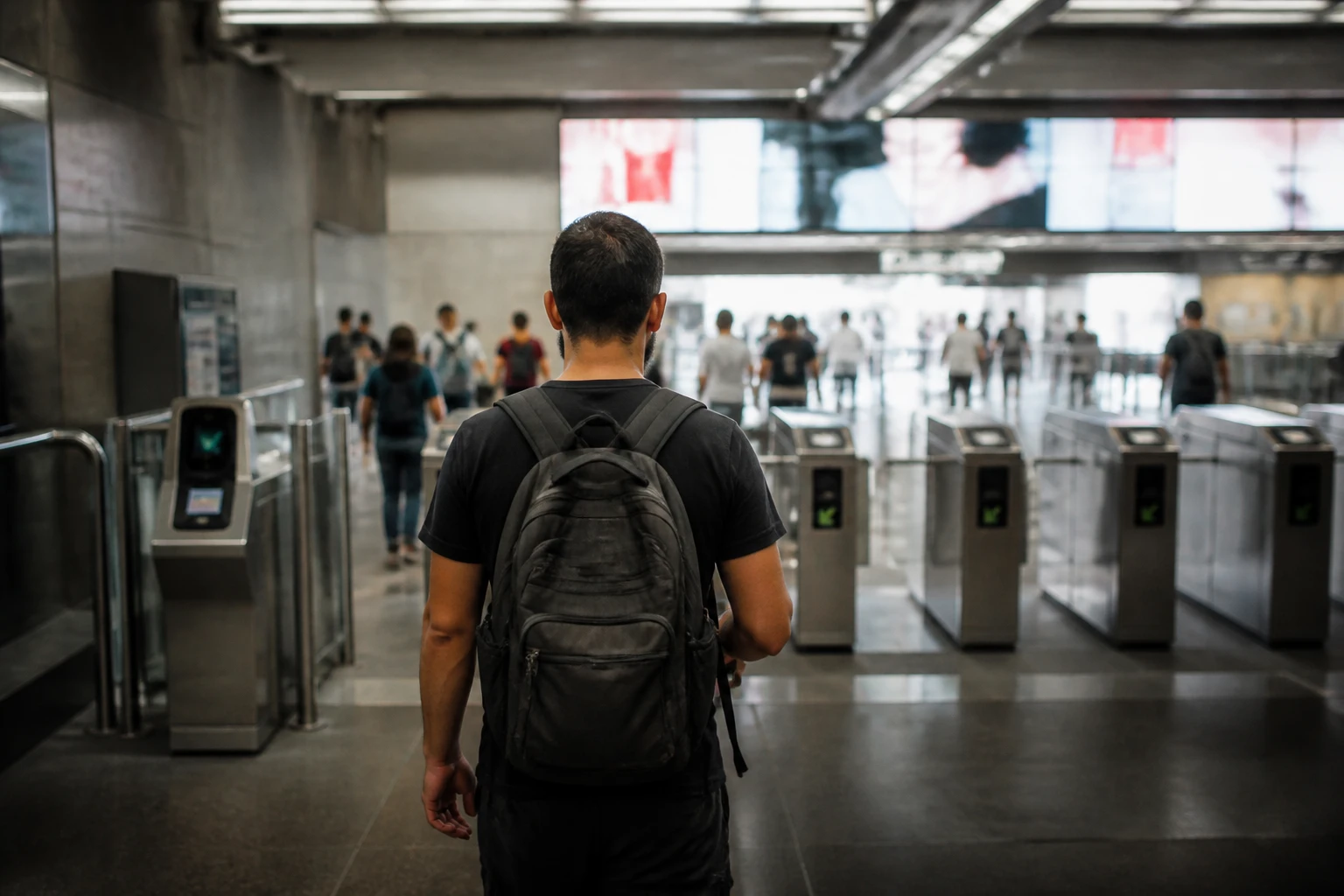
MetrôRio lists its public fare at R$7.90. Its Giro package is listed at R$11.90, consisting of a R$4.00 card deposit and R$7.90 in travel credit. Fares can change, so check the current amount when planning a longer budget rather than treating this figure as fixed for the duration of your stay.
The metro also supports contactless payment and QR-code options. Those choices are convenient during a short stay or while you decide which payment method fits your routine. Check that international contactless payment works as expected before depending on it, and keep another payment option available for journeys outside the metro system.
| Situation | Practical approach |
|---|---|
| First days | Use flexible payment while learning your most common routes. |
| Regular commute | Calculate the weekly cost using the current listed fare. |
| Late finish | Plan the return before leaving and keep a backup option. |
| Luggage day | Allow extra time and choose the route for ease, not only price. |
| Unfamiliar destination | Review the final walking segment before departure. |
Test a likely weekday journey at the time you would normally make it. Note the entire door-to-door experience, including the walk, waiting, transfers, and final approach. A route that looks simple on a screen can feel different with a laptop, summer clothing, groceries, or an approaching meeting. Build your housing decision around the complete trip.
Create a monthly budget without relying on a single headline number
A useful Rio budget begins with your own work and comfort requirements. Accommodation length, booking flexibility, neighborhood, workspace quality, food habits, transport, insurance, and leisure choices can change the total substantially. Instead of adopting another traveler's monthly figure, price a normal week and multiply it by the length of your stay. Then add setup costs and a contingency reserve.
| Budget category | Include |
|---|---|
| Accommodation | Nightly or monthly rate, utilities, cleaning, deposits, and booking fees |
| Work | Coworking, mobile data, equipment, calls, printing, and backup access |
| Transport | Routine journeys, airport transfers, late returns, and leisure trips |
| Daily life | Groceries, meals, laundry, household supplies, and personal care |
| Administration | Insurance, immigration documents, and required appointments |
| Leisure | Attractions, guided activities, nightlife, day trips, and a reserve |
Separate arrival costs from recurring costs. The first week can include transport with luggage, household basics, mobile setup, workspace trials, and temporary accommodation. Those expenses should not automatically become your estimate for every week. Once settled, record actual spending for seven days and update the rest of the plan using your own pattern.
Transport calculations should use current operator information. For example, the listed R$7.90 metro fare can help estimate a repeated journey, but it does not cover every transport need or guarantee a future price. Keep a separate allowance for routes, times, or circumstances when the metro is not your chosen option.
Still comparing Rio De Janeiro Airport Transfer?
Ask for tour ideas, hotel suggestions, or a simple trip plan that combines both.
Trip Helper
Make safety part of your routine, not the theme of your trip
A consistent routine is more useful than constant anxiety. Read practical Rio safety tips before arrival, then decide how you will handle your phone, laptop, transport, late finishes, and unfamiliar routes. The goal is to reduce avoidable exposure while continuing to enjoy the city. Reassess a plan when the surroundings or timing feel different from what you expected.
- Carry only the work equipment and payment methods needed for that outing.
- Avoid displaying a laptop or phone longer than necessary in exposed public settings.
- Plan the final walking segment before traveling to an unfamiliar address.
- Use a secure bag and keep digital backups of important documents.
- Tell a trusted person where you are going when a plan runs late.
- Choose a different route or transport option when conditions feel uncomfortable.
Remote workers face one extra decision: when to carry the laptop. If an outing does not require it, leave it secured at the accommodation. When it must come with you, travel directly and avoid adding spontaneous stops that require repeatedly opening the bag. Enable device locks, backups, and remote account protections before departure, not after a problem.
On arrival day, keep the plan simple. The Rio de Janeiro first-night guide can help you think through that initial transition. Save the accommodation address offline, understand the entry procedure, and arrange enough flexibility for delays. A calm first evening is a better foundation than trying to complete errands, sightseeing, and a full work shift immediately.
Design a schedule that protects work and free time
Compare Rio's local clock with the hours used by your employer, clients, or team. Mark the overlap window, then protect sleep, meals, exercise, and errands around it. If your main meetings fall late in the day, choose accommodation and evening transport with that pattern in mind. A beautiful base loses much of its value if calls make its location awkward every night.
Group demanding tasks into a predictable block and place flexible work around them. Keep sightseeing out of the narrow gap between two important calls. Instead, reserve larger periods when delays will not create stress. This rhythm also reduces the temptation to work continuously because there is always another activity waiting just outside.
Build one low-pressure day into each week. Use it for laundry, groceries, planning, backups, and any administrative task that has accumulated. Long stays become easier when everyday maintenance has a place in the schedule. Otherwise, small chores compete with both paid work and the experiences that brought you to Rio.
Settle into daily life one useful habit at a time
Start with a compact everyday zone around your accommodation. Identify a place for groceries, a straightforward meal, laundry, exercise, and a backup work session. You do not need to solve the entire city during the first weekend. Familiarity with a few dependable options reduces daily decision-making and leaves more attention for work and exploration.

The guide to where to eat in Rio de Janeiro can help you explore beyond the nearest convenient meal. For ordinary workdays, balance that curiosity with simple choices you can repeat. Save more involved restaurant plans for evenings when a delay will not interfere with a meeting or deadline. Keep the address and return route available offline.
Learn a small set of Portuguese phrases for greetings, ordering, directions, numbers, and explaining a basic problem. Save important addresses in a form that is easy to show another person. Translation tools are useful, but a few prepared phrases make routine interactions smoother and reduce the need to unlock your phone repeatedly in public.

Rio's Cookin' Good: 9-Dish & Caipis Fiesta + Optional Market Tour
Wander into our Ipanema hideout and let the culinary capers begin. Whether you're a kitchen newbie or a seasoned fo...

Rio's Full Day: Selarón Steps, Christ & Sugarloaf – Tickets & Lunch Included
Discover the best of Rio de Janeiro in a full-day tour that combines convenience, comfort, and expert guidance. This...

A Day in Rio Tour - City Tour with Tickets and Lunch Included
This tour was planned thinking about the tourist who wants to know the main sights of Rio de Janeiro with comfort, s...
Plan days off that do not leave you exhausted on Monday
Remote work can create the feeling that every free day must become a major excursion. Resist that pressure. Alternate ambitious outings with slower neighborhood days, meals, walks, and rest. Check travel time, physical effort, and the return plan before placing an activity ahead of a demanding workday.
The Best Things to Do in Rio de Janeiro for First-Time Visitors guide can help you identify priorities without crowding them into one weekend. Choose one main experience and leave space around it. If a viewpoint, hike, beach visit, or cultural outing depends on conditions, keep a flexible alternative rather than forcing the original schedule.
Use your first seven days as a practical trial
- Day 1: Arrive, enter the accommodation, test basic connectivity, and rest.
- Day 2: Walk the immediate area and identify food, transport, and essential services.
- Day 3: Work a normal day from the apartment and record noise or equipment problems.
- Day 4: Test your mobile backup and try an alternative workspace if needed.
- Day 5: Make a likely weekday journey at the time you expect to use it.
- Day 6: Explore one leisure priority without packing the entire day.
- Day 7: Review spending, productivity, comfort, and routes before extending the stay.
This trial week replaces assumptions with information. Keep short notes about sleep, internet performance, workspace comfort, meal costs, transport, and how you felt after a full workday. The goal is not to score Rio as a whole. It is to decide whether your current setup supports the stay you want.
Avoid the mistakes that disrupt long remote stays
- Booking several months solely on the strength of listing photographs.
- Assuming “Wi-Fi included” describes speed, stability, or router access.
- Choosing a base before mapping the journeys that matter every week.
- Treating cafés as guaranteed offices for calls and confidential work.
- Carrying a laptop on every outing without a clear need.
- Using another person's monthly spending as a fixed promise of your own costs.
- Leaving visa research, insurance, or required documents until shortly before departure.
Another common error is planning each week like a short vacation. Remote workers still need groceries, laundry, exercise, administration, rest, and unremarkable evenings. Build those into the calendar. A sustainable routine usually creates more rewarding free time than a packed itinerary followed by several days of fatigue and unfinished work.
Decide if Rio belongs in your remote-work plan
Rio is a strong candidate for remote workers who value an active city stay and are willing to plan their working conditions carefully. Its main limitation is that an appealing location cannot compensate for weak internet, an unsuitable desk, a difficult routine, or the wrong immigration plan. Secure the essentials first, then let the destination shape the hours beyond work.
Begin with the visa route, a flexible initial booking, a tested backup connection, and a realistic weekly budget. Spend the first days learning your immediate area rather than racing through a checklist. Once the practical pieces are stable, Rio becomes easier to experience at a pace that serves both your job and your reasons for traveling.
Frequently asked questions
Does Brazil have a digital-nomad visa?
Yes. Brazil's VITEM XIV digital-nomad route is intended for foreign nationals working remotely for a foreign employer while in Brazil, and consular guidance frames it as a temporary visa for stays longer than 90 days. Check the current instructions issued by the Brazilian consular office serving your legal residence.
What documents are needed for Brazil's digital-nomad visa?
Consular checklists include a valid travel document, proof of residence or residence history, criminal-record documentation, and travel or health insurance valid in Brazil. Exact formatting and procedural requirements should be checked with the consular office that has jurisdiction over your legal residence.
How much does the Rio metro cost?
MetrôRio currently lists the public fare at R$7.90. Its Giro package is listed at R$11.90, including a R$4.00 card deposit and R$7.90 in travel credit. Check the operator's current fare before finalizing a long-stay budget.
Can travelers use contactless payment on the Rio metro?
Yes. MetrôRio says riders can use contactless payment and QR-code options. Keep a backup payment method until you know that your preferred card or device works reliably.
Which Rio neighborhood is best for digital nomads?
The best neighborhood is the one that supports your work schedule, preferred daily services, transport needs, and noise tolerance. Compare exact addresses and test likely routes instead of choosing solely by a neighborhood's reputation or listing photographs.
Should a digital nomad book Rio accommodation for the entire stay in advance?
A flexible initial booking is usually the more practical approach when your schedule allows it. Use the first week to test internet stability, workspace comfort, noise, mobile signal, building access, and everyday routes before extending.
What internet backup should a remote worker have in Rio?
Keep an independent mobile-data connection and identify a second place where you can work. Test tethering, charging, calls, and access arrangements before an important meeting or deadline.
How should remote workers budget for Rio de Janeiro?
Build the budget around accommodation, work costs, transport, food, insurance, administration, leisure, and a contingency reserve. Price a realistic week using your own habits, then update the plan after recording actual spending during the first seven days.
Private Rio Tour: Christ the Redeemer & Sugar Loaf Essentials
Enjoy a personalized visit to Rio de Janeiro’s essentials with a private guide and driver. The tour covers key highlights such as Christ the Redeeme...
Private Custom Full-Day Highlights in Rio: Only the Best Sights!
Enjoy the most complete private day tour in Rio de Janeiro with flexible itineraries built just for you. Visit iconi...
Best of Rio in One Day: Christ Redeemer, Sugarloaf & Local Lunch
Discover the best of Rio de Janeiro in just one day with a complete, well-organized itinerary designed to provide co...
Rio: Tijuca Rainforest Hike, Wildlife, Waterfalls & Caves
Skip the gridlocked city traffic and the crowded tour buses. Just 40 minutes from Rio's famous beaches lies a protec...
