Rio de Janeiro Architecture Guide
How to use this Rio de Janeiro architecture guide
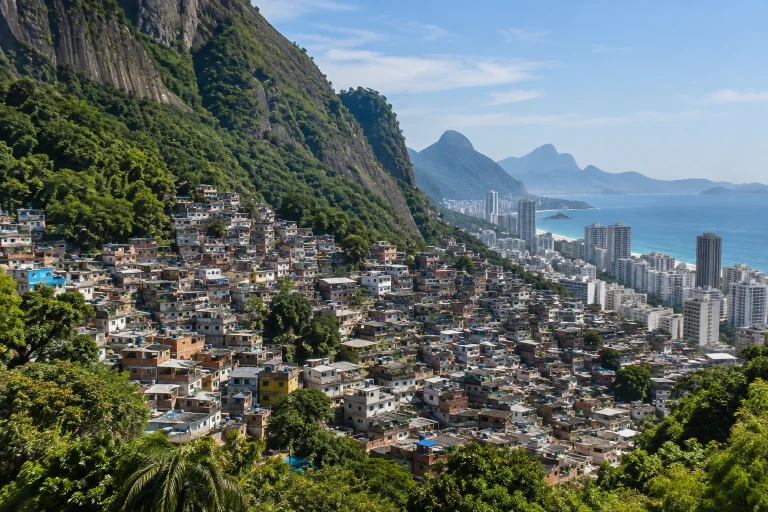
Rio de Janeiro is best approached as a city to read at several distances. Start with the large picture, where roads, shorelines, hills, towers, and neighborhoods become one composition. Then slow down at street level, where entrances, shade, paving, materials, and the changing width of public space reveal how a place works. This guide is built for travelers who want to look closely rather than race through a checklist.
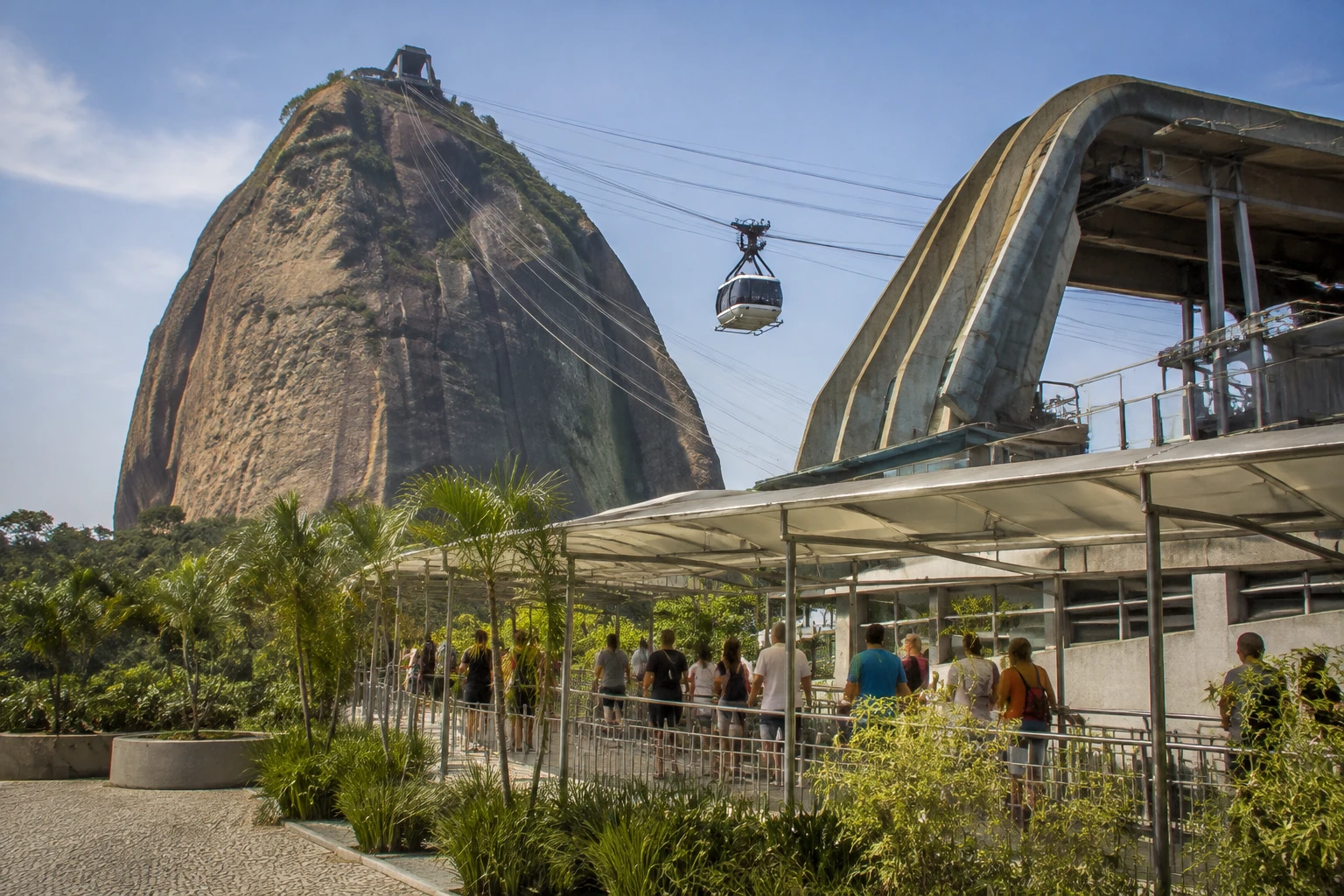
A productive architecture day has two parts: an elevated orientation stop and unhurried ground-level observation. Parque Bondinho Pão de Açúcar provides the first. Its cable-car route from Praia Vermelha via Morro da Urca to Sugarloaf is specifically framed around views of Rio’s landmarks and urban architecture, making it a useful opening lens for the rest of the city. For practical route detail, the site’s Sugarloaf cable car guide is a useful companion to this architecture-focused approach.

Rio's Full Day: Selarón Steps, Christ & Sugarloaf – Tickets & Lunch Included
Discover the best of Rio de Janeiro in a full-day tour that combines convenience, comfort, and expert guidance. This experience includes lunch, admiss...

Full Day Excursion to Petrópolis from Rio de Janeiro
Trip to Petropolis with transfer included. Discover the Imperial City with the No. 1 agency in Rio, without intermed...

Private Tour in Rio - All Day, Fully Customizable
Olá! I’m Mariana, an official tour guide of Rio de Janeiro. This tour is a wonderful way to see all the magnifice...

Discover Petropolis and its Hidden Gems with our Private Tour
Step back in time and immerse yourself in the elegance and grandeur of Brazil's Imperial City on a private, full-day...
- Begin with a high viewpoint so you can understand the wider urban composition before focusing on details.
- Use a simple lens at street level: how a building meets the ground, guides movement, creates shade, and frames a view.
- Choose a few observation zones rather than trying to judge every landmark in one day.
- Allow generous time for Sugarloaf Mountain; the operator recommends a full day for its cable-car route, viewpoints, food outlets, and programming.
- Book Sugarloaf entry ahead when possible, keep ticket rules in mind, and recheck prices and operating times before visiting.
Start at Sugarloaf Mountain to see Rio as an urban composition
Treat Sugarloaf as a city-reading viewpoint, not simply a scenic diversion. The journey begins at Praia Vermelha, rises to Morro da Urca, and continues to Sugarloaf. Along that sequence, look for the way the built city gathers in dense bands, opens toward water, and changes scale against the surrounding landforms. A wide view helps you recognize relationships that are difficult to grasp from a single sidewalk.

Do not rush straight to a photograph. At each stop, spend a few minutes without a screen. Find the strongest horizontal line, then the tallest vertical element. Notice where streets seem to converge and where the city’s edge becomes less regular. This is the moment to form questions for later: Which areas look tightly gridded? Where do larger structures dominate? How does the waterfront influence the shape of development?
What to look for from the cable car and viewpoints
- Movement corridors: Trace the lines that appear to connect districts, slopes, and the waterfront.
- Edges and thresholds: Look at the point where buildings meet open space, vegetation, roads, or water.
- Scale: Compare compact clusters of construction with broad outdoor areas and steep terrain.
- Rooflines and silhouettes: A distant skyline is easier to read as a sequence of heights and shapes than as individual addresses.
- Public space: Notice which open areas invite movement and which function as visual breathing room around denser development.
This perspective also sharpens your eye for the cable car itself. Its route is a useful reminder that architecture is more than façades. Arrival sequences, changes in elevation, waiting areas, viewing platforms, ramps, and the pace of movement all shape how a visitor experiences a place. Carry that question into the rest of your day: what route does a space ask you to take?
Sugarloaf tickets, timing, and arrival planning
The cable-car departure point is at Av. Pasteur, 520, in Urca. There is no on-site parking. Visitors who buy through the official website can access a partnered RIOSUL parking rate of R$20 for up to six hours, so drivers should factor the parking arrangement into their plan rather than expect parking at the departure point itself.
Current listed admission starts at R$205 for international tourists, R$160 for the Brazilian promotional fare, and R$102 for half-price entry. Discounted tickets require the relevant documentation. Prices can change, so check the booking page when choosing a date. The standard ticket is the budget-minded choice, while the Fast Pass starts at R$325 for full-price entry and includes priority queues at all stations plus an air-conditioned lounge at Praia Vermelha.
The park closes at 9 PM and final cable-car boarding is at 7:30 PM. Its official pages list different opening times, so confirm the date-specific start time before setting out. Timed entry and online booking are part of the current visitor process. Large bags over 25 x 35 x 55 cm and glass containers are not permitted, and it is wise to avoid building a tight plan around the final ride of the day.
Build your architecture day around observation, not a long checklist
A satisfying architecture itinerary has a clear rhythm. Begin with the broad view at Sugarloaf, then choose one area for a slower walk. Give yourself permission to linger where a building, square, pavement pattern, or junction catches your attention. The goal is not to collect names. It is to understand how parts of the city relate to one another.
Use three levels of attention as you walk. First, read the block: its length, corners, trees, traffic, and open space. Next, read the building: its height, rhythm of windows, entrances, structure, and relationship to neighboring forms. Finally, read the human scale: benches, steps, shade, thresholds, paving, and the places where people naturally stop. The smallest clues often explain the larger design.
Keep the plan flexible enough to follow a visual thread. You might spend an hour comparing a sequence of façades, watching how light falls across a covered walkway, or tracing the boundary between a formal public area and an ordinary street. A Rio de Janeiro neighborhoods guide can help you organize broader areas of the city around that kind of focused exploration rather than around isolated photo stops.
Still comparing Day Trips?
Ask for tour ideas, hotel suggestions, or a simple trip plan that combines both.
Trip Helper
A simple field-note method for non-architects
- Write down the location and time of day. Light and activity can change a space completely.
- Describe the first thing your eye notices: a curve, a line, a texture, a shadow, or an opening.
- Identify the route through the place. Where do you enter, pause, turn, climb, or look outward?
- Note the building-to-street relationship. Does the ground floor feel open, formal, sheltered, or closed off?
- Record one question rather than forcing a conclusion. Curiosity produces better memories than technical jargon.
A notebook works, but a phone note is enough. Pair one wide photograph with one close detail and a sentence about why you stopped. By evening, those fragments become a personal map of the city: not a catalog of attractions, but a record of sequences, surfaces, views, and small surprises.
Know the architectural details worth slowing down for
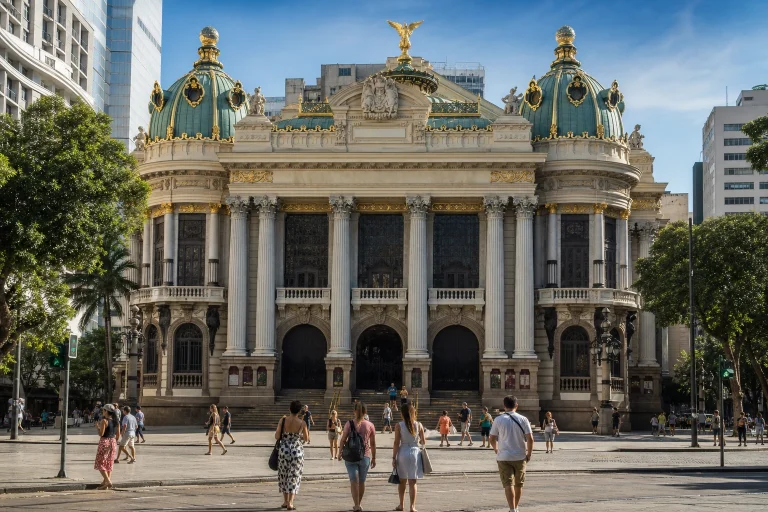
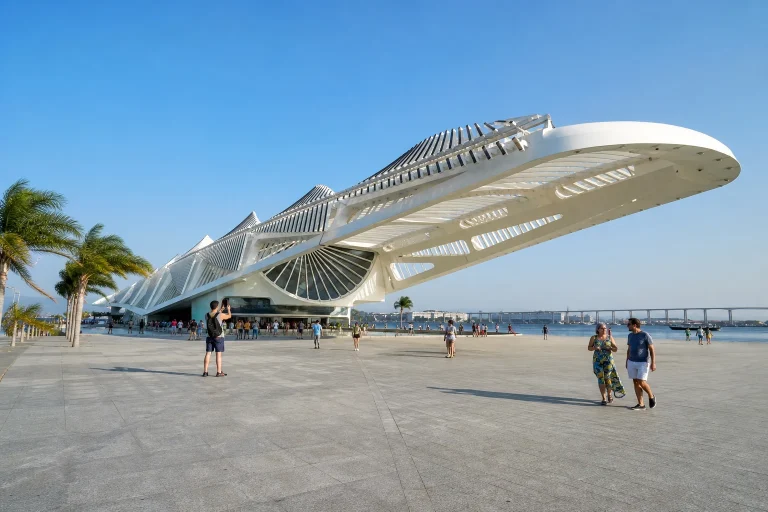
You do not need specialist training to look carefully. Architecture becomes more legible when you break it into a few visible decisions. Ask how a structure stands, how it admits light, how it handles weather, and how it greets the street. These questions work equally well for a major cultural building, a residential corner, a stair, or a modest shopfront.
- Form: Is the overall shape compact, layered, repetitive, curved, or strongly geometric?
- Structure: Look for spans, columns, supports, frames, cantilevers, or solid walls that reveal how weight is carried.
- Light: Notice deep shadows, overhangs, screened openings, reflective surfaces, and the contrast between interior and exterior.
- Material: Compare smooth and rough textures, joints, weathering, color, and changes between base and upper levels.
- Thresholds: Entrances, gates, ramps, stairs, porches, and lobbies often reveal the clearest design choices.
- Context: Step back to see how the building relates to trees, street width, adjoining buildings, and distant views.
At Sugarloaf, use the same method at city scale. Shoreline, slopes, dense construction, and open areas act like a vast composition. At street scale, reverse the exercise: focus on one doorway, one paving change, or one patch of shade. Moving between these scales is the central pleasure of an architecture-focused visit.
Plan photographs that show space, not just landmarks
The strongest architecture photographs explain a relationship. Instead of centering every image on a façade, include the approach, a foreground edge, a person for scale when appropriate, or a slice of sky. A wide frame can show how a building sits in its setting; a detail can capture the craft of a handrail, screen, stair, or junction.
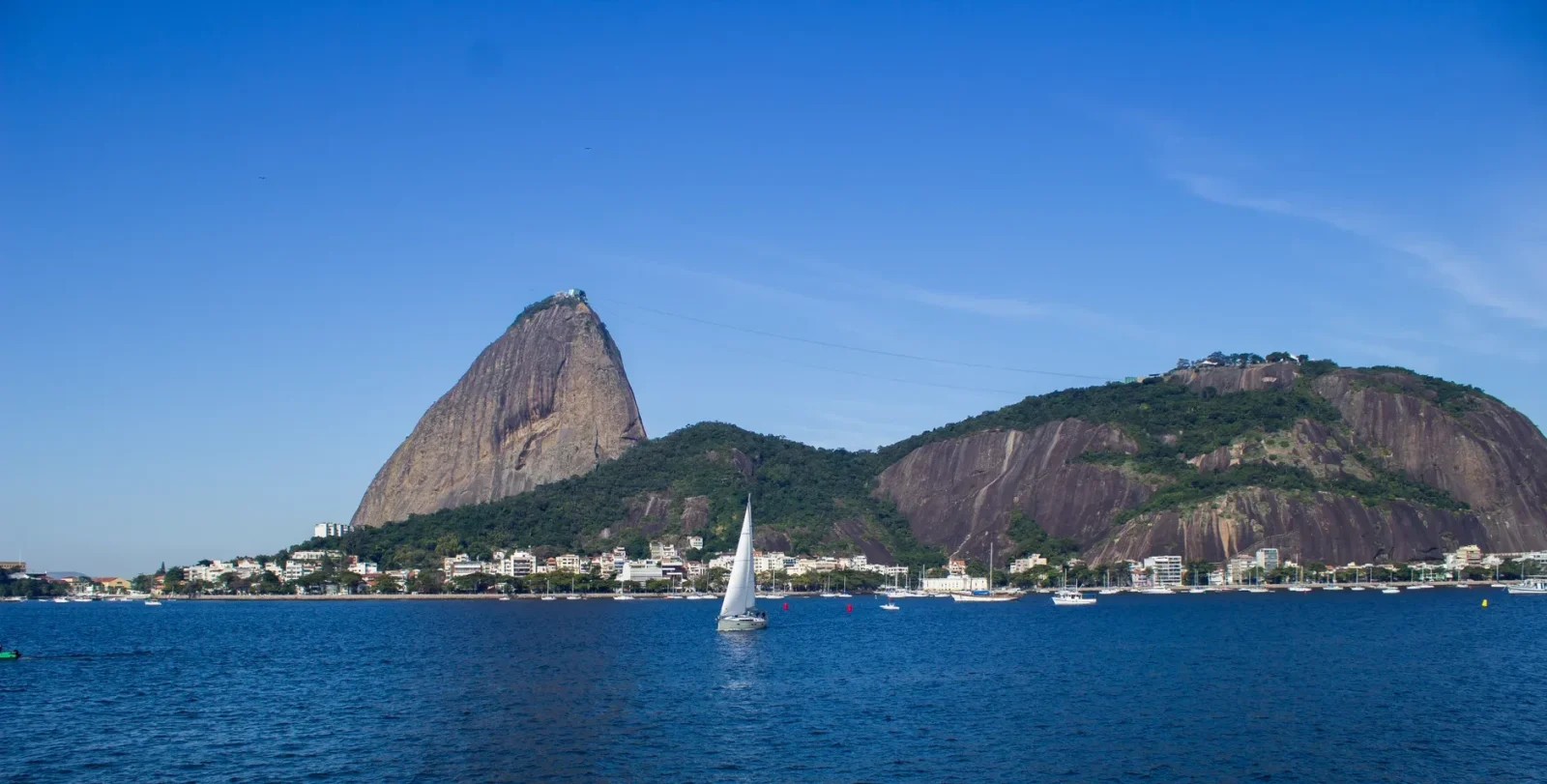
At viewpoints, make one image for orientation and one for evidence. The orientation frame should show the larger urban pattern. The evidence frame should isolate a single feature you want to remember, such as a cluster of rooflines, a contrast in building height, or the point where constructed space meets the landscape. Photographing with purpose will make the later walk more observant.
For close-ups, work with changing light rather than fighting it. Strong sun can produce graphic shadows, while softer conditions reveal color and texture. Avoid standing too close to a building simply to fit it into the frame. Take a few steps back, photograph a fragment, and then look for a side angle that explains depth.
Include accessibility and pacing in the design of your day
At Parque Bondinho Pão de Açúcar, the core visitor route includes elevators to viewpoints, ramps, adapted restrooms, and an inclined plane for visitors with physical disabilities or reduced mobility. The standard cable-car half-price ticket is listed at R$102 for a disabled visitor and one companion, with the prescribed documentation presented on the day.
Accessibility is not identical in every part of the park. The Clássico Sunset Club restaurant and Bosque das Artes require stairs and are not fully accessible. For an architecture day, this is a useful planning principle: prioritize the main experience first, then treat optional detours as extras. A well-paced route should leave time for rests, views, and a change of plan without making any one stop feel like a test of endurance.
A practical Sugarloaf planning table for architecture travelers
| Planning point | What to know | Best use in an architecture-focused day |
|---|---|---|
| Purpose | The cable-car route via Morro da Urca to Sugarloaf offers views over Rio’s landmarks and urban architecture. | Make it your orientation stop before choosing ground-level observation areas. |
| Time | The operator recommends allowing a full day; the park closes at 9 PM and final boarding is at 7:30 PM. | Leave room for repeated viewpoints and avoid scheduling the last cable car too tightly. |
| Arrival | The departure point is Av. Pasteur, 520, Urca, with no on-site parking. | Decide on your arrival plan in advance; drivers can consider the official online-ticket parking partnership. |
| Ticket choice | Standard admission starts at R$205 for international tourists; Fast Pass starts at R$325 for full-price entry. | Choose standard entry for value or Fast Pass when minimizing queues is worth the added cost. |
| Access | Core-route features include elevators, ramps, adapted restrooms, and an inclined plane. | Use the main route as the priority and check optional venue access separately. |
The best way to remember Rio’s architecture
The most rewarding architecture visit to Rio is suited to travelers who enjoy looking twice. Begin at Sugarloaf Mountain for the big picture, then let the city reward slower attention to routes, thresholds, shade, surfaces, and changing scale. The main limitation is time: a rushed schedule turns buildings into backdrops. Give the day space to unfold, reserve Sugarloaf entry in advance, and use your viewpoint observations to guide the rest of your explorations.
Frequently asked questions
Is Sugarloaf Mountain worth visiting for architecture fans?
Yes. Parque Bondinho Pão de Açúcar is especially useful as a city-reading viewpoint because its cable-car route from Praia Vermelha through Morro da Urca to Sugarloaf looks over Rio’s landmarks and urban architecture.
Where does the Sugarloaf cable car depart?
The cable car departs from Av. Pasteur, 520, in Urca. There is no on-site parking, so drivers should plan around the partnered RIOSUL parking option available with purchases through the official website.
How much time should I allow for Sugarloaf Mountain?
Allow a full day if you want time for the viewpoints, cable-car route, food outlets, and programming. The operator lists a 9 PM close and final cable-car boarding at 7:30 PM.
What does the Sugarloaf cable car cost?
Listed admission starts at R$205 for international tourists, R$160 for the Brazilian promotional fare, and R$102 for half-price entry. Prices and eligibility conditions can change, so recheck the booking page before purchase.
Is Sugarloaf Mountain accessible for visitors with reduced mobility?
The core route includes elevators to viewpoints, ramps, adapted restrooms, and an inclined plane. Some optional areas, including the Clássico Sunset Club restaurant and Bosque das Artes, require stairs and are not fully accessible.
Experiences to explore
 Explore experience ↗
1-hour Watercolor Class with a View of Sugarloaf Mountain
◷ 1 hr 30 min
Experience the beauty of Rio with a creative twist as you combine stunning views and artistic expression. Our watercolor class is suita
See dates for Current pricing
View dates Explore experience ↗
SugarLoaf Mountain Hiking Tour- Rio de Janeiro by Rio Eco Trip
◷ 4 hr
The walk begins on Praia Vermelha (Red Beach) at Claudio Coutinho Cooper Track, into the small and famous neighborhood of Urca. The cli
See dates for Current pricing
View dates Explore experience ↗
Rio de Janeiro: Christ the Redeemer, Sugarloaf Mountain & City Tour
◷ 7 hr–8 hr
✨ Discover Rio de Janeiro with a Guide who loves this city as much as you will! ✨ Hello! I am Bruno, accredited and passionate Tourism
See dates for Current pricing
View dates