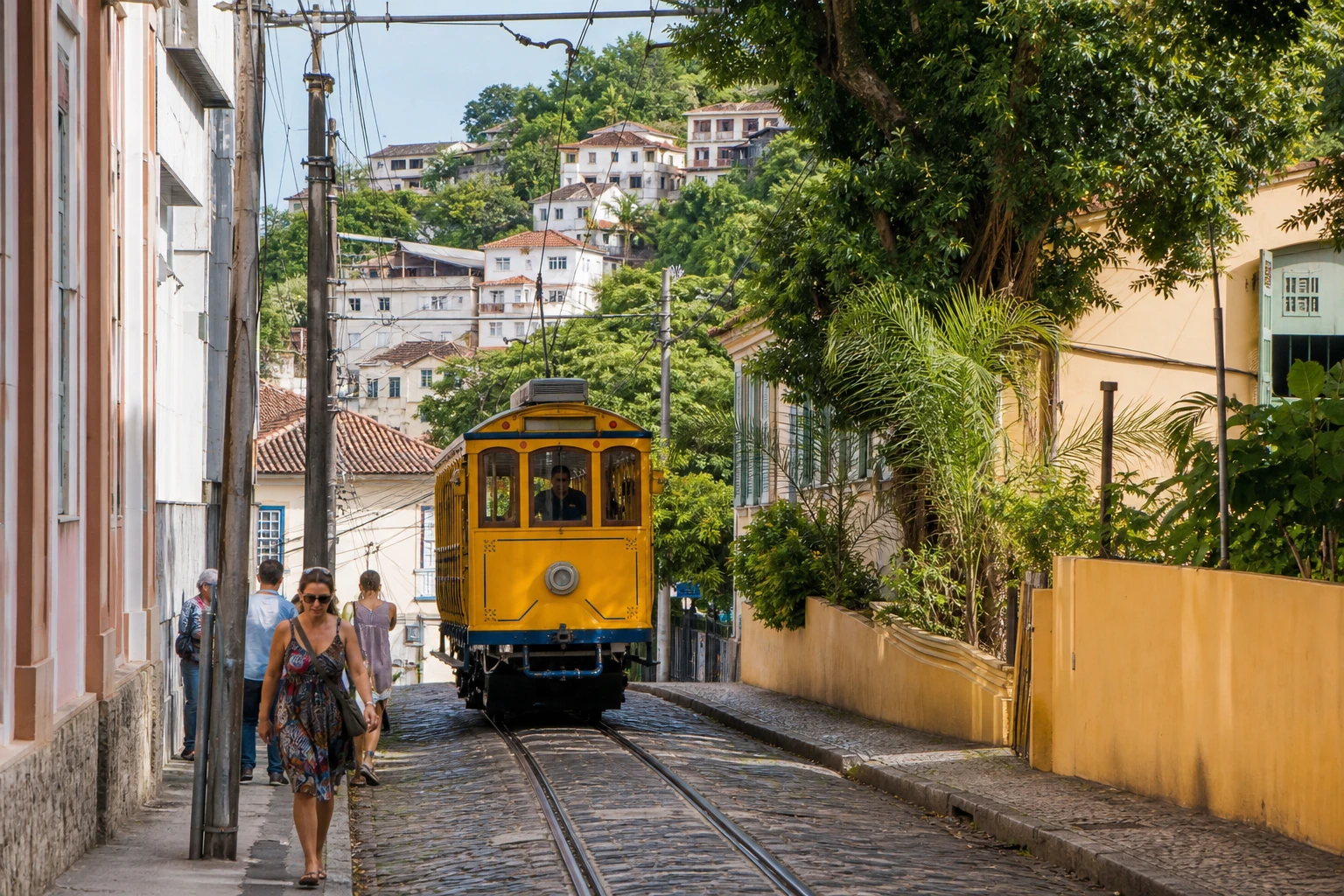
Santa Teresa sits on a hill above downtown Rio de Janeiro, trading beachside convenience for historic character, artistic identity, and tram heritage. Its location and terrain reward an unhurried approach. Instead of treating the district as a quick photo stop, give yourself time to travel uphill, explore a compact area, pause along the way, and return without rushing.
- Plan at least half a day so transport changes do not derail the visit.
- Check the official tram schedule, service notices, and current fare shortly before departure.
- Keep your walking route compact because Santa Teresa is a hilltop neighborhood.
- Explore during daylight and consider a taxi for the return, particularly after dark.
- Travel light, keep valuables discreet, and use extra awareness around transport hubs.
A good Santa Teresa plan has three parts: flexible transport, a manageable walking route, and a clear return strategy. The tram can be part of the experience as well as a practical connection from downtown, but operations can change. Build enough flexibility into the day to switch to a taxi if necessary.
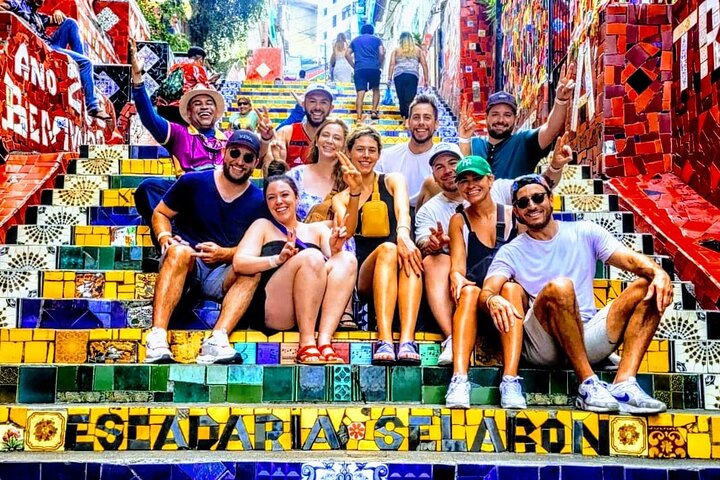
Private Custom Full-Day Highlights in Rio: Only the Best Sights!
Enjoy the most complete private day tour in Rio de Janeiro with flexible itineraries built just for you. Visit iconic landmarks like Christ the Redeem...
Why Santa Teresa rewards a slower visit
Santa Teresa is best understood as a neighborhood rather than a single attraction. Official tourism descriptions emphasize its historic and artistic character, while the tram gives the district a strong link to Rio's transport heritage. The pleasure comes from moving through the area at a neighborhood pace instead of chasing a long checklist.
That slower rhythm is also a practical necessity. Reaching a hilltop district, accounting for tram operations, and navigating elevation all take time. Leave gaps in the schedule rather than placing a timed reservation immediately before or after your visit.
Santa Teresa suits travelers who enjoy urban history, local character, and journeys where the route matters. It is less suitable for anyone seeking the easiest possible transport or a flat, tightly timed sightseeing circuit. Recognizing that tradeoff before going makes the district much easier to appreciate.
How much time to allow in Santa Teresa
A half day is the most practical starting point. That gives you room for the journey uphill, a compact walk, a break, and a flexible return. A full day works better if you prefer long pauses or want to explore without watching the clock.
Avoid planning Santa Teresa as a narrow gap between fixed appointments. Tram service can change, and the district naturally takes longer to navigate than a flat central area. If your schedule is strict, decide on a backup taxi plan before leaving.
| Visit style | Suggested plan | Main tradeoff |
|---|---|---|
| Focused half day | Travel uphill, follow one compact walking loop, take a break, and return in daylight. | Efficient, but leaves little room for transport delays. |
| Unhurried full day | Explore at a slower pace with longer stops and a flexible return. | More relaxed, but uses a large share of a Rio sightseeing day. |
| Short stop | Choose one purpose and arrange direct transport in both directions. | Saves time, but misses much of the neighborhood experience. |
Getting to Santa Teresa and using the tram
The Santa Teresa tram is a practical connector between downtown Rio and the hilltop neighborhood. It is also central to the area's identity, making the journey part of the visit rather than a simple transfer. Check current operations before setting out because schedules and service arrangements can change.
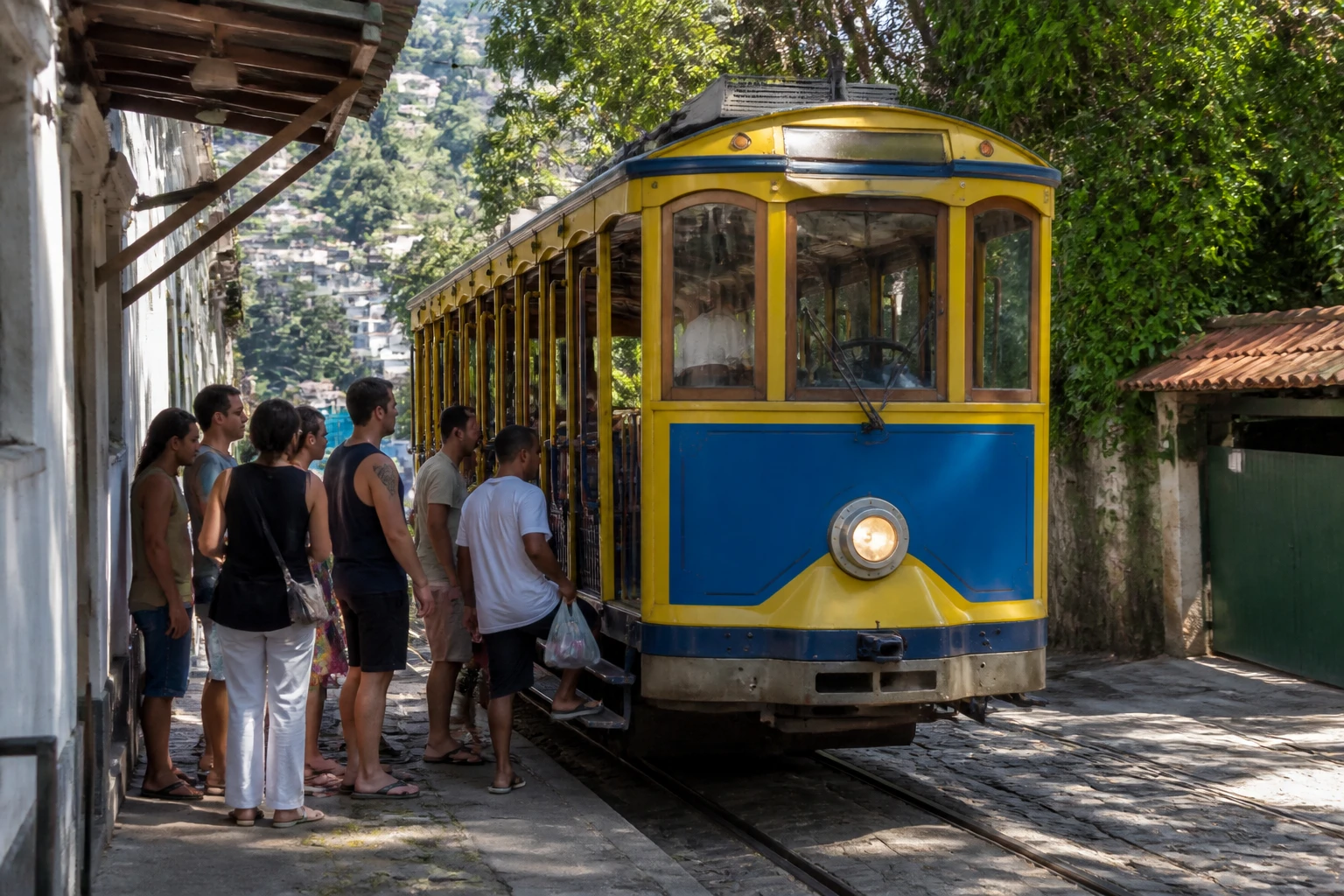
The Paula Mattos branch reopened in January 2025 after more than a decade closed. That recent change is another reason to rely on current service information rather than an old itinerary, archived timetable, or undated travel post.
Verify the current fare on the official tram page close to your travel date. Build a separate taxi allowance into your budget so a service change does not force you to abandon the day. Exact transport costs should be treated as a final planning check rather than a fixed figure.
A taxi is the simplest backup when the tram does not fit your timing or mobility needs. Arrange the return before it becomes urgent, especially if you plan to remain in the neighborhood into the evening. Travelers with limited mobility should confirm both tram boarding conditions and suitable drop-off access in advance.
A practical self-guided Santa Teresa itinerary
- Begin by checking same-day tram operations and the weather before leaving your accommodation.
- Travel toward Santa Teresa with a taxi option ready in case the tram does not fit your schedule.
- Once uphill, choose a compact walking area rather than trying to cover the entire neighborhood.
- Take a deliberate break for food or rest before deciding whether to extend the walk.
- Start your return while you still have daylight, or use a taxi if you stay later.
If your day also includes lower-city sightseeing, the Selarón Steps and Centro walk deserves its own structured time block. Avoid squeezing both areas into an overly tight schedule. Santa Teresa works better when you can adjust the pace around the tram, hills, and your energy level.
Keep the route simple enough that you can reverse it without confusion. Save optional stops for the end instead of making every idea essential. This creates room for a slower lunch, a transport change, or an earlier return without turning the day into a race.

Half-Day Tour: Christ the Redeemer, Selarón & Sunset at Sugarloaf
Spend an amazing afternoon visiting the best of Rio: Christ The Redeemer Statue atop Corcovado Mountain, Sugarloaf C...

Private Rio Tour: Christ the Redeemer & Sugar Loaf Essentials
Enjoy a personalized visit to Rio de Janeiro’s essentials with a private guide and driver. The tour covers key hig...

Full Day in Rio: Christ by Train, Sugarloaf, Selarón & Barbecue
Discover the best of Rio de Janeiro in a single day! Begin with a scenic train ride up Corcovado Mountain to visit C...
The best time of day for a visit
Daylight is the most practical window for a first visit. It makes navigation easier, gives you more time to respond to transport changes, and reduces the need to move through unfamiliar or isolated areas after dark. Start early enough that a delay will not push the return into the evening.
Let current tram operations determine your starting time. Check the service information on the day, then leave a buffer before any later reservation elsewhere in Rio. If the tram is central to your plans, avoid making it dependent on a narrow connection.
Check the forecast before committing to a long walking route, and choose footwear suited to slopes. If conditions or energy levels change, shorten the route rather than forcing the original plan. Santa Teresa's value lies in its atmosphere and neighborhood character, not in covering a set distance.
Safety in Santa Teresa and around transport
Current United States travel guidance rates Brazil at Level 2 and advises increased caution. It warns that assaults and drugging are common, especially in Rio de Janeiro, and recommends caution on public transport and at transportation hubs. Demonstrations are also frequent and can disrupt movement.

For Santa Teresa, turn that guidance into a straightforward plan. Explore in daylight, avoid isolated movement, keep phones and cameras discreet when not in use, and do not wait until late evening to arrange the return. Use a taxi when the available route or timing feels unsuitable.
If you continue into Rio's nightlife, keep control of your drinks and do not accept beverages from strangers. Check for demonstrations before crossing central areas or heading toward a transport hub. Our practical Rio safety tips cover the same citywide habits in greater depth without turning normal precautions into alarm.
Accessibility and mobility planning
Santa Teresa requires more mobility planning than flatter parts of Rio. The hilltop setting and the importance of the tram suggest that changes in elevation and boarding conditions can shape the visit. Travelers who need step-free access should confirm an appropriate route rather than relying on a general walking itinerary.
Before departure, identify a suitable taxi drop-off and pickup plan. Confirm whether the tram boarding arrangement works for your needs, and keep the walking portion short enough to preserve energy for the return. A companion can also handle directions and transport changes while the traveler focuses on the terrain.
Families and mixed-ability groups should plan around the person with the least comfortable walking range. One compact area with a reliable return is more enjoyable than an ambitious route that becomes difficult halfway through. The neighborhood does not need to be covered extensively to justify the visit.
Staying in Santa Teresa or visiting for the day
Choose Santa Teresa as a base when historic atmosphere and neighborhood character matter more than direct access to Rio's beach districts. Its artistic identity and tram heritage provide a distinctive setting, but the hilltop location creates a slower and more itinerary-dependent stay.
A day visit is the easier choice if your priorities are beaches, flat walking routes, or rapid movement between major sights. You can experience Santa Teresa during daylight while keeping accommodation in a more convenient transport area. The compromise is less time to settle into the district's slower pace.
Travelers deciding between major beach bases can use the Ipanema or Copacabana comparison to frame that choice separately. Think about where you want to begin and finish most days. Santa Teresa offers character, while a beach base generally serves a different set of priorities.
Still comparing Santa Teresa Tram And Neighborhood Tours?
Ask for tour ideas, hotel suggestions, or a simple trip plan that combines both.
Trip Helper
Budgeting and what to bring
Do not build the day's budget around an old tram fare. Check the current price shortly before departure and retain enough flexibility for a taxi. Transport is the expense most likely to change your plan because a backup ride can become necessary when operations or timing shift.

- Supportive footwear suitable for a hilltop walking route
- Water appropriate for the length of your planned outing
- A charged phone with the destination and return plan saved
- A low-profile bag that keeps valuables close and discreet
- A payment option and budget buffer for an unplanned taxi
- Only the camera equipment you expect to use
Traveling light is particularly helpful here. It makes the slopes easier and reduces the amount of equipment that attracts attention. Keep essential transport information available, but avoid standing in an exposed place while concentrating on your phone.
Common Santa Teresa planning mistakes
- Treating the neighborhood as a rushed stop between fixed appointments
- Relying on an old tram timetable or assuming service will be unchanged
- Using an outdated fare when estimating the day's transport budget
- Planning a walking route without accounting for the hilltop setting
- Waiting until after dark to decide how to return
- Displaying a phone, camera, or other valuables unnecessarily
Most of these problems have the same solution: simplify the itinerary. Give Santa Teresa a clear block of time, check transport shortly before leaving, choose a modest walking area, and decide how you will return. That approach preserves the district's relaxed appeal without sacrificing practical control of the day.
Is Santa Teresa worth visiting?
Santa Teresa is worth considering for travelers drawn to historic neighborhoods, artistic character, and the experience of reaching a hilltop district by heritage tram. It adds a different perspective to a Rio itinerary dominated by beaches and major landmarks, but it demands more flexibility than a quick central stop.
Its main limitation is convenience. Slopes, changing tram operations, and the need for a thoughtful return can make tightly scheduled visits frustrating. Give the neighborhood at least half a day, explore during daylight, and keep taxi money in reserve. With those basics settled, you can focus on the character that makes Santa Teresa distinctive.
Frequently asked questions
How do you get to Santa Teresa from downtown Rio?
The Santa Teresa tram is a practical connection from downtown into the hilltop neighborhood. Check same-day operations before departure and keep a taxi as a backup if the timetable does not fit your plan.
How long should I spend in Santa Teresa?
Allow at least half a day for a comfortable first visit. The journey uphill, changing tram operations, slopes, and the neighborhood's slower character make a tightly timed stop less practical.
How much does the Santa Teresa tram cost?
Check the official tram information for the current fare shortly before traveling. Transport pricing can change, so avoid building your budget around an undated fare quoted elsewhere.
Does the Santa Teresa tram follow a fixed schedule?
Do not assume that an old timetable remains current. Operations and schedules can change, and travelers should check the latest service information on the day of the visit.
Is Santa Teresa safe for visitors?
Plan the visit during daylight and use active city precautions around transport, valuables, isolated areas, and the return journey. Current United States guidance rates Brazil at Level 2 and specifically advises caution in Rio and at public transportation hubs.
Is Santa Teresa accessible for travelers with limited mobility?
Accessibility requires advance planning because Santa Teresa is a hilltop neighborhood and the tram is a key access option. Confirm boarding conditions, step-free routes, and a suitable taxi drop-off and pickup plan before visiting.
Should I stay in Santa Teresa or visit for the day?
Stay in Santa Teresa if neighborhood character matters more than maximum transport convenience. Choose a day visit if beaches, flatter routes, and easier movement across Rio are higher priorities.
Private Custom Full-Day Highlights in Rio: Only the Best Sights!
Enjoy the most complete private day tour in Rio de Janeiro with flexible itineraries built just for you. Visit iconic landmarks like Christ the Redeem...