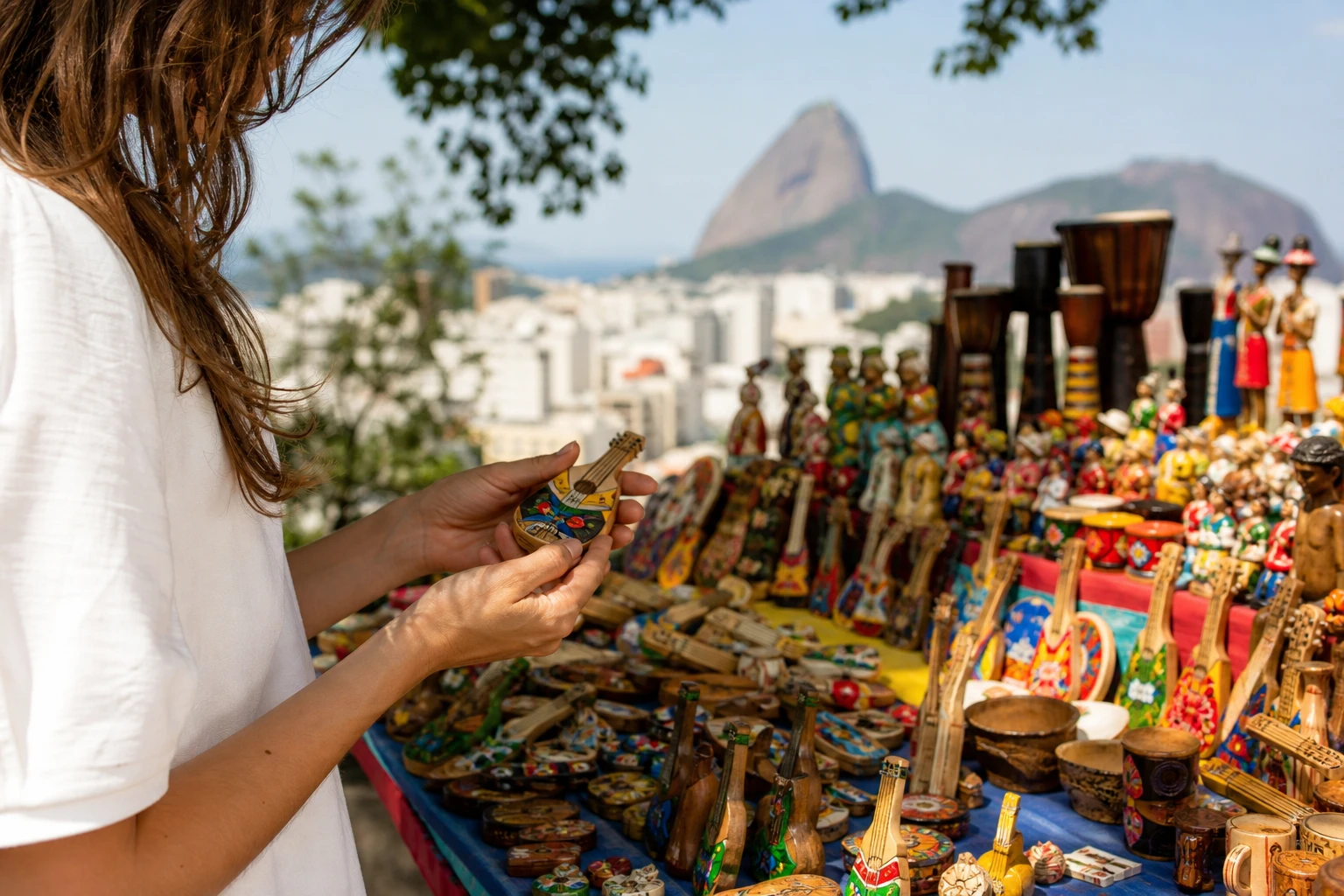
Souvenir shopping in Rio de Janeiro is most rewarding when the object carries a clear connection to the city or the wider state. Rio's tourism authorities describe handicrafts and souvenirs as products with historical and cultural value. That makes a locally connected piece more than a reminder of a holiday. It can also reflect a place, attraction, material, or creative tradition.
- Choose meaning before size. A small piece connected to your trip often has more value than a bulky generic gift.
- Ask who made the item, what it is made from, and how it relates to Rio.
- Compare similar objects before buying, especially when craftsmanship or origin matters.
- Check dimensions, weight, fragility, and destination customs rules before paying.
- Treat event schedules and venue hours as changeable, and confirm them before making a special journey.
A useful strategy is to set a simple shopping brief before leaving the hotel. Decide who the gift is for, how much luggage space it can occupy, and what part of Rio you want it to recall. This keeps a colorful display from turning into a suitcase full of impulse purchases that have little connection to the journey.

Cooking Class in Rio with 9 Recipes & Unlimited Caipirinhas
Wander into our Ipanema hideout and let the culinary capers begin. Whether you're a kitchen newbie or a seasoned foodie warrior, our class is the per...
What Makes a Souvenir Feel Connected to Rio
Rio's state tourism program recognizes both handicrafts and a dedicated souvenir line associated with attractions in the metropolitan region. A strong purchase therefore does not need to reproduce a famous landmark literally. Its connection can come through its maker, subject, material, technique, or the story attached to the place where you found it.
Look for an object you can explain in one or two sentences when you return home. Perhaps it recalls a particular attraction, uses a technique described by the seller, or was made by an identified artisan. If the only available explanation is that it came from a vacation destination, keep looking.
| Souvenir format | Best suited to | What to check |
|---|---|---|
| Small artwork or print | Flat packing and visible display | Artist identity, dimensions, protective sleeve |
| Textile item | Useful gifts and flexible packing | Material, stitching, care instructions |
| Jewelry or small accessory | Minimal luggage space | Maker, materials, clasp or fastening |
| Decorative craft | A lasting display piece | Fragile parts, weight, stable base |
| Functional object | Travelers who prefer useful keepsakes | Finish, durability, cleaning needs |
Where to Begin Looking Without Chasing a Single Famous Shop
Begin with places where the seller can discuss the object rather than merely process the payment. Artisan-focused events, cultural venues with retail areas, maker-led displays, and souvenir outlets associated with attractions can all fit this approach. The useful question is not simply where an item is sold. It is how clearly its origin and connection to Rio can be explained.
- Choose one neighborhood or attraction already included in your itinerary.
- Allow a defined shopping window instead of sacrificing an entire sightseeing day.
- Browse one complete display before buying anything.
- Ask concise questions about the maker, material, and origin.
- Compare two or three suitable items, then check how each will travel.
The state Program of Artesanato do Rio de Janeiro has an office at Rua Buenos Aires, 309, in Centro. Its listed public service schedule is Monday through Friday, 10:00 to 16:00. This is a program office, so use it as an institutional point of reference rather than assuming it is a retail store. Confirm its purpose and current schedule before making a dedicated trip.
Temporary craft events can add another option, but old announcements should not be treated as current calendars. Expo Artesão 2025, for example, included a free in-person craft fair with music and food at Praça Edson Cortes in Glória during March 2025. That edition has passed. Check current destination information for any new event before building it into an itinerary.
How to Assess a Handmade or Artisan-Made Item
A polished sales pitch does not establish that an object is handmade. Focus on specific, answerable details. A seller who knows the work should usually be able to identify the maker or workshop, describe the material, and explain the basic process without relying on vague claims about authenticity.

- Maker: Is an artisan, collective, or workshop identified?
- Material: Can the seller state what the object contains?
- Process: Is there a simple explanation of how it was produced?
- Origin: Is the claimed connection to Rio clear and specific?
- Finish: Are edges, seams, fastenings, and surfaces suitable for the intended use?
- Care: Will the object need protection from moisture, pressure, or heat?
Small variations can be normal in handmade work, but damage is different. Inspect for cracks, loose attachments, unstable bases, sharp unfinished edges, stains, or closures that do not work. If an imperfection is part of the design, the seller should be able to explain it. Buy the exact piece you inspected whenever possible.

3 Hour Rocinha Favela Walking Tour with a Local Guide
Visiting the Rocinha favela, one of Rio's hundreds of "favelas" (the Brazilian term for a slum or shantytown) and th...

Rio Maracana Stadium Football Match Ticket & Private Transport
***JOGA BONITO*** Step into the heart of Brazil’s passion with a once-in-a-lifetime experience: attending a live...

Private Rio Tour: Christ the Redeemer & Sugar Loaf Essentials
Enjoy a personalized visit to Rio de Janeiro’s essentials with a private guide and driver. The tour covers key hig...
Choosing Gifts That Will Survive the Journey Home
The most practical souvenir is one that fits both its recipient and the return journey. Measure uncertain pieces rather than judging them by eye. Consider the object inside its packaging, since a protective box can add surprising bulk. Travelers changing hotels or taking several flights should favor items that tolerate repeated handling.
| Travel concern | Safer approach |
|---|---|
| Limited cabin space | Choose flat, soft, or compact pieces |
| Checked baggage | Avoid unsupported fragile edges and loose parts |
| Multiple transfers | Use a rigid inner container inside the suitcase |
| Gift for a child | Check for sharp edges, detachable parts, and suitable materials |
| Home display | Confirm dimensions before buying |
| Uncertain customs rules | Check restrictions before purchasing food, plants, wood, or animal-derived material |
Ask for protective wrapping, but inspect how it is done. Paper can prevent scratches, while padding and a rigid container provide better protection against pressure. Photograph a fragile object before packing it and place it where the suitcase structure offers support. Keep delicate purchases away from shoes, bottles, and other hard objects that can shift in transit.
How to Compare Prices Without a Fixed Souvenir Budget
There is no useful single price range for Rio souvenirs because format, material, size, maker, and sales setting can differ sharply. Set a personal ceiling for each recipient, then judge the item against comparable work. The cheapest object is not automatically poor, and a high price does not by itself establish local origin or careful craftsmanship.
- Compare objects made from similar materials and of a similar size.
- Ask whether packaging is included before agreeing on the total.
- Confirm the accepted payment method before the transaction begins.
- Check the final amount on the payment screen or receipt.
- Keep proof of purchase for valuable or fragile items when one is provided.
If negotiation is possible, keep it polite and brief. Ask for the price, decide what the object is worth to you, and accept the answer without turning the exchange into a contest. Handmade work includes time as well as material. A respectful purchase should leave both traveler and seller comfortable with the result.
Packing, Airline Limits, and Customs Checks
Check transport rules before buying anything unusually large, sharp, liquid, perishable, or made with organic material. Airline baggage rules and destination customs requirements are separate concerns. An item that fits in a suitcase is not automatically permitted through security or across an international border.
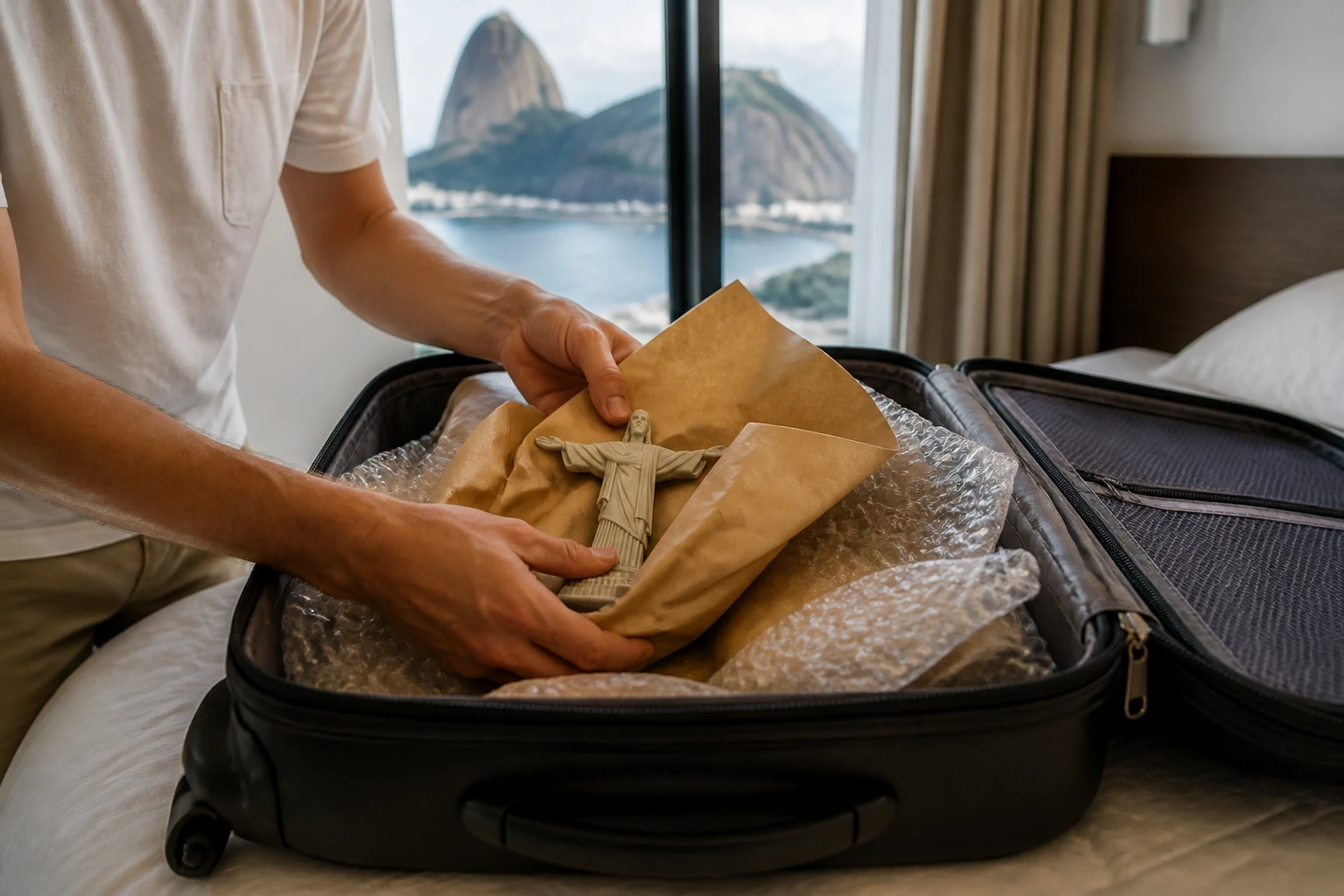
- Review airline size, weight, liquid, and sharp-object rules.
- Check the customs rules of the country where the trip ends.
- Ask the seller to identify uncertain materials clearly.
- Keep fragile or valuable pieces in cabin baggage when permitted.
- Leave enough luggage capacity for protective packaging.
Food, seeds, untreated plant material, wood, shells, and animal-derived components deserve particular attention because destination rules differ. Do not rely on a seller's general assurance that an object is easy to travel with. The traveler is responsible for meeting airline, security, and customs requirements on the actual route.
Building Souvenir Shopping Into a Rio Itinerary
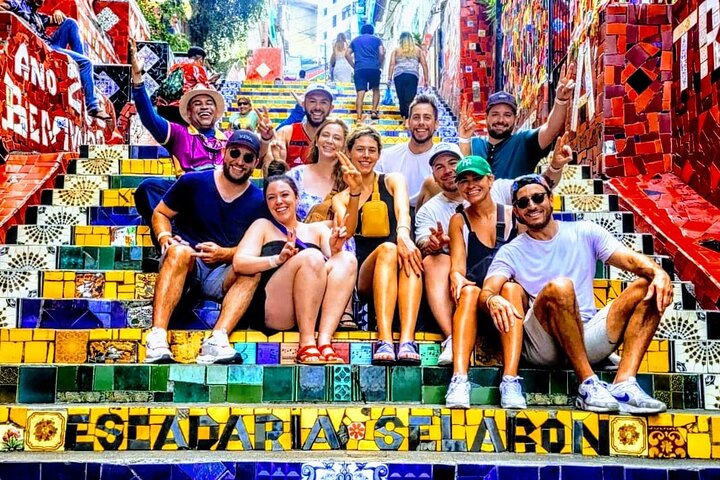
Shopping works best as part of an existing route. If Centro is already on the schedule, consult the Selarón Steps and Centro walk guide before placing a shopping stop into the day. This helps keep the route coherent and avoids an unnecessary cross-city journey for an item that could be found during planned sightseeing.
- Select the main attraction or neighborhood for the day.
- Identify one realistic period for browsing nearby.
- Save the exact venue name and location before leaving Wi-Fi.
- Buy fragile pieces near the end of the outing when possible.
- Return to the hotel before an evening activity if purchases are bulky or valuable.
Review the site's practical Rio safety tips before carrying purchases through unfamiliar or busy areas. Keep shopping bags manageable, avoid displaying large amounts of money, and pause inside a suitable venue if you need to reorganize a wallet or phone. A compact tote that closes securely is more discreet and easier to manage than several loose bags.
Still comparing Rio De Janeiro Souvenir Shopping?
Ask for tour ideas, hotel suggestions, or a simple trip plan that combines both.
Trip Helper
Planning an Accessible Shopping Stop
Accessible tourism is one of the experience segments featured by Rio de Janeiro's official tourism portal. Individual shopping locations still differ in entrances, floor surfaces, aisle widths, lifts, restrooms, seating, and nearby drop-off conditions. Confirm the features that matter before traveling to a particular venue.
- Ask whether the entrance is step-free.
- Check whether displays leave enough room to maneuver.
- Confirm lift access when retail space is on another floor.
- Ask about an accessible restroom if the visit will be lengthy.
- Check the nearest practical drop-off point or transit entrance.
- Request seating if standing for an extended period is difficult.
Temporary fairs deserve extra attention because layouts can change between editions. Ask about the surface, entrance route, weather cover, and accessible facilities for the specific event. A general statement about accessibility is less useful than a direct answer about the feature needed for the visit.
Questions That Reveal More Than the Sales Pitch
Good shopping conversations can be short. Rather than asking if an object is authentic, use questions that invite precise answers. Listen for names, places, materials, and processes. The goal is not to interrogate the seller. It is to understand what you are taking home.

- Who made this piece?
- Was it produced in Rio de Janeiro state?
- What materials were used?
- Is each piece made individually or produced as part of a larger line?
- Does the design refer to a particular place or attraction?
- How should it be cleaned, stored, or transported?
These questions match the cultural value that Rio's tourism authorities associate with handicrafts and souvenirs. They also make comparison easier. Two similar-looking objects can have very different stories, materials, and levels of workmanship. Choose the one whose explanation is clear and whose quality suits its intended use.
Common Souvenir Shopping Mistakes to Avoid
- Buying the first object seen without comparing workmanship or origin.
- Assuming every item near an attraction was made locally.
- Leaving fragile purchases until there is no time to pack them properly.
- Choosing a gift without considering the recipient's taste or available space.
- Treating an old event announcement as a current fair schedule.
- Buying restricted materials before checking customs rules.
- Making a long detour without confirming the venue's current schedule and purpose.
The biggest mistake is confusing urgency with rarity. Take a photograph of the display if the seller permits it, walk around, and return after comparing options. If the piece is genuinely one of a kind, decide whether losing it would matter more than buying too quickly. That is a personal choice, but it should be deliberate.
A Five-Minute Checklist Before You Pay
Pause before completing the purchase. A quick check can prevent disappointment at the hotel or airport, especially when the item is fragile, expensive, or difficult to replace.
- I understand who made the item or how it was produced.
- The material and claimed origin are clear enough for me.
- I inspected the exact piece for damage or weak parts.
- It fits my luggage with room for protective packaging.
- It complies with the relevant transport and customs rules.
- The final price and payment method are clear.
Private Custom Full-Day Highlights in Rio: Only the Best Sights!
Enjoy the most complete private day tour in Rio de Janeiro with flexible itineraries built just for you. Visit iconi...

Rio's Full Day: Selarón Steps, Christ & Sugarloaf – Tickets & Lunch Included
Discover the best of Rio de Janeiro in a full-day tour that combines convenience, comfort, and expert guidance. This...

Ginga Tropical - Brazilian Samba and Folklore Show
Make your evening unforgettable with the Ginga Tropical Show and an introductory samba class to set the mood. You’...
Bring Home a Story You Can Explain
The best Rio souvenir is not necessarily the brightest, largest, or most expensive object on the table. It is the piece that fits your luggage, suits its recipient, and carries a credible connection to the journey. A modest object with an identifiable maker or meaningful subject can preserve a stronger memory than a bag of generic gifts.
Plan shopping around sightseeing, ask a few precise questions, and leave time for careful packing. Current prices, event dates, and venue arrangements can change, so confirm those details only where they affect the day. Then choose with confidence and give the object enough room in the suitcase to reach home intact.
Frequently asked questions
What is the best souvenir to buy in Rio de Janeiro?
The best souvenir is a well-made object with a clear connection to your trip, such as an identifiable maker, local subject, attraction, material, or creative tradition. Rio's tourism authorities recognize the historical and cultural value carried by handicrafts and souvenir items.
How can I tell if a Rio souvenir is locally made?
Ask who made it, where it was produced, what materials were used, and how it connects to Rio. Specific answers are more useful than a broad claim that an item is authentic or local.
Is the state craft program office a souvenir shop?
No, travelers should not automatically treat it as a retail shop. The Program of Artesanato do Rio de Janeiro has an office at Rua Buenos Aires, 309, in Centro, with listed public service hours of Monday through Friday, 10:00 to 16:00. Confirm its purpose and current schedule before visiting.
How much do souvenirs cost in Rio de Janeiro?
Prices vary according to the item's material, size, maker, production method, and sales setting. Compare similar pieces, set a personal budget, and confirm the total before paying rather than relying on a single general price range.
Are Rio de Janeiro souvenir shops accessible?
Accessibility depends on the individual venue. Accessible tourism is featured by Rio's official tourism portal, but shoppers should confirm specific details such as step-free entry, lifts, aisle width, restrooms, and drop-off access.
Are there craft fairs in Rio de Janeiro?
Temporary craft fairs and events do take place, but dates and locations must be checked for the current year. Expo Artesão 2025 included an in-person craft fair in Glória, but that edition ended in March 2025 and should not be treated as a current event.
How should I pack a fragile souvenir?
Wrap it against scratches, add padding, place it in a rigid inner container, and keep it away from hard objects that can shift. Confirm airline and security rules before putting a valuable or unusual item in cabin baggage.
Cooking Class in Rio with 9 Recipes & Unlimited Caipirinhas
Wander into our Ipanema hideout and let the culinary capers begin. Whether you're a kitchen newbie or a seasoned foodie warrior, our class is the per...