
Rio Carnival becomes easier to plan once you stop treating it as a single event. The official program brings together the major Sapucaí parades, street blocos, megablocos, children’s samba schools, Intendente Magalhães competitions, Terreirão do Samba, and other activities. First-time visitors should choose one anchor experience, then build a flexible schedule around it.
- Choose between a formal Sapucaí parade, public street carnival, or a combination of both.
- For 2027, the main Grupo Especial parades are scheduled for February 7, 8, and 9.
- The Série Ouro parades are planned for February 5 and 6, before the headline nights.
- Check the current official street schedule because bloco routes and traffic operations change by year.
- Budget separately for formal parade admission, accommodation, transport, food, and flexible travel time.
- Keep your first plan simple: one major event per day is usually enough.
Choose the Carnival experience you actually want
The three clearest options are the formal samba-school parades at Sapucaí, the public street carnival, and the competitions at Intendente Magalhães. Each has a different rhythm. Sapucaí offers a structured program on fixed dates. Blocos place you inside moving street crowds. Intendente provides a less headline-driven look at Rio’s competitive samba scene.

Full Day in Rio: Christ, Sugarloaf, Selarón & Barbecue Lunch
Experience a full-day tour of Rio de Janeiro, visiting all the city’s must-see attractions in a single day! See the iconic Christ the Redeemer Stat...

Christ the Redeemer & Sugarloaf: Rio City Tour with Lunch
Discover Rio de Janeiro’s top attractions on a guided small-group tour. Visit Christ the Redeemer and Sugarloaf Mo...

Full Day in Rio: Christ by Train, Sugarloaf, Selarón & Barbecue
Discover the best of Rio de Janeiro in a single day! Begin with a scenic train ride up Corcovado Mountain to visit C...
| Format | Best suited to | Budget approach | Main planning challenge |
|---|---|---|---|
| Sapucaí parades | Travelers who want a formal samba-school event on a fixed night | Set aside a separate admission budget | Selecting the right date and following entry instructions |
| Street blocos | Visitors who prefer public, mobile celebrations | Lower-cost format, with spending mainly around the day | Crowds, changing routes, and road closures |
| Intendente Magalhães | Travelers interested in a more local, less headline-focused competition | Check the current event arrangements | Fitting its separate schedule into the wider Carnival plan |
A strong first trip often combines one formal parade with one carefully selected street event. This gives you two sides of Carnival without filling every waking hour. Leave space for meals, sleep, route changes, and the inevitable moment when a plan that looked easy on paper meets a city operating at festival scale.
Mark the confirmed 2027 parade dates first
The 2027 Sapucaí calendar begins with Série Ouro on Friday, February 5, and Saturday, February 6. Grupo Especial follows on Sunday, February 7, Monday, February 8, and Tuesday, February 9. The Desfile das Campeãs is scheduled for Saturday, February 13. Confirm the calendar again before purchasing nonrefundable travel because event information can change.
| Date in 2027 | Scheduled program |
|---|---|
| Friday, February 5 | Série Ouro parades |
| Saturday, February 6 | Série Ouro parades |
| Sunday, February 7 | Grupo Especial parades |
| Monday, February 8 | Grupo Especial parades |
| Tuesday, February 9 | Grupo Especial parades |
| Saturday, February 13 | Desfile das Campeãs |
Treat the street calendar as a separate layer of planning. Rio’s 2026 municipal plan anticipated 460 blocos and more than six million participants, alongside special traffic operations. Those figures are a useful measure of scale, but they are not a 2027 schedule. Use the latest official listings to confirm each bloco’s date, gathering area, route, and expected size.
The official Carnaval.Rio guide is the most useful starting point because it consolidates several branches of the celebration rather than focusing only on the best-known parade nights. Consult it again close to departure, especially if street events form a large part of your itinerary.
Allow enough time without exhausting yourself
Five to seven nights is a practical target for many first-time visitors. That window can accommodate a formal parade, a street event, and at least one slower day. A shorter trip can still work, but it demands stricter priorities. Longer stays make sense if you plan to attend Série Ouro, Grupo Especial, and the Champions Parade.

- Three nights: choose one anchor event and keep the remaining time flexible.
- Five nights: combine one parade night, one street event, and a recovery day.
- Seven nights: add a second formal event or more time for Rio beyond Carnival.
- Nine nights or longer: consider arriving for Série Ouro and staying through later events.
- Any trip length: avoid scheduling major sightseeing immediately after your latest Carnival night.
Your schedule should have empty spaces. Carnival crowds add friction to ordinary tasks, and late events can affect the following day even when everything runs smoothly. A free afternoon can absorb a changed route, a longer meal, or simple fatigue. That breathing room often makes the difference between feeling immersed and feeling trapped inside a checklist.
Use bonus days for the city rather than squeezing landmarks between major events. Best Things to Do in Rio de Janeiro for First-Time Visitors can help you select a small number of sights that fit around Carnival instead of competing with it.

Exploring Angra Dos Reis and Ilha Grande in One Day
Discover the magic of a tropical paradise by booking the Angra dos Reis and Ilha Grande tour. These stunning destina...

Food Tour Rio de Janeiro - The Best Typical Brazilian Dishes
Discover Brazil through its flavors, history, and rhythm on this immersive food tour in Rio de Janeiro. Explore the...

Two brothers (Dois Irmãos) Hike
Our tours are beyond the average tours within Rio. With Experience Rio you will feel like a local. Visit the lesser...
Plan your first Sapucaí parade night carefully
Sapucaí is the logical anchor for visitors who want to see Rio’s formal samba-school program. In 2027, Série Ouro occupies the first two scheduled nights, followed by three Grupo Especial nights. Choose the event before booking the rest of the evening, since the selected date determines the central commitment in your itinerary.
Before paying, compare the event date, admission category, included services, delivery method, cancellation terms, and stated entry instructions. Exact prices vary, so build your budget with a margin rather than relying on an old figure. Keep the booking confirmation available and follow the arrival information attached to your purchase.
Do not plan a tight connection after the parade. Give yourself room for crowd movement and altered traffic conditions. If traveling with friends, agree in advance on a meeting point outside the busiest flow. Phones are useful, but a simple reunion plan remains valuable when a large crowd moves in several directions.
First-timers do not need to attend every formal night. Pick the date that fits your trip, arrive with the required information, and let that event carry the evening. A second parade can be rewarding for dedicated samba followers, but it also increases the need for recovery time and a larger admission budget.
Approach street blocos with a route and an exit plan
Street Carnival is the public-access, lower-cost side of the celebration, but it still requires planning. The scale can be immense. Rio’s 2026 operation anticipated hundreds of blocos, millions of participants, and special traffic measures. For 2027, select events only after checking the current official schedule rather than relying on an old social post or previous route.
The official guide distinguishes between blocos and megablocos, which is a useful reminder that street events do not all feel alike. Choose according to your tolerance for density, travel time, and standing. A famous event is not automatically the best first event. A manageable plan often produces a better day than chasing several names across the city.
- Choose one priority bloco instead of trying to cross the city between several events.
- Save the latest gathering point and route before leaving your accommodation.
- Allow extra time because traffic operations and road closures can disrupt direct journeys.
- Set a specific meeting place in case your group becomes separated.
- Leave early if crowd density becomes uncomfortable.
- Carry only what you are prepared to manage for several hours.
Keep the rest of the day adaptable. A street event can be the main activity rather than an item before lunch. Decide in advance what would make you leave, such as fatigue, separation from your group, worsening weather, or discomfort with the crowd. That decision is easier to follow when it is made before the music and movement take over.
Consider Intendente Magalhães for a more local competition
Intendente Magalhães is known as the city’s Passarela Popular do Samba. It hosts competitions involving samba-school groups and blocos outside the headline Grupo Especial program. For visitors who want a less internationally prominent part of Carnival, it offers a different perspective on the city’s competitive parade culture.
This option suits travelers who are curious about the broader structure of Rio Carnival rather than focused only on Sapucaí. It can also work as an additional event on a longer stay. Check the current schedule and access arrangements before committing, since its program is separate from the main Sapucaí calendar.
Do not treat Intendente as a substitute chosen only because another plan failed. Select it deliberately for its community-focused atmosphere and place within Rio’s wider samba competition. That mindset helps first-time visitors appreciate the event on its own terms rather than measuring every moment against the most televised parade nights.
Choose accommodation for flexible journeys
During Carnival, a useful base is one that supports several possible routes rather than a single perfect journey. Compare accommodation by its access options, cancellation terms, building entry procedures, and the places where you expect to spend most of your time. A beautiful room loses some charm if every outing depends on an inflexible door-to-door plan.
Special traffic operations and road closures can change how vehicles move around street events. Leave more time than an ordinary city itinerary would require, and check the current route before each departure. If a driver cannot reach the exact pin you selected, follow safe local instructions and use a clearly agreed pickup point.
Many first-time visitors consider the beach districts when selecting a base. Ipanema or Copacabana: Which Beach Should You Base Yourself On compares those two popular choices and can help you weigh atmosphere and trip priorities before booking.
- Prioritize access and flexible booking conditions over a perfect view.
- Check how building access works if you expect to return late.
- Keep the accommodation address saved separately from your phone’s live map.
- Ask your lodging provider about temporary access changes near major events.
- Avoid basing every journey on one transport method.
- Leave enough time to change plans without missing a fixed-entry event.

Private Tour - 5 Hours Customized Tour With a Local Guide in Rio
Rio de Janeiro is full of attractions such as mountains, beaches and the Tijuca National Park a Urban Forest Located...

Private Rio Tour: Christ the Redeemer & Sugar Loaf Essentials
Enjoy a personalized visit to Rio de Janeiro’s essentials with a private guide and driver. The tour covers key hig...

Rio's Cookin' Good: 9-Dish & Caipis Fiesta + Optional Market Tour
Wander into our Ipanema hideout and let the culinary capers begin. Whether you're a kitchen newbie or a seasoned fo...
Build a Carnival budget by category
Separate your budget into formal events and public street activities. The street side is the lower-cost, public-access format, while Sapucaí and other formal venues require their own planning allowance. Exact 2027 admission prices depend on the event and selected option, so use current information when making a purchase.
| Budget category | What to allow for |
|---|---|
| Formal events | Admission, selected extras, and travel to and from the event |
| Street Carnival | Food, drinks, local transport, and small personal purchases |
| Accommodation | Festival-period rates, taxes, and cancellation terms |
| Transport | Routine journeys plus backup options when roads are disrupted |
| Food | Regular meals and convenient snacks around long outings |
| Contingency | Changed routes, replacement items, or a revised plan |
Do not make street Carnival “free” in your spreadsheet. Public access does not remove the cost of accommodation, meals, transport, or supplies. Likewise, do not estimate a formal parade using only the admission amount. The full evening can involve additional travel and food expenses.
Book the nonnegotiable parts first, then preserve some flexibility. For many travelers, that means securing suitable accommodation and the chosen formal event before filling the calendar. Review cancellation conditions carefully because a bargain with rigid terms can become expensive when plans shift.
Use simple safety and accessibility checks
Crowds and altered traffic patterns are the main practical complications to design around. Carry only essential items, keep your phone and payment method secure, and avoid standing at the edge of moving vehicle routes. Groups should agree on a meeting place and a time to reassess the plan. If the crowd stops feeling manageable, move away without waiting for everyone else to make the same decision.
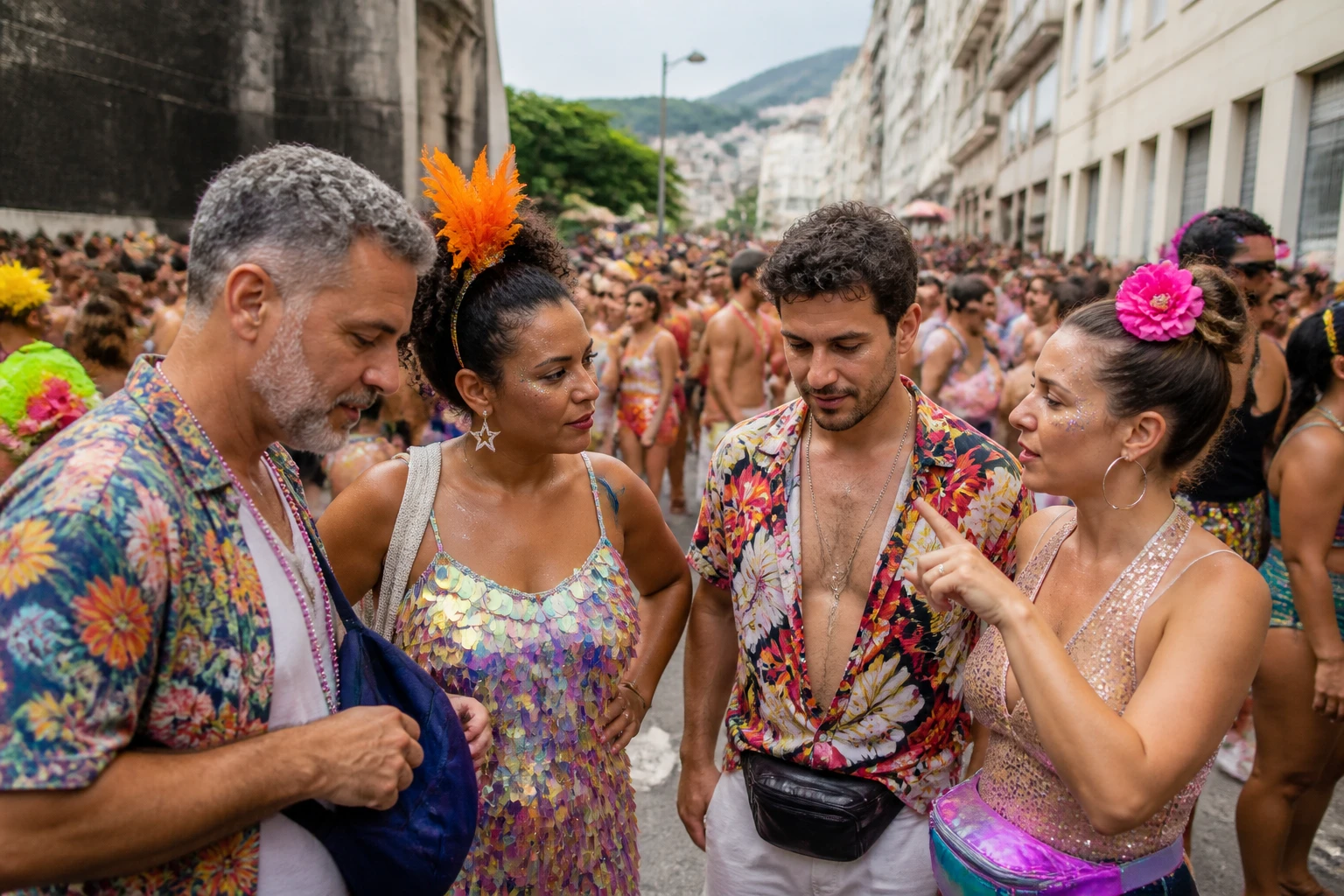
Rio Safety Tips: Practical, Current Advice Without the Scare Stories provides a broader framework for moving around the city. For Carnival itself, the best strategy is low-friction preparation: fewer valuables, a charged phone, an offline copy of key details, and a clear route back to your accommodation.
Official Carnival messaging emphasizes inclusion and respect, but practical accessibility arrangements depend on the venue and event. Travelers who need step-free access, accessible seating, adapted toilets, companion arrangements, or entry assistance should confirm those details on the current venue or operator page before booking.
Crowd tolerance is also an access consideration. A public event can still be difficult for someone affected by prolonged standing, noise, heat, or dense movement. Choose a smaller commitment, identify an exit route, and schedule recovery time. Those adjustments can preserve the experience without forcing anyone to endure conditions that have stopped being enjoyable.
Pack for movement, crowds, and changing plans
The best Carnival bag is small enough to remain under your control. Pack for the specific event rather than carrying supplies for every possible situation. Check venue rules before bringing bottles, larger bags, costume accessories, or other items that could be restricted at a formal entrance.
- A charged phone and compact power bank
- A secure payment method with a separate backup
- Identification required for your bookings
- Sun or rain protection suited to the day’s forecast
- Comfortable clothing and footwear for prolonged movement
- Medication and essential personal supplies
- A copy of event details and your accommodation address
Avoid loose accessories that demand constant attention. If you wear a costume, test it before the event and make sure you can walk, sit, use facilities, and manage your belongings comfortably. Carnival style should support the day rather than turn every doorway and crowded patch into an obstacle course.
Respect the rhythm of the city and your own limits
Carnival invites participation, but a sustainable pace matters. Eat proper meals, schedule pauses, and resist the urge to fill every evening. A first trip is more memorable when each major event has room to register. Fatigue can make simple navigation harder and reduce your patience with crowds.
For an evening outside the formal Carnival program, Samba Nights in Lapa: A Local-Style Guide to Rio After Dark introduces the district’s samba nightlife. Treat that as an alternative for a free night rather than another obligation squeezed between long parade sessions.
Rio’s official Carnival materials frame the celebration around diversity, inclusion, and respect. Follow organizer instructions, give performers and workers space, and ask before taking close photographs of strangers. Avoid blocking exits or arguing with people managing crowd flow. Small acts of consideration make shared public celebrations work better.
A balanced first-timer itinerary for Carnival 2027
The following outline is a planning model rather than an official itinerary. It uses the scheduled 2027 parade dates while leaving enough space for the street program once that calendar is finalized. Adjust it to your arrival day, selected admission, energy, and wider Rio plans.
- Friday, February 5: attend Série Ouro or use the evening to settle into Rio.
- Saturday, February 6: choose the second Série Ouro night or keep the day flexible.
- Sunday, February 7: attend the selected Grupo Especial parade if this is your anchor night.
- Monday, February 8: schedule a slower day, or choose this Grupo Especial night instead.
- Tuesday, February 9: use the third Grupo Especial date if it best fits your trip.
- Midweek: add one official street event and leave room for sightseeing or recovery.
- Saturday, February 13: consider the Desfile das Campeãs if your stay extends through the weekend.
There is no prize for completing every line. Select one Grupo Especial date rather than assuming all three are necessary. If Série Ouro matters more to you, make that the anchor. If street Carnival is your priority, preserve daytime flexibility until the confirmed bloco schedule is available.
Avoid the planning mistakes that create unnecessary stress
- Treating every branch of Carnival as interchangeable instead of choosing a preferred format.
- Using an old bloco schedule without checking the current date, gathering point, and route.
- Booking a formal event before reading what the selected admission includes.
- Planning fixed car journeys through areas affected by special traffic operations.
- Scheduling major events on consecutive days without recovery time.
- Carrying too many valuables or loose belongings into a dense crowd.
- Failing to agree on a meeting point when attending with other people.
- Leaving accessibility questions until after purchasing a nonrefundable booking.
Most first-timer problems begin with an itinerary that is too rigid. Fixed parade dates require commitment, while street events demand adaptability. Build around that difference. Confirm the formal night, monitor the public schedule, and let the remaining hours breathe.
Make one event the heart of your first Carnival
Rio Carnival suits travelers who enjoy music, public celebration, and the energy of large shared events. Its main challenge is scale. Crowds, route changes, and several overlapping programs can overwhelm an overpacked itinerary. Choose one anchor experience, add one contrasting event, and protect time for rest.
For 2027, begin with the confirmed Sapucaí dates, then add street plans after the current official calendar is published. Book only after checking the event details, keep your budget divided by format, and carry a simple exit plan. That is enough structure to enter the celebration with confidence while leaving space for Rio’s spontaneity.
Frequently asked questions
When is Rio Carnival 2027?
The scheduled Sapucaí program runs from February 5 through February 13, 2027. Série Ouro is planned for February 5 and 6, Grupo Especial for February 7, 8, and 9, and the Desfile das Campeãs for February 13. Confirm the dates again before purchasing nonrefundable travel.
Which Rio Carnival event is best for a first-time visitor?
One Grupo Especial parade or Série Ouro night makes a strong anchor for a first visit. Add one official street event if you want to experience both the formal and public sides of Carnival without overloading the itinerary.
Is street Carnival in Rio free?
Street Carnival is the lower-cost, public-access side of the celebration. Visitors should still budget for accommodation, food, transport, and personal purchases, and should check the current official listing for each event’s arrangements.
How crowded is Rio Carnival?
Crowds can be extremely large, especially around major street events. Rio’s 2026 municipal plan anticipated 460 blocos and more than six million participants, so first-timers should expect road closures, altered traffic, and dense gathering areas.
What is the difference between Sapucaí and street blocos?
Sapucaí hosts formal samba-school parades on fixed dates, while blocos are public street events listed within the wider Carnival program. Sapucaí requires a separate event budget, while the street side is generally the lower-cost format.
Is Intendente Magalhães worth considering?
Yes, especially if you want a less headline-focused view of Rio’s competitive samba culture. Known as the Passarela Popular do Samba, Intendente hosts samba-school and bloco competitions outside the main Grupo Especial program.
How many days should a first-time visitor spend at Rio Carnival?
Five to seven nights is a practical starting point. That allows time for a formal parade, a street event, recovery, and a small amount of sightseeing without requiring a major activity every day.
How should travelers check Carnival accessibility?
Confirm accessibility directly through the current venue or event information before booking. Ask about step-free routes, accessible seating, adapted toilets, companion arrangements, and entry assistance because practical provisions vary by event.
Full Day in Rio: Christ, Sugarloaf, Selarón & Barbecue Lunch
Experience a full-day tour of Rio de Janeiro, visiting all the city’s must-see attractions in a single day! See the iconic Christ the Redeemer Stat...
Christ the Redeemer & Sugarloaf: Rio City Tour with Lunch
Discover Rio de Janeiro’s top attractions on a guided small-group tour. Visit Christ the Redeemer and Sugarloaf Mo...
Full Day in Rio: Christ by Train, Sugarloaf, Selarón & Barbecue
Discover the best of Rio de Janeiro in a single day! Begin with a scenic train ride up Corcovado Mountain to visit C...
Still comparing Rio Carnival Planning?
Ask for tour ideas, hotel suggestions, or a simple trip plan that combines both.

