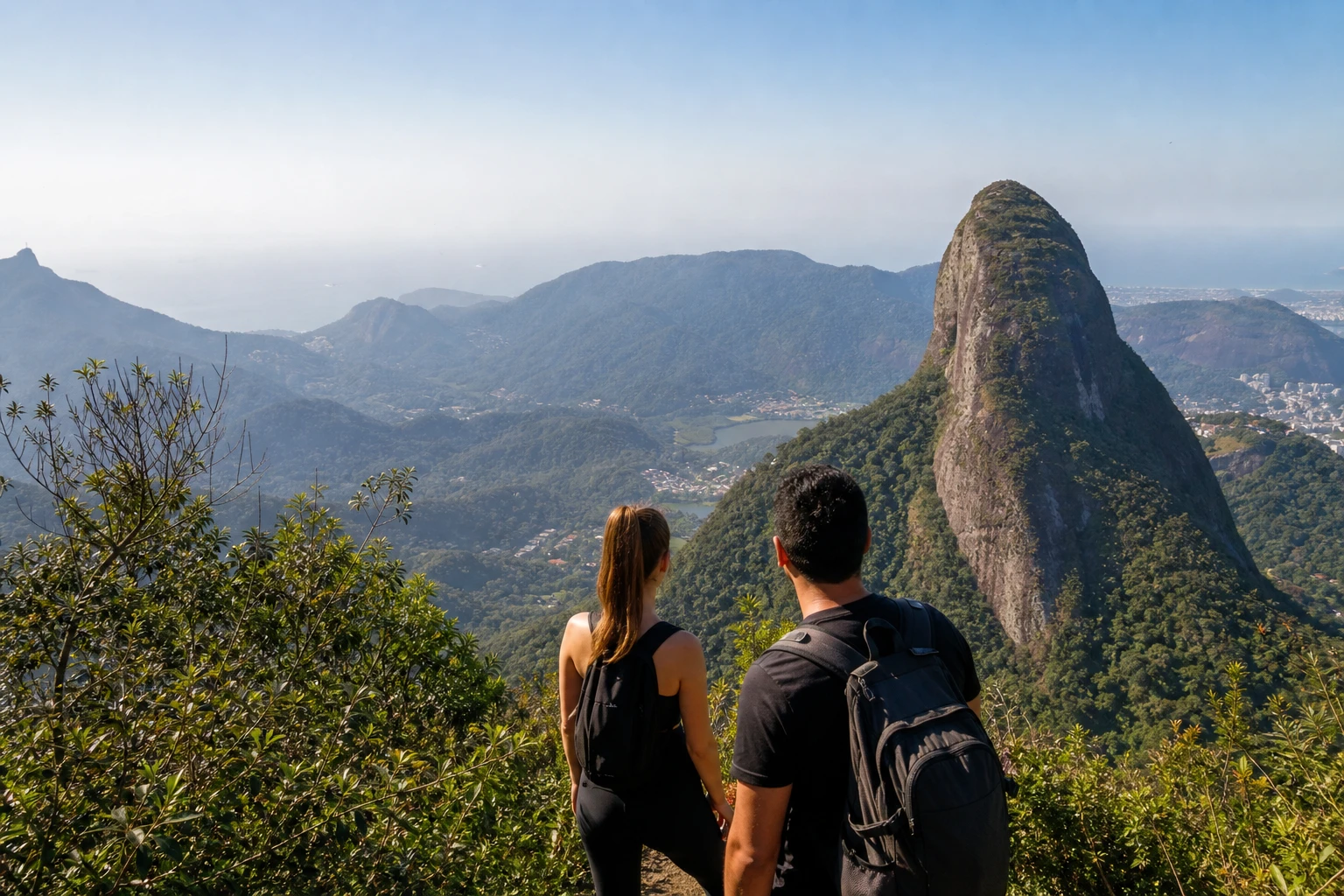
Pedra Bonita offers a compelling blend of protected forest, mountain scenery, and Rio’s free-flight culture. The mountain sits in the Pedra da Gávea and Pedra Bonita sector of Tijuca National Park, where visitors can combine a summit walk with views of free-flight takeoffs. Careful planning matters because access arrangements, route conditions, and visibility can shape the experience.
- Pedra Bonita is part of Tijuca National Park’s Pedra da Gávea and Pedra Bonita sector.
- Check current park access information before leaving because exact route, transport, and parking details can change.
- Choose a day with a favorable forecast if the summit scenery is your priority.
- Most park trails and viewpoints are generally free, but free-flight practice is a stated exception.
- For higher-complexity plans, choose a credentialed guide or environmental conductor with active Cadastur registration.
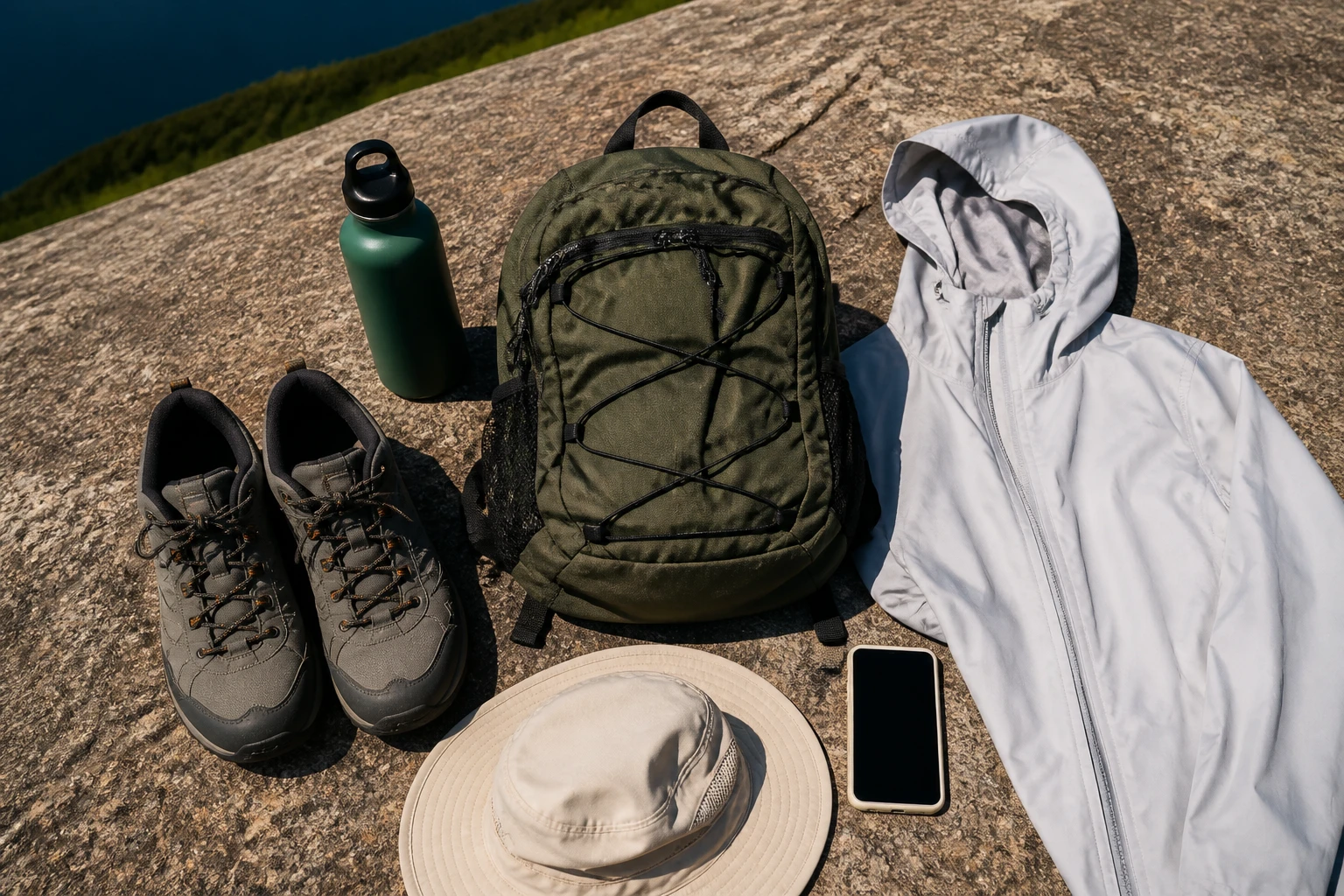
- Carry water, secure footwear, sun and rain protection, and an offline copy of your route details.
This hike best suits travelers who want an outdoor viewpoint rather than a drive-up attraction. It also rewards flexible planning. A cloud bank can hide the landscape, while heavy rain or thunder can turn a scenic outing into a poor decision. Keep an alternative activity ready and avoid building an inflexible day around the summit.

Hang Gliding or Paragliding Package experience in Rio
You will have one of the best experience of your life, flying with the most experienced Pilots. What i can tell you is after we take off from Pedra Bo...
Is the Pedra Bonita hike right for you?
Pedra Bonita is a strong choice when you want a hike, a national park setting, and a landscape payoff in the same outing. Watching free-flight takeoffs can add another dimension, even if you have no intention of taking part. The activity brings movement and color to a setting already shaped by forest and mountain terrain.
Do not rely on a casual “easy” label when deciding if the walk fits your group. Difficulty depends on the current route, surface conditions, pace, weather, and each person’s mobility. Check current distance, elevation, and estimated walking time before committing, especially when hiking with children, older relatives, or anyone returning to exercise.
The outing is less suitable on a day when visibility is poor or your schedule leaves no room for delays. It is also a weak choice for anyone who needs a confirmed step-free route without first arranging appropriate support. In those cases, choose an attraction with clearer transport and accessibility arrangements.
Pedra Bonita hike facts at a glance
| Planning point | What to know |
|---|---|
| Setting | Pedra Bonita is in Tijuca National Park’s Pedra da Gávea and Pedra Bonita sector. |
| Main appeal | A mountain walk, broad landscape reward, and the chance to watch free-flight takeoffs. |
| Trail cost | Official park guidance says nearly all accesses, viewpoints, waterfalls, and trails are free. Cristo Redentor access and free-flight practice are cited exceptions. |
| Route statistics | Confirm current distance, elevation gain, duration, and trail conditions before departure. |
| Guide advice | For higher-complexity activities, the park recommends credentialed professionals with active Cadastur registration. |
| Accessibility | The park has hosted guided walks for people with disabilities, but Pedra Bonita arrangements require specific confirmation. |
Treat the table as a planning framework rather than a substitute for current park instructions. Access rules, closures, and operational arrangements can change. Review current information on the day before your hike, then check the forecast again before leaving your accommodation.
How to plan the approach and trail access
Begin by confirming the entrance and route you intend to use. Search for current park guidance rather than navigating only to the mountain’s name. A generic map pin can identify the landmark without clarifying where visitors may legally enter, where a driver can stop, or how the return journey should work.

Build the morning or afternoon backward. First establish the permitted access period and expected round-trip walking time. Next arrange transport in both directions. Finally, add a buffer for traffic, route finding, rest stops, and time at the viewpoint. This prevents a scenic pause from becoming a rushed descent.
If you use a taxi, app-based ride, transfer, or tour, save the exact meeting point and return instructions offline. Confirm that everyone in the group understands where the vehicle will collect you. Avoid assuming that outbound transportation automatically solves the return trip.
Drivers need a precise, lawful access point rather than a broad request for “Pedra Bonita.” If you are driving, check current parking arrangements before departure and prepare an alternative if spaces or access are restricted. Do not leave valuables visible in a parked vehicle. The site’s guide to Rio safety tips offers broader advice for moving around the city and protecting personal belongings.

Rio de Janeiro Hang Gliding Experience
The original hang gliding experience over Rio de Janeiro, Brazil. Operated by, WXC World Champion, National Champion...

4x4 Tijuca National Park Rio de janeiro
Hike through the Tijuca National Park on this 4-hour tour. Stop at a refreshing natural lagoon for a brief swim befo...

Rio Carnival Parade from a Prime Box – With Shuttle, Tour Guide, Food & Drink
Experience the Rio Carnival from a prime spot at the Sambadrome, guided by an expert dedicated to ensuring your safe...
Choose the day for visibility, not a rigid itinerary
The best day for Pedra Bonita is one with a forecast that favors stable conditions and useful visibility. A famous viewpoint loses much of its appeal when cloud covers the landscape. Check conditions shortly before departure rather than trusting a forecast saved several days earlier.
Rain does not merely affect the view. Wet leaves, mud, smooth roots, and rock can reduce traction on mountain paths. Postpone the hike during heavy rain, thunder, or any official closure. If conditions deteriorate after you begin, turning around is a sound travel decision, not a failed adventure.
Sunrise and late-day plans need extra care. Never assume that a park entrance or trail is available before dawn or after normal visitor access. Confirm current rules first. If an early or late hike is permitted, carry a proper light and allow enough daylight for the return.
Hang Gliding or Paragliding Package experience in Rio
You will have one of the best experience of your life, flying with the most experienced Pilots. What i can tell you is after we take off from Pedra Bo...
A flexible clear-weather morning is usually more valuable than a fixed summit appointment on the wrong day.
What to expect from the experience
The defining experience is the transition between a national park walk and a mountain landscape. Pedra Bonita belongs to the same park sector as Pedra da Gávea, but the two names should not be treated as interchangeable route descriptions. Follow the signs and current instructions for the specific Pedra Bonita route you selected.
Near the free-flight area, takeoffs can become part of the spectacle. Give participants and staff ample room, remain outside operational spaces, and follow instructions on site. Watching the activity is different from booking or participating in free flight, which should be treated as a separate activity with its own arrangements and costs.
On the trail, move at the pace of the slowest member of your group. Stop in a safe place when taking photographs or adjusting equipment. Shortcutting bends damages vegetation and can place hikers on steeper, less stable ground. A good summit visit leaves enough energy and daylight for the full return.
For a wider look at forest walking beyond this single mountain, the guide to hiking Tijuca through three contrasting trails can help you compare other outdoor plans. It is especially useful if cloud or access conditions make Pedra Bonita a poor choice on your preferred day.
How to judge difficulty without guessing
Judge the route using current statistics, not one adjective. Distance and elevation are only the beginning. Surface condition, recent rainfall, heat, footwear, rest breaks, and your group’s experience all affect how demanding a hike feels. Someone comfortable on stairs can still struggle on an uneven or slippery path.

- Confirm the current route, distance, elevation gain, and estimated return time.
- Review the forecast and recent trail or closure notices.
- Assess the least experienced person in your group.
- Set a turnaround time before starting.
- Choose a credentialed guide if the plan exceeds your skills or involves higher complexity.
The park recommends credentialed guides or environmental conductors for higher-complexity activities. Check that the professional or operator has active Cadastur registration. A guide can be especially useful when your group is unfamiliar with local park access, wants help interpreting conditions, or plans an activity beyond a straightforward daytime walk.
Hiring a guide does not remove personal responsibility. Wear suitable footwear, disclose relevant mobility or health concerns, and follow the agreed route. Before booking, confirm the meeting place, expected duration, included transportation, cancellation terms, and what happens if weather prevents the hike.
What to pack for Pedra Bonita
Pack for a mountain walk while keeping your load manageable. The goal is to cover hydration, traction, changing conditions, navigation, and minor delays. Expensive equipment is less important than carrying the basics and knowing how to use them.
- Water in a reusable bottle, with the amount matched to your route and conditions
- Closed shoes with reliable grip
- Lightweight sun and rain protection
- A charged phone with access details saved offline
- A small snack and a bag for carrying all waste out
- Any personal medication you could need during the outing
- A compact light if your legally permitted schedule approaches low light
Avoid carrying loose items near the viewpoint or free-flight activity. Secure hats, wrappers, and light accessories before wind can take them. Keep food packed away when you are not eating, and do not feed wildlife. Take every bottle, peel, tissue, and snack wrapper back with you.

Rio Shore Excursion: Christ Redeemer, Sugarloaf and Selarón Steps 6-Hour Tour
Be worry free and still get to see three of Rio’s best landmarks on this Half-day shore excursion packed with brea...

Dona Marta's sunrise, undisturbed Christ the Redeemer and more
Enjoy a local experience exploring Rio de Janeiro's most beautiful tourist attractions in a dynamic and flexible way...

Private Rio Tour: Christ the Redeemer & Sugar Loaf Essentials
Enjoy a personalized visit to Rio de Janeiro’s essentials with a private guide and driver. The tour covers key hig...
Safety habits that improve the hike
Share your plan with someone who is not joining the hike. Include the intended route, companions, transport arrangement, and expected return. Keep the group together, particularly at junctions. If someone needs to stop, wait where the path remains clear for other visitors.
Respect every closure, barrier, warning, and staff instruction. Do not enter simply because another visitor ignores a restriction. Conditions can differ beyond a closed point, and an online trip report cannot override current management decisions.
Set a turnaround time based on the slowest realistic pace. Fatigue, fading light, wet terrain, or worsening weather are all reasons to descend. Keep enough water and concentration for the return. Most hiking mishaps are not improved by squeezing in one more photograph.
Use normal urban precautions before and after the trail as well. Keep phones and cameras controlled when arranging transport, avoid displaying unnecessary valuables, and pay attention to the confirmed pickup point. Pedra Bonita is an outdoor excursion, but the journey still forms part of a day in a large city.
Trail costs and free-flight expenses are separate
Official guidance for Tijuca National Park says nearly all park accesses, viewpoints, waterfalls, and trails are free. The stated exceptions include Cristo Redentor access and free-flight practice. This distinction matters at Pedra Bonita because watching takeoffs can be part of the hike, while participating in free flight is a separate activity.
Even without a general trail charge, the outing can involve transportation, food, a guided service, or free-flight costs. Prices depend on the service, date, and group size. Review exactly what a tour or activity includes before booking, particularly transfers, meeting points, equipment, and weather cancellation terms.
Do not confuse payment for a tour, transfer, or flight with a mandatory hiking admission fee. Ask for an itemized description if a package combines several services. This makes it easier to compare a guided outing with independent transportation and a self-planned walk.
Accessibility requires route-specific planning
Tijuca National Park has hosted guided walks for people with disabilities through a state-government project. That broader program does not establish that every Pedra Bonita route or departure is accessible. Travelers who need mobility, sensory, or communication support should confirm arrangements for this specific hike before setting out.
Useful questions include the surface type, gradient, steps, rest opportunities, accessible transportation, toilet access, and the kind of assistance available. Describe your needs clearly rather than asking only if the hike is “accessible.” That single word can mean very different things to different people.
A guided accessible activity elsewhere in the park can be a better choice when Pedra Bonita’s current conditions do not fit. Select the experience according to the traveler’s needs, not solely according to the viewpoint on an itinerary.
Build a flexible Rio viewpoint itinerary
Keep Pedra Bonita on the clearest suitable day in your schedule. Place indoor attractions, meals, and flexible neighborhood walks on days with a weaker mountain forecast. This simple approach gives the viewpoint a better chance without forcing you to reorganize the entire trip at the last minute.
Avoid stacking several fixed reservations immediately after the hike. Transport delays, extra viewpoint time, or a slower group can consume the buffer. A relaxed meal or an unreserved evening is easier to manage than a timed attraction across the city.
For a viewpoint that relies less on hiking, the Sugarloaf Cable Car guide explains how that landmark’s ride and viewing experience work. The two outings need not compete. Pedra Bonita provides a national park walk and free-flight atmosphere, while Sugarloaf offers a different way to reach an elevated city panorama.
First-time visitors can also place the hike within the broader list of the best things to do in Rio de Janeiro. That helps balance outdoor plans with beaches, cultural stops, and attractions that remain useful when mountain visibility is poor.
A simple Pedra Bonita planning checklist
- Check current park access, route status, and permitted visiting periods.
- Confirm distance, elevation, estimated time, and suitability for every group member.
- Review the latest weather forecast and prepare a backup plan.
- Arrange outbound and return transportation using a precise meeting point.
- Pack water, secure footwear, weather protection, and offline access details.
- Use a credentialed professional with active Cadastur registration for higher-complexity plans.
- Leave enough daylight and energy for the return.
Complete these steps before the morning of the hike whenever possible. On departure day, the remaining decisions should be simple: check the weather, confirm that the route remains open, secure your essentials, and decide honestly if conditions still support the plan.
Why Pedra Bonita earns a place in a Rio itinerary
Pedra Bonita suits travelers who want Rio’s mountain landscape to feel like part of the journey rather than scenery seen through a window. Its Tijuca National Park setting and connection to free-flight takeoffs give the outing a distinctive identity. The main limitation is uncertainty around changeable access, weather, and route conditions.
Treat the hike as a flexible outdoor plan. Confirm current details, choose a clear and stable day, and match the route to your group’s real ability. With those decisions made carefully, Pedra Bonita can provide a rewarding pause above the pace of Rio without turning the day into a logistical scramble.
Frequently asked questions
How long does the Pedra Bonita hike take?
The total time depends on the current access route, your pace, conditions, and how long you remain at the viewpoint. Confirm the latest route distance, elevation gain, and estimated return time before fixing transportation or later reservations.
Is the Pedra Bonita hike difficult?
There is no single difficulty label that suits every visitor. Assess the current distance, elevation, trail surface, weather, and the least experienced person in your group rather than relying on a casual description of the hike as easy.
Is the Pedra Bonita trail free?
Official Tijuca National Park guidance says nearly all park accesses, viewpoints, waterfalls, and trails are free. Free-flight practice is one of the stated exceptions, so participating in that activity should be budgeted separately.
Do I need a guide for Pedra Bonita?
A guide is not presented as a universal requirement for every park walk, but the park recommends credentialed guides or environmental conductors for higher-complexity activities. Check that the selected professional has active Cadastur registration.
Can visitors watch free-flight takeoffs at Pedra Bonita?
Yes. Official tourism information identifies the Pedra Bonita sector as a place where visitors can watch free-flight takeoffs. Stay outside operational areas and follow instructions from staff on site.
What is the best time to hike Pedra Bonita?
Choose a permitted period with favorable visibility and stable weather. Check the current forecast shortly before departure, and avoid the hike during heavy rain, thunder, closures, or conditions that make the route unsafe.
Can I hike Pedra Bonita at sunrise?
Only plan a sunrise hike if current park access rules permit entry at that time. Do not assume that gates or trails are available before dawn, and carry a proper light if an early start is allowed.
Is Pedra Bonita accessible to people with disabilities?
Pedra Bonita-specific accessibility should be confirmed before visiting. Tijuca National Park has hosted guided walks for people with disabilities, but that does not guarantee that this particular route or every departure meets an individual traveler’s needs.
What should I bring for the Pedra Bonita hike?
Bring water, closed shoes with good grip, sun and rain protection, a charged phone, offline access details, a snack, personal medication, and a bag for your waste. Add a compact light only when your permitted schedule could involve low light.
How do I get to the Pedra Bonita trail?
Confirm the current legal entrance and precise meeting point before departure. Transport and parking arrangements can change, so save the correct access details offline and arrange the return journey as carefully as the outbound trip.
Still comparing Pedra Bonita Hike?
Ask for tour ideas, hotel suggestions, or a simple trip plan that combines both.