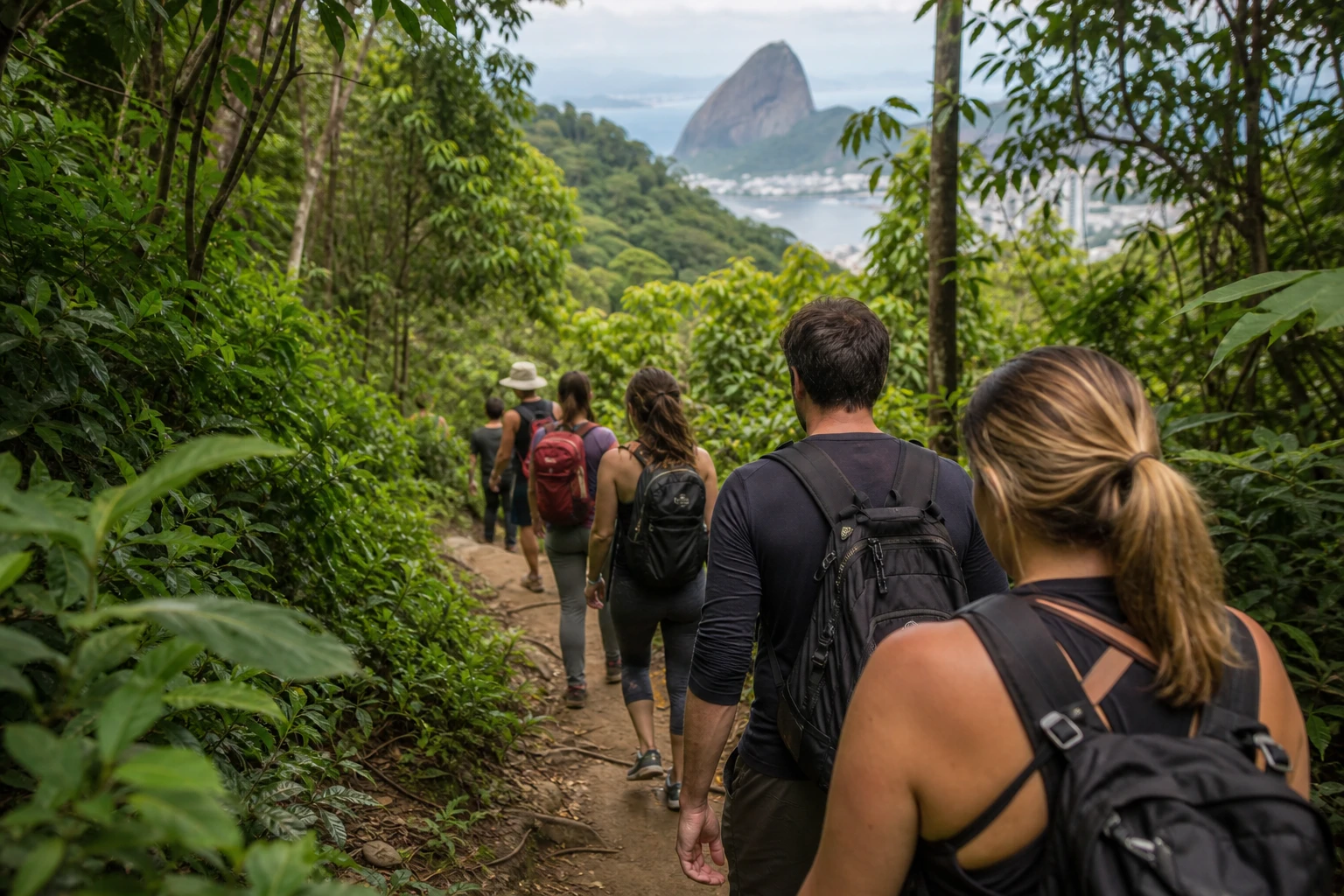
Rio’s adventure appeal is most convincing where the city meets protected nature. Parque Nacional da Tijuca is the strongest starting point for planning a guided outdoor experience, especially if you want forest scenery, hiking, viewpoints, and a structured route rather than an unverified thrill package. The best tour is not automatically the hardest one. It is the outing that matches your fitness, available time, transport needs, and comfort with changing trail conditions.
- Make a guided Tijuca forest or hiking tour your first comparison point.
- Choose a route by distance, elevation, surface, and exposure, not by promotional labels such as easy or moderate.
- Check the exact meeting point, transport arrangement, estimated return, and included equipment before paying.
- Ask how the itinerary changes if weather or trail conditions affect the planned route.
- Use private reserves and lesser-known nature areas as optional additions only after confirming visitor access.
Treat the word adventure broadly. A well-paced forest walk can be more rewarding than an activity packed with transfers and rushed stops. Before booking, decide whether you want sustained hiking, a shorter nature outing, photography time, or a private itinerary adjusted to your group. That choice will narrow the field faster than scrolling through dramatic photographs.

Jeep Adventure: Guided Tour through Tijuca Rain Forest
Hop in an open Jeep for a morning tour of the Tijuca Forest in Rio de Janeiro, also known as Tijuca National Park. This section of Brazil’s Mata Atl...
Rio adventure tour types at a glance
| Tour format | Best suited to | What to check |
|---|---|---|
| Guided Tijuca forest hike | Travelers who want a protected-nature experience and a defined walking route | Trail name, distance, elevation, terrain, guide service, transport, and return time |
| Private hiking outing | Couples, families, photographers, and groups seeking more control over pace | Whether the route can be adjusted and what changes affect duration or price |
| Short nature-focused excursion | Visitors with limited time or uncertain hiking fitness | Actual walking time, number of stops, stairs, uneven ground, and vehicle time |
| Special-interest forest tour | Travelers focused on scenery, photography, plants, or conservation | Guide expertise, group size, route emphasis, and permitted activities |
| Private-reserve visit | Travelers looking beyond the national park | Current visitor access, reservation requirements, route conditions, and transport |
This comparison is deliberately based on tour format rather than a fixed operator ranking. Live prices, departure times, accessibility arrangements, and product-specific cautions belong to the individual listing. Use the table to create a shortlist, then compare the current details for the same date and group size.
Why Tijuca should lead your shortlist
Parque Nacional da Tijuca is Rio’s clearest regulated base for a nature-centered adventure. Its protected status and place within the city make forest hiking a more defensible core choice than loosely described products that provide little information about routes or operating standards. A good listing should identify what part of the experience takes place on foot and explain how the guide manages the planned itinerary.
The appeal is contrast. Rio’s dense urban setting gives way to a landscape where vegetation, irregular paths, and elevated views shape the day. That shift can feel adventurous without requiring a highly technical activity. It also lets mixed-interest groups enjoy a substantial outdoor experience while keeping the focus on scenery and movement.
Route research matters because “Tijuca tour” can describe very different days. For a closer look at three possible forest walks, the guide Hiking Tijuca: Three Trails That Show You a Different Rio provides a useful subject to review before comparing bookable itineraries. Use route names and terrain descriptions to determine whether two similar-looking products are actually comparable.
Choose the best format for your group
Guided group hikes for structure and simplicity
A group hike suits travelers who want a set plan and are comfortable moving at a shared pace. Look for a clearly stated group limit, a named route, and a realistic description of walking conditions. The main compromise is flexibility. Photo stops, rest breaks, and route adjustments usually need to work for the whole group rather than one person.

Private tours for pace control
A private outing is worth comparing when fitness levels differ, children are joining, or photography is a priority. Ask what can genuinely be customized. A private label does not necessarily mean every route, pickup area, or departure time is available. The useful advantage is the opportunity to discuss pace and objectives before the activity begins.
Shorter hikes for a first outdoor day
A shorter route can be the smarter choice after a flight, during a packed itinerary, or for travelers testing their comfort on uneven ground. Do not judge effort by duration alone. A compact climb can feel more demanding than a longer walk with gentle gradients. Compare elevation, steep sections, footing, shade, and rest opportunities.
Travelers considering a shorter climb can also review Pedra Bonita: The Easy Hike With One of Rio’s Best Views. Use that Pedra Bonita hiking subject as a route-planning reference, then confirm that any tour listing describes the same trail, access point, and level of support.
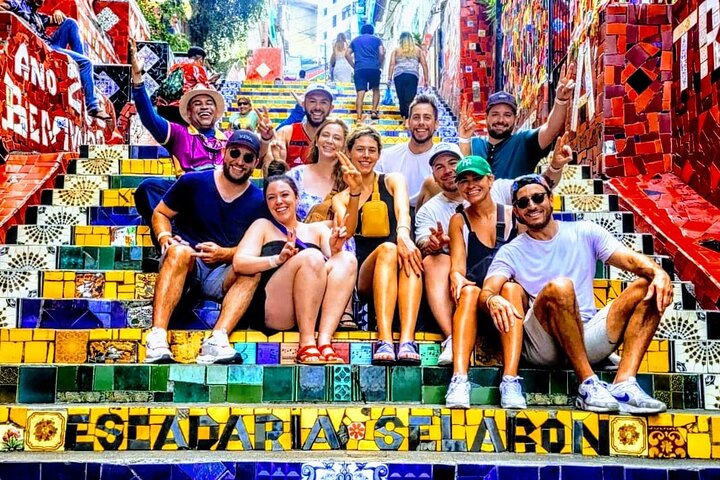
Private Custom Full-Day Highlights in Rio: Only the Best Sights!
Enjoy the most complete private day tour in Rio de Janeiro with flexible itineraries built just for you. Visit iconi...

Full-Day Private Tour of Rio with Pick Up
Design your own personalized tour of Rio de Janeiro, customized to your interests. Choose must-see highlights or let...

Rio de Janeiro Hang Gliding Experience
The original hang gliding experience over Rio de Janeiro, Brazil. Operated by, WXC World Champion, National Champion...
Read the itinerary like a route plan
The strongest listings explain the day in sequence. You should be able to tell where the group meets, how it reaches the trail, how much time is spent walking, and where the tour finishes. A list of attraction names without route details is less useful because it does not reveal how much of the day happens inside a vehicle.
- Identify the exact walking route or ask which routes are used for the booked difficulty level.
- Compare distance and elevation rather than relying only on labels such as beginner-friendly.
- Separate estimated hiking time from transfers, check-in, breaks, and scenic stops.
- Check whether the end point matches the start or requires separate transportation.
- Review what happens if the planned trail cannot be used on the day.
Pay attention to wording around viewpoints. A tour can include a scenic stop reached mainly by road, a short walk, or a sustained climb. None is inherently better, but they are different products. If hiking is your priority, choose the listing that gives walking details rather than the longest list of landmarks.
Make difficulty labels work for you
Words such as easy, moderate, and challenging are only starting points. Ask for measurable details: total distance, approximate ascent, longest steep section, expected pace, trail surface, and number of breaks. Also mention any knee, balance, heat, or height concerns. This gives the organizer information that is more useful than saying you are “reasonably fit.”
Your recent activity is the best comparison. Someone who regularly walks hills will read a route differently from a traveler whose exercise happens on flat streets. Build in energy for the return, not just the climb. A viewpoint is only the halfway point when the route descends along the same trail.
Jeep Adventure: Guided Tour through Tijuca Rain Forest
Hop in an open Jeep for a morning tour of the Tijuca Forest in Rio de Janeiro, also known as Tijuca National Park. This section of Brazil’s Mata Atl...
Choose the tour whose route description you understand, not the one with the most dramatic photograph.
Check safety without turning booking into an investigation
A few direct questions are enough. Confirm who leads the activity, how the group communicates if separated, what equipment is supplied, and how route changes are handled. For higher-effort outings, ask about participant limits and any health restrictions. The answers should be specific to the booked activity rather than generic promises about adventure.
Review the cancellation and weather terms before payment. Focus on the practical outcome: rescheduling, an alternative route, a shorter activity, or cancellation. Save the booking details offline and carry the meeting-point information separately from the device used for photographs.
The same street awareness used elsewhere in Rio still matters before and after the outdoor portion. Practical Rio safety tips can help with phone use, transportation, valuables, and arrival planning. Carry only what you need, and decide how you will return to your accommodation before setting out.
Compare price, transport, and inclusions on equal terms
Prices are only comparable when the products include the same services. A lower headline amount can exclude pickup, equipment, admission-related costs, food, or the return journey. A higher amount can reflect private transport or a guide dedicated to one group. Build a simple total for your date instead of choosing by the first number displayed.
- Pickup area or exact meeting point
- Private or shared transportation
- Guide service and stated languages
- Equipment supplied by the organizer
- Food, water, and planned meal stops
- Cancellation, rescheduling, and route-change terms
Transport deserves special attention because it affects the rest of your day. Check whether pickup is guaranteed for your neighborhood, offered only within a defined area, or replaced by a central meeting point. Confirm the estimated return before reserving a dinner, airport transfer, or timed attraction afterward.
Still comparing Rio De Janeiro Tijuca Forest Guided Adventure Tours?
Ask for tour ideas, hotel suggestions, or a simple trip plan that combines both.
Trip Helper
Consider protected nature beyond the national park carefully
Rio also has protected private-reserve possibilities beyond the national park. The ICMBio registry includes reserves in Rio de Janeiro state and city, including RPPN Céu do Mar in the municipality of Rio de Janeiro. These areas broaden the conservation picture, but a registry entry alone should not be treated as a bookable visitor attraction.
If a tour advertises a private reserve, verify the current access arrangement, activity permission, meeting point, and route. Ask whether the visit is led by the reserve, an authorized partner, or an outside guide. This protects you from booking a vague “hidden nature” experience without understanding where it goes.
Private-reserve experiences are best treated as an addition for travelers with a specific conservation or nature interest. First-time visitors usually gain more from a clearly described route in Rio’s principal national-park setting, where the role of protected forest is easier to understand within a broader city itinerary.
Pack for movement, changing conditions, and a light load
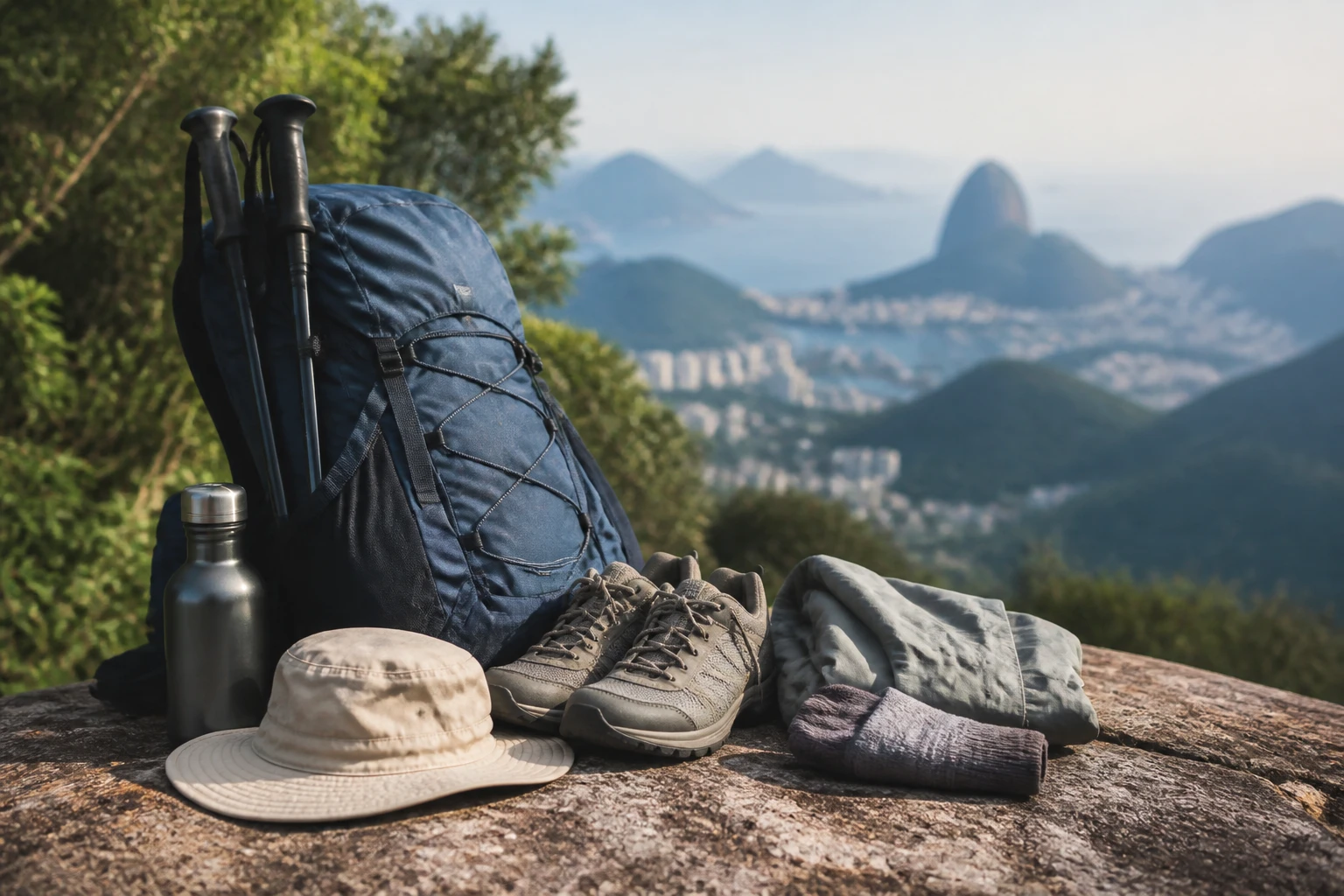
Bring clothing that lets you move freely and footwear suited to the stated trail surface. Avoid testing new shoes on a long outing. Keep the pack compact enough that it does not affect balance, and protect anything that should stay dry. The operator’s equipment list should take priority for specialized activities.
- Comfortable footwear appropriate for the route description
- Water in the quantity recommended for the activity
- Sun protection and a lightweight outer layer
- Any personal medication needed during the booked period
- A charged phone with offline booking and meeting details
- A small protective bag for electronics and documents
Leave unnecessary valuables at your accommodation. A lighter pack makes climbing and descending easier, while fewer loose items reduce distractions at rest stops. If photography is central to the day, ask whether the pace allows deliberate photo breaks before carrying extra equipment.
Plan timing around the whole excursion
Do not schedule using walking time alone. Your real commitment includes reaching the meeting point, waiting for the group, traveling to the route, completing check-in, taking breaks, and returning. Leave a buffer before any fixed evening plan. This is especially important when several pickup points or itinerary stops are involved.
Ask when the organizer makes weather-related decisions and how you will be notified. If a view is central to your motivation, check whether an alternative route would still satisfy you. A flexible day is easier to manage than an itinerary in which one delay causes a chain of missed reservations.
Travelers with only one outdoor day should prioritize a dependable route description and manageable logistics. Those with several days can keep a second nature option in reserve. Avoid booking two demanding activities back to back unless the effort level of both is clear.
Ask about accessibility and family suitability before booking
Outdoor accessibility depends on the route, vehicle, surfaces, gradient, steps, and support available. Ask questions based on the traveler’s actual needs. Useful details include walking tolerance, mobility equipment, balance, hearing or vision considerations, and the ability to enter the tour vehicle. Confirm arrangements for the specific departure rather than relying on a general accessibility label.
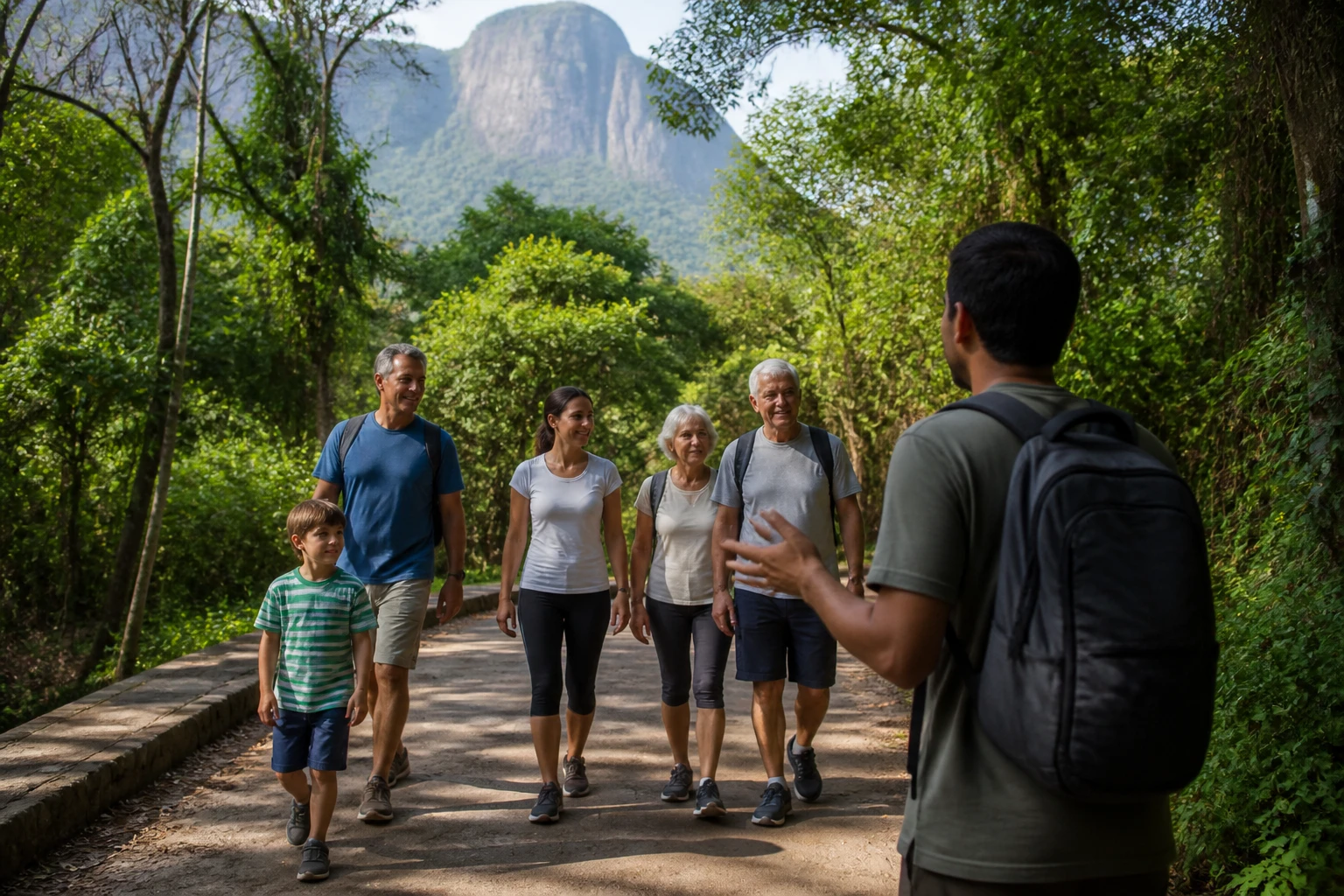
Families should compare the route with the youngest participant’s stamina and attention span. Check age restrictions, equipment sizing, toilet opportunities, food planning, and the possibility of leaving early. A private outing can offer useful pace control, but only if the route and transport arrangement allow changes.
Older travelers do not necessarily need the shortest option. A longer route with gentle gradients and regular breaks can suit some people better than a compact, steep climb. Specific terrain information is more useful than choosing by age category.

Private Rio Tour: Christ the Redeemer & Sugar Loaf Essentials
Enjoy a personalized visit to Rio de Janeiro’s essentials with a private guide and driver. The tour covers key hig...

Rio Maracana Stadium Football Match Ticket & Private Transport
***JOGA BONITO*** Step into the heart of Brazil’s passion with a once-in-a-lifetime experience: attending a live...

Christ the Redeemer & Sugarloaf: Rio City Tour with Lunch
Discover Rio de Janeiro’s top attractions on a guided small-group tour. Visit Christ the Redeemer and Sugarloaf Mo...
Combine adventure with a balanced Rio itinerary
Place a substantial hiking day away from your most time-sensitive plans. A relaxed meal or flexible neighborhood visit fits better afterward than a tightly timed attraction. If your group wants an elevated city experience with less walking, the Sugarloaf Cable Car guide covers a useful alternative subject for another day.
Avoid collecting viewpoints simply to repeat similar photographs. One forest route, one urban viewpoint, and time at street level create a fuller sense of Rio. This mix also gives tired legs a recovery window without removing scenery from the itinerary.
For a longer nature break beyond the city, Ilha Grande from Rio: How to Plan the Day Trip (or Stay the Night) is a relevant planning subject. Treat it as a separate excursion rather than trying to fold distant transfers into a single Rio hiking day.
Choose a tour that respects the setting
Protected landscapes deserve more than a scenic backdrop role. Favor itineraries that stay on the planned route, explain expected conduct, manage waste, and avoid promising access that has not been confirmed. A guide who sets clear expectations at the beginning helps the group move with less disruption.
Keep food secured, take every item out with you, and follow instructions around plants and wildlife. Do not pressure a guide to add an unplanned shortcut or restricted stop for a photograph. The best adventure ends with the route looking much as it did before the group arrived.
The best choice for most visitors
For most travelers, the best Rio de Janeiro adventure tour is a clearly documented guided hike or forest outing centered on Parque Nacional da Tijuca. It offers the strongest connection between the city and its protected natural landscape without requiring you to choose the most extreme activity. Select the route by measurable difficulty, then compare transport, group size, and cancellation terms.
Choose a private format if pace control or family needs justify the additional flexibility. Consider a private-reserve experience when access and authorization are explicit. Your next step is simple: shortlist two or three products for the same date, compare the complete itinerary, and book the one whose route and logistics you can explain in plain language.
Frequently asked questions
What is the best adventure tour in Rio de Janeiro for a first-time visitor?
A guided forest or hiking tour centered on Parque Nacional da Tijuca is the strongest starting point. Choose a route with clear distance, elevation, terrain, transport, and return details.
Do I need a private tour to hike in Rio?
A private tour is most useful when you need pace control, route discussion, family flexibility, or dedicated photography time. A well-described group tour can be sufficient when everyone is comfortable with the stated route and shared pace.
How difficult are Rio adventure tours?
Difficulty depends on the exact route rather than the tour name. Compare total distance, ascent, trail surface, steep sections, expected pace, and break frequency before booking.
How much do Rio de Janeiro adventure tours cost?
Current prices depend on the selected product, date, group format, transport, and inclusions. Compare the complete total for the same date and group size rather than relying on headline amounts.
Can I book a tour to RPPN Céu do Mar?
Confirm current visitor access before planning a visit. RPPN Céu do Mar appears in the ICMBio private-reserve registry for the municipality of Rio de Janeiro, but a registry entry does not by itself provide tour logistics.
What should I bring on a guided hike in Rio?
Bring suitable footwear, water, sun protection, personal medication, a charged phone, and protection for electronics. Follow the organizer’s equipment list for the specific route or any specialized activity.
Are Rio adventure tours accessible to travelers with limited mobility?
Accessibility depends on the route, terrain, vehicle, and support available for a particular departure. Confirm gradients, steps, surfaces, vehicle access, and assistance based on the traveler’s individual needs.
What happens if weather affects the planned tour?
The outcome depends on the product’s cancellation and route-change terms. Check whether the organizer offers rescheduling, an alternative route, a shorter activity, or cancellation before paying.

Explore the Best of Tijuca Forest – Hike to Peaks, Caves & Falls
This tour is all about experiencing the best of Rio - hiking to stunning peaks, exploring hidden caves, and cooling off in waterfalls within the incre...

4x4 Tijuca National Park Rio de janeiro
Hike through the Tijuca National Park on this 4-hour tour. Stop at a refreshing natural lagoon for a brief swim befo...
Jeep Adventure: Guided Tour through Tijuca Rain Forest
Hop in an open Jeep for a morning tour of the Tijuca Forest in Rio de Janeiro, also known as Tijuca National Park. T...