Rio de Janeiro Hidden Gems Guide
Rio's famous landmarks deserve their place on a first itinerary, but they tell only part of the story. A more personal trip takes shape through a focused neighborhood walk, a forest outing, an unhurried meal, or a day beyond the familiar beachfront circuit. This guide helps you find those experiences without turning your vacation into a race through a long list of supposedly secret places.
- Choose one discovery theme for each day, such as nature, neighborhood culture, food, or a day trip.
- Treat Corcovado as a famous anchor rather than a hidden gem, then leave time for a less structured experience.
- Use focused local guides to choose trails and neighborhoods instead of collecting disconnected stops.
- Book high-demand attractions carefully and keep flexible activities around them.
- Allow room for a long meal, changing weather, and the appealing street or path you did not expect to find.
What counts as a hidden gem in Rio?
A useful hidden gem does not have to be unknown. It can be a familiar district explored at a slower hour, a trail chosen for the landscape rather than a checklist, or a meal that becomes the center of the afternoon. Popularity also changes by season, weekday, and social media attention. Think in terms of experiences that sit outside your personal default itinerary, not places that no one else has discovered.

Rio: Tijuca Rainforest Hike, Wildlife, Waterfalls & Caves
Skip the gridlocked city traffic and the crowded tour buses. Just 40 minutes from Rio's famous beaches lies a protected UNESCO World Heritage wilderne...
This approach produces a better plan than chasing ten obscure pins. Select a part of Rio you genuinely want to understand, decide how much walking or travel you can handle, and give it a meaningful block of time. A forest route needs different preparation from an evening of food and music. A day trip needs more breathing room than a neighborhood stroll.
Rio: Tijuca Rainforest Hike, Wildlife, Waterfalls & Caves
Skip the gridlocked city traffic and the crowded tour buses. Just 40 minutes from Rio's famous beaches lies a protected UNESCO World Heritage wilderne...
The most rewarding hidden-gem itinerary is usually a well-paced day with one clear idea, not a scavenger hunt for places labeled secret.
Use Corcovado as an anchor, not a hidden gem
The Trem do Corcovado is firmly in Rio's headline-attraction category. It carries more than 1.5 million passengers a year and is described by its operator as Brazil's oldest tourist railroad. The approximately 3.82-kilometer journey starts in Cosme Velho, takes about 20 minutes, and travels through Tijuca National Park. The ticket includes the round-trip train journey and access to Christ the Redeemer.
That popularity makes Corcovado useful as a fixed point in an otherwise flexible day. Reserve the train first, protect the check-in window, and avoid attaching several timed bookings to the same outing. Afterward, choose one meal, walk, or neighborhood activity rather than trying to cross the city repeatedly.
| Planning detail | Current published information |
|---|---|
| Adult ticket | R$134 |
| Senior ticket | R$70 |
| Children ages 7 to 11 | R$107 |
| Student, ID Jovem, and PcD categories | R$107 |
| Children up to age 6 | Free with proof |
| Published operation | Daily, 8:00 to 18:00, with departures every 20 minutes |
| Required check-in | At least 30 minutes before departure |
Train schedules can change because of technical or weather conditions. Arriving after the required check-in window can mean losing the booked departure and waiting for a standby place or another date, depending on availability. Review the current schedule and ticket conditions before setting out. The operator also warns travelers to buy only through its official ticketing site, an important precaution when comparing offers online.
Pick a nature experience that matches your energy
Rio's greener side works best when you select a route for your actual fitness, available time, and comfort outdoors. The guide to three Tijuca Forest hikes that show a different Rio is a useful starting point for comparing trail ideas. Read the route-specific guidance before choosing, especially if your day already includes Corcovado or another activity involving substantial walking.
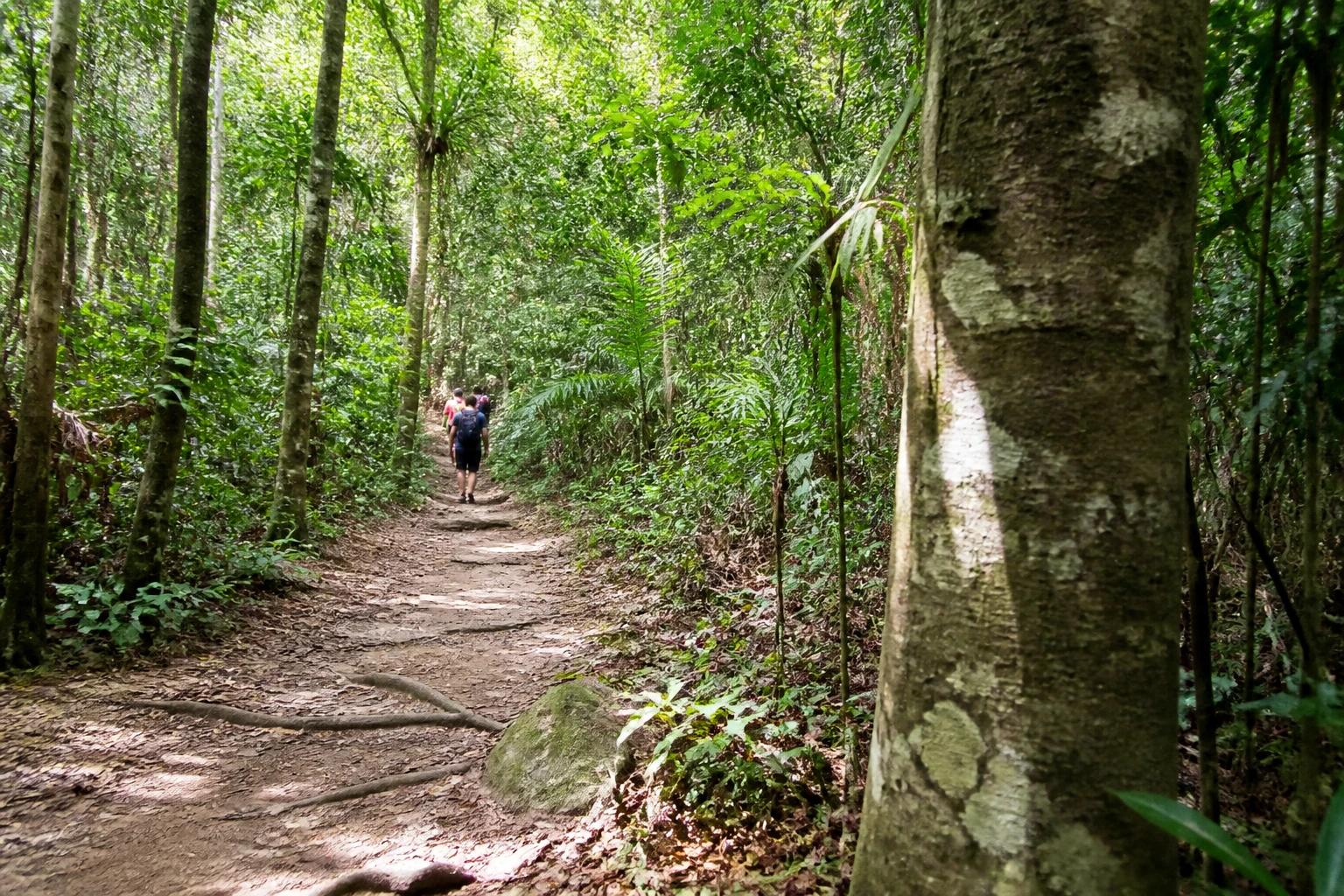
For another nature-focused option, consult the guide to the easy Pedra Bonita hike and its Rio view. The word “easy” should never replace personal judgment. Consider your footwear, recent activity level, heat tolerance, and the effort required to reach the starting point. If rain or low cloud changes the appeal of a viewpoint, keep a neighborhood or food plan ready instead.
- Choose one main trail rather than stacking several hikes.
- Check current access conditions before leaving your accommodation.
- Carry water and use shoes suited to uneven ground.
- Keep valuables compact and avoid spreading belongings around at rest stops.
- Turn back if weather, visibility, or trail conditions deteriorate.
A nature day does not need to produce a summit photo to succeed. Forest sounds, changing vegetation, and pauses beneath the canopy can be the substance of the outing. Build enough slack into the schedule to walk at a controlled pace and return without rushing into the next reservation.

Rio's Full Day: Selarón Steps, Christ & Sugarloaf – Tickets & Lunch Included
Discover the best of Rio de Janeiro in a full-day tour that combines convenience, comfort, and expert guidance. This...

Jeep Adventure: Guided Tour through Tijuca Rain Forest
Hop in an open Jeep for a morning tour of the Tijuca Forest in Rio de Janeiro, also known as Tijuca National Park. T...

Best of Rio in One Day: Christ Redeemer, Sugarloaf & Local Lunch
Discover the best of Rio de Janeiro in just one day with a complete, well-organized itinerary designed to provide co...
Slow down in a neighborhood instead of collecting landmarks
Neighborhood exploration is the simplest way to make Rio feel less like a sequence of attractions. Start with a defined area and a short list of priorities. Architecture, cafés, public spaces, galleries, and everyday street life can fill the gaps naturally. The goal is not to wander without awareness, but to avoid scheduling every ten minutes of the day.
Santa Teresa's hillside neighborhood rewards a slower planning style, and the dedicated Santa Teresa guide can help you decide what belongs in your visit. For a more structured urban outing, use the guide to Selarón Steps and a practical Centro walk. Keep those as separate themes unless you have confirmed a route that suits your time, mobility, and transportation plan.
Photographers should resist turning residents, homes, and working streets into scenery without context. Ask before taking close portraits, keep doorways clear, and spend locally when a café, shop, or cultural venue genuinely interests you. These small choices create a better visit than rushing through for a single image.
Look beyond the standard beach circuit
A day outside your usual base can reset the pace of a Rio trip. A Niterói day trip from Rio de Janeiro is one possible theme, but it should be treated as the day's main plan rather than squeezed between unrelated bookings. Decide what you want from the outing before leaving: architecture, waterfront scenery, food, or simply a change of perspective.
The same principle applies within Rio. Instead of trying to sample every stretch of coast, select an area and explore it with purpose. If you are deciding where to spend more time, the comparison of Ipanema and Copacabana can clarify how the two beach bases differ. That comparison is more useful than assuming the most famous name automatically fits your travel style.
Avoid adding a distant outing merely because it looks close on a map. Door-to-door transportation, waiting, weather, and meal stops can occupy more of the day than expected. Keep the evening flexible after a day trip, especially if you have an early attraction booked the following morning.
Let food and music lead the evening
An under-the-radar evening often begins with a neighborhood rather than a famous venue. Choose the kind of experience you want, then narrow the location. The Rio food guide to feijoada, kiosks, and botecos by neighborhood offers a practical way to organize that search without crossing the city for every course.

For live music, the guide to samba nights in Lapa provides a focused next step. Decide in advance how you will arrive and return, particularly if the evening runs late. Do not overload the night with several venues in different areas. One meal and one music plan usually leave more room to enjoy both.
Restaurant and performance plans can vary by date, so check the details that matter before leaving. Reservations, dress expectations, entry policies, and program times belong in that final check. Once those essentials are settled, allow the evening to move at its own pace.
Still comparing Rio De Janeiro Hidden Gems And Slower Paced Local Discovery?
Ask for tour ideas, hotel suggestions, or a simple trip plan that combines both.
Trip Helper
Four flexible hidden-gem itinerary patterns
| Theme | Main plan | How to keep it manageable |
|---|---|---|
| Forest and viewpoint | Choose one suitable trail or book Corcovado as the day's anchor | Avoid combining multiple strenuous or timed outings |
| Neighborhood culture | Focus on Santa Teresa or a structured Centro walk | Set a clear start and finish rather than adding distant districts |
| Across-the-bay day | Make Niterói the primary destination | Leave the evening flexible for delays or a slower return |
| Food and music | Choose one neighborhood meal and one samba plan | Confirm the essential timing, then avoid unnecessary venue hopping |
These patterns can be moved around your itinerary according to weather, energy, and bookings. Fixed attractions should be placed first. Flexible meals, neighborhood walks, and indoor alternatives can fill the surrounding days. This prevents one delayed outing from unraveling the entire trip.
Practical decisions that improve the day
- Start with geography. Group experiences by area instead of choosing solely from a list of top attractions.
- Limit timed commitments. One major reservation per half day leaves room for transportation and meals.
- Set a turnaround time. Decide when you need to leave a trail, neighborhood, or day-trip destination.
- Download essential booking details before setting out, including the exact check-in instruction.
- Keep a simple alternative ready for rain, low visibility, fatigue, or a changed schedule.
- Use practical Rio safety tips without scare stories to shape how you carry valuables and plan transportation.
The strongest plans are specific but not brittle. Know where the day begins, identify the one experience you do not want to miss, and leave the rest adjustable. If a viewpoint disappears into cloud or a walk takes longer than planned, you can change course without feeling that the day has failed.
What to carry for an exploratory day
- Water and a small snack for longer walks or transportation days
- Comfortable shoes appropriate for the route you selected
- Sun protection and a compact layer for changing conditions
- A charged phone and a backup battery
- A small bag that keeps essential items close
- Proof required for any discounted or free Corcovado ticket category
Keep the load light enough that you can walk comfortably and manage it without setting belongings on the ground. Families should pack with transportation rules in mind. On the Corcovado train, baby strollers must remain folded during the ride.

Accessibility and family planning
The Corcovado complex lists elevators and adapted bathrooms among its accessibility facilities. Strollers must be folded aboard the train, so families should plan how they will manage the child, bags, and folded stroller during the approximately 20-minute journey. Travelers using a discounted or free category should also carry the required proof.
Accessibility differs across trails, historic streets, restaurants, and transportation options. Confirm route-specific conditions before committing to an outing, especially when steps, steep ground, uneven surfaces, or vehicle transfers could affect the day. A shorter experience that works for everyone is better than an ambitious plan that creates unnecessary strain.
Make room for a more personal Rio
Rio's hidden gems are best approached as a style of travel. Pair one celebrated landmark with one focused exploration. Choose a trail you can enjoy, give a neighborhood enough time to reveal its rhythm, or let a meal and music shape the evening. The main limitation is distance and overplanning. Select fewer places, organize them carefully, and leave enough space for the city to surprise you.
Frequently asked questions
What are the best hidden gems in Rio de Janeiro?
The best choices depend on your interests and available time. Start with one theme, such as a Tijuca Forest hike, the Pedra Bonita outing, Santa Teresa, a structured Centro walk, neighborhood food, samba, or a Niterói day trip, then use a dedicated guide to plan the details.
Is Christ the Redeemer a hidden gem?
No. Christ the Redeemer and the Trem do Corcovado are high-demand Rio attractions. The train carries more than 1.5 million passengers a year, so it works better as a famous anchor paired with a less structured experience.
How early should I arrive for the Corcovado train?
Check in at least 30 minutes before your booked departure. Late arrivals can lose their scheduled time and may need to wait for a standby place or another day, depending on availability.
What is the current Corcovado train schedule?
The published schedule lists daily operation from 8:00 to 18:00, with departures every 20 minutes. Technical or weather conditions can change the schedule, so check the current information before traveling.
Is the Corcovado train accessible?
The Corcovado complex lists elevators and adapted bathrooms. Baby strollers must remain folded during the train journey, and travelers with route-specific accessibility needs should review the current arrangements before visiting.
How can I avoid fraudulent Corcovado tickets?
Buy through the train operator's official ticketing site. The operator explicitly warns visitors to use only its official site when purchasing tickets.
Experiences to explore
 Explore experience ↗
The Other Side of Niterói City Nature, Hidden Gems and Beaches
◷ 8 hr
Embark on a spectacular journey across Guanabara Bay to Niterói, Rio de Janeiro's charming sister city. This tour offers a perfect bala
See dates for Current pricing
View dates Explore experience ↗
Rio de Janeiro Hidden Gems City Tour
◷ 6 hr
Booking the Instagram Tour with Rio Cultural Secrets means exploring Rio’s main attractions with comfort and style, making it the perfe
See dates for Current pricing
View dates Explore experience ↗
Rio de Janeiro Super Saver: Corcovado and Sugar Loaf Mountain plus Ginga Tropical Show
◷ 14 hr
Combine a full-day tour of Rio de Janeiro’s top attractions with an evening of samba at the Ginga Tropical Show! This is the ultimate d
See dates for Current pricing
View dates