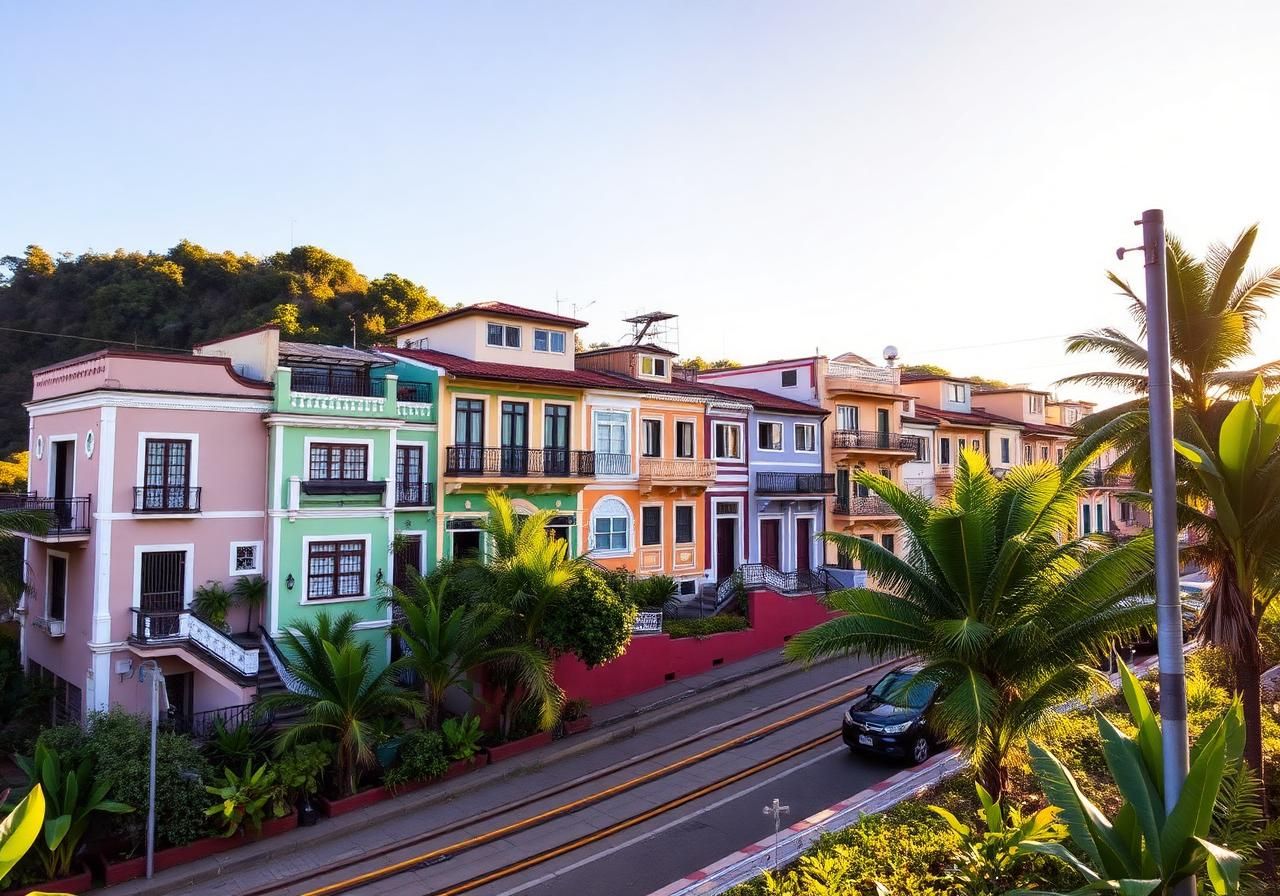
Santa Teresa is one of Rio’s most atmospheric neighborhoods, but it works poorly as a checklist. Its appeal lies in the climb between old houses, studio doors, glimpses across the city, and pauses that were not on the schedule. The hills and irregular transport are part of the experience.
Plan a half day, wear shoes for steep and uneven streets, and choose a few anchors rather than trying to cover every lane. The historic tram can be memorable, but operating arrangements and queues change; treat it as part of the day rather than the only reason to visit.
At a glance
| Allow | Half a day |
|---|---|
| Best pace | Two or three anchors plus wandering |
| Wear | Comfortable shoes with grip |
| Good pairing | Selarón Steps and Lapa in daylight |
| Return | Arrange a verified car from an active pickup point |
Why Santa Teresa feels different
The neighborhood grew along a ridge above central Rio, and its geography still shapes daily life. Houses sit behind walls and gardens, streets bend around slopes, and views appear unexpectedly between buildings. It feels removed from the beachfront even though it is close to Centro and Lapa.
Santa Teresa is not uniformly picturesque. Some stretches are quiet and residential, while others cluster around restaurants, galleries, or tram stops. That variation is the point: the neighborhood is lived-in, not an open-air museum.
A practical route
Begin around Largo dos Guimarães, where cafés, restaurants, and transport make orientation easier. From there, walk selectively toward studios, small shops, and viewpoints that interest you. Parque das Ruínas and the area around Museu da Chácara do Céu can provide cultural anchors when open.
If you include Selarón Steps, visit in daylight and decide in advance whether to walk down toward Lapa or take a car from Santa Teresa. The descent looks short on a map but steep streets, heat, and traffic can make improvised routes tiring.
Using the historic tram
The yellow bonde is an icon and a functioning transport experience. Check the official current schedule, boarding point, fares, and queue arrangements rather than relying on an old timetable. Demand can be high on weekends and holidays.
If the line is long or service is interrupted, keep the day. Santa Teresa remains worth visiting by car, taxi, or bus, and the time saved may allow a calmer lunch and more walking.
Food, coffee, and creative spaces
Choose one restaurant or café as an anchor, particularly on weekends when popular tables can fill. The neighborhood suits a long lunch because returning to the beach districts during peak traffic may take time.
Gallery and studio hours can be irregular. Verify any place that is essential to you, but leave room for something found on the street. Buying directly from a local artist or small shop is one of the most meaningful ways to engage with the neighborhood.
Walking and accessibility
Expect cobbles, broken pavement, steps, and sustained gradients. Travelers with limited mobility should plan door-to-door transport between selected stops and confirm access with individual venues. Even confident walkers should carry water and take the hills slowly in hot weather.
Rain changes the experience quickly. Slopes become slippery, views disappear, and ride demand increases. On a wet day, choose a museum-and-lunch version of the visit instead of forcing a long walk.
Safety and transport
Explore active streets in daylight, keep your phone discreet, and avoid following a map down an isolated staircase or lane. Ask restaurant or museum staff where to request a ride; local pickup knowledge is more useful than walking toward a pin that looks convenient.
Traffic can make arrival times unpredictable. Do not schedule a timed attraction immediately after Santa Teresa, and keep enough phone battery for the return journey.
Still comparing Sightseeing?
Ask for tour ideas, hotel suggestions, or a simple trip plan that combines both.
Trip Helper
A slow half-day plan
Arrive in the morning, orient yourself near Largo dos Guimarães, visit one cultural site, browse a few streets, and stop for lunch. Add the tram if the queue and schedule fit naturally. Continue to Selarón Steps only if there is daylight and everyone still wants to walk.
Santa Teresa rewards a smaller plan. The best memory is often a tiled façade, a sudden bay view, or a conversation over coffee—not the number of sights collected.
Keep planning your Rio trip
Use the site’s practical guides to compare neighborhoods, build a weather-aware itinerary, and choose tours only where they genuinely improve the day.