A Rio de Janeiro itinerary without a car works best when each day stays focused on one area. Use the metro for predictable cross-city movement, walk within compact sightseeing zones, and save taxis or app-based rides for awkward final connections. MetrôRio accepts contactless payment, while Sugarloaf provides a clear fixed point around which to build one full outing. The result is a trip with less time spent navigating and more room to enjoy the city at street level.
Car-free Rio at a glance
- Choose accommodation with a practical route to a metro station, rather than selecting a base by neighborhood name alone.
- Cluster each day around one district or major attraction to reduce backtracking.
- Use a contactless Visa, Mastercard, or Elo card, or an NFC mobile device, for direct metro entry.
- Check estimated journey times and transfers in MetrôRio’s trip planner before leaving.
- Build one day around the Sugarloaf cable-car route through Praia Vermelha and Morro da Urca.
- Keep room in the budget for a short taxi or app-based ride when the metro does not solve the final connection.
The central tradeoff is flexibility versus predictability. The metro offers a straightforward fare and easy contactless entry, but it does not operate around the clock. Individual station entrances can also follow different schedules. A good plan therefore uses rail for the main portion of the day and keeps the beginning and end flexible.

Best of Rio in One Day: Christ Redeemer, Sugarloaf & Local Lunch
Discover the best of Rio de Janeiro in just one day with a complete, well-organized itinerary designed to provide comfort from start to finish. Visit...

A Day in Rio Tour - City Tour with Tickets and Lunch Included
This tour was planned thinking about the tourist who wants to know the main sights of Rio de Janeiro with comfort, safety and without worries. Because...
How many days to allow for this itinerary
Four days gives this plan a comfortable rhythm. Day one introduces Centro and the metro. Day two is reserved for Sugarloaf. Day three stays close to a chosen beach base, and day four provides space for a personal priority, a guided activity, or a return to somewhere that deserves more time.
| Day | Primary focus | Transport strategy | Planning priority |
|---|---|---|---|
| 1 | Centro orientation | Metro and walking | Learn station entrances and avoid excessive backtracking |
| 2 | Sugarloaf Mountain | Metro where useful, then a local transfer | Check the attraction’s current schedule |
| 3 | Beach-base day | Mostly walking, with an optional short ride | Keep the route local and weather-flexible |
| 4 | Flexible priority day | Choose the simplest mode for the activity | Leave time for an easy return to the hotel |
Three days is enough if you combine the beach-focused day with your arrival or departure. With five or more days, keep the same structure but add rest between major outings. The purpose is not to cross off the largest possible number of places. It is to avoid spending the trip repeatedly crossing Rio because two unrelated stops looked close on a small screen.
Choose a base that reduces daily transport
The best car-free base is one that simplifies the trips you actually intend to make. Before reserving accommodation, compare the walking route to the nearest useful station, the number of transfers shown for your priority days, and how you would return if an outing finishes after normal metro access hours.
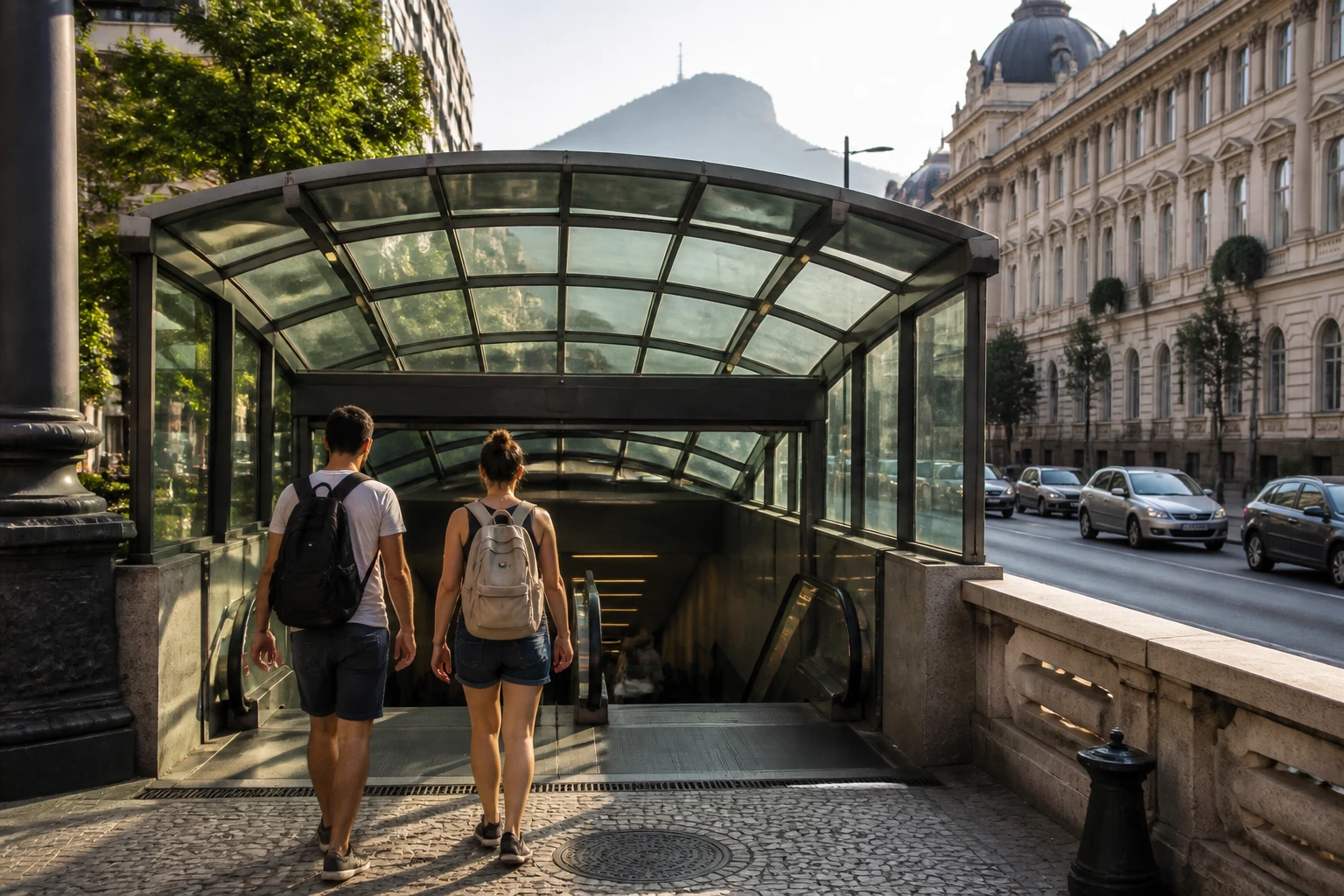
Travelers planning plenty of time beside the water can compare Ipanema or Copacabana as a beach base. Make the choice according to the accommodation, station access, and places you plan to visit rather than assuming one neighborhood is automatically more convenient for every itinerary.
Check the route between the lodging entrance and the station itself. A property described as being near public transport can still involve a longer walk than expected. A short, simple station approach is especially useful when carrying luggage or returning after a full day outside.
Do not choose a hotel solely because it appears central on a city map. Rio’s topography and the position of rail lines can make a direct route more useful than raw distance. Test two or three sample journeys in the official trip planner before booking, including Centro and the starting point for your Sugarloaf day.
Day 1: Learn the metro and explore Centro
Begin with a day built around Centro, where Central do Brasil, Carioca, and Cinelândia provide named metro anchors. All three are marked as accessible stations. Central do Brasil also connects with TrensRJ, making it an important interchange to recognize even if your route does not require that connection.
- Check your starting station, destination station, estimated time, and transfer count before leaving the hotel.
- Choose one Centro station as your arrival point rather than switching stations without a reason.
- Spend the main part of the day on a compact walking plan with scheduled pauses for food, shade, or rain.
- Use the station that best suits your final stop for the return journey, even if it differs from your arrival station.
- Confirm the correct entrance before the evening, since secondary entrances can close earlier than the main access.
At Central do Brasil, Carioca, and Cinelândia, the listed main-access schedule is 5:00 a.m. to midnight Monday through Saturday and 7:00 a.m. to 11:00 p.m. on Sundays and holidays. Some secondary entrances close earlier or remain closed on weekends and holidays, so the entrance name matters as much as the station name.
Keep the first day deliberately manageable. Centro rewards a route with a clear beginning and end more than a collection of disconnected pins. For a ready-made sightseeing framework, pair this itinerary with the dedicated Selarón Steps and Centro walk, then adjust its start and finish to your chosen station.
Use the return trip as a rehearsal for the remaining days. Notice how long it takes to find the platform, whether a transfer feels intuitive, and which station entrance works best for your lodging. Those small observations make later journeys smoother without requiring a tightly timed schedule.

Full Day in Rio: Christ, Sugarloaf, Selarón & Barbecue Lunch
Experience a full-day tour of Rio de Janeiro, visiting all the city’s must-see attractions in a single day! See t...

Full Day in Rio: Christ by Train, Sugarloaf, Selarón & Barbecue
Discover the best of Rio de Janeiro in a single day! Begin with a scenic train ride up Corcovado Mountain to visit C...

Rio in One Day Private Tour with Christ the Redeemer by Train
Faster access to the Christ the Redeemer. Embark on this tailor-made tour and visit Rio de Janeiro's top landmarks a...
Day 2: Make Sugarloaf the main event
Reserve the second day for Sugarloaf Mountain rather than squeezing it between distant stops. The official cable-car route connects Praia Vermelha, Morro da Urca, and Sugarloaf Mountain. That defined sequence makes the attraction a useful anchor in a car-free itinerary, even though the first and final connections still require advance planning.
- Review the attraction’s current programming and schedule close to the visit.
- Use the metro trip planner to identify the longest practical rail portion from your accommodation.
- Choose the final connection separately, using a walking route or local ride that suits your timing.
- Leave a generous block for the cable-car sequence instead of attaching a distant appointment immediately afterward.
- Plan the return before setting out, especially if the day could extend into the evening.
Sugarloaf programming is time-specific, and published schedules are subject to change. Check the official information shortly before the outing, then work backward to decide when to leave the hotel. This is more reliable than building the day around a schedule remembered from an older trip or social-media post.
Avoid assuming the metro completes the entire journey. Treat it as one possible segment, then select the simplest last-mile option using current navigation. This approach preserves the savings and predictability of rail without forcing an inconvenient connection merely to keep the day entirely on public transport.
For more detail before committing the day, use the Sugarloaf cable car guide covering when to go, how the ride works, and how to organize the visit. Keep the rest of the schedule light so a changed operating time does not unravel several unrelated reservations.
Day 3: Slow the pace with a beach-base day
After two structured days, spend day three close to your accommodation or chosen beach district. This is the point in the itinerary to favor walking over ambitious transit. A local day also absorbs the ordinary variables of travel, including a slow morning, changing weather, or the need to rearrange another activity.

- Begin with a walkable activity near the hotel instead of crossing the city early.
- Choose one main meal area or indoor stop rather than collecting several distant options.
- Use the middle of the day for rest, laundry, or a flexible activity that requires no timed admission.
- Add a short ride only if it clearly improves the day.
- Check the next morning’s route and station entrance before going to bed.
A less complicated day is not wasted time. It protects the itinerary from fatigue and creates room to notice the everyday texture around the hotel. It also prevents small delays from carrying into the following morning, when you may want an early start for a tour or another major sight.
If the weather does not suit an outdoor plan, exchange day three with the flexible fourth day. Keep any timed reservation fixed and move only the unbooked activities. This simple rule is easier to manage than attempting to redesign every day at once.
Day 4: Use a flexible priority day
The final full day should reflect your strongest remaining interest. Choose one substantial activity, then add only stops that lie naturally along its route. This could be a guided outing, another viewpoint, a neighborhood-focused walk, or a return to somewhere that felt rushed earlier in the trip.
- Pick one non-negotiable activity and identify its nearest practical transport connection.
- Check the official metro planner for estimated time and transfers.
- Compare the rail route with a direct local ride when time matters more than fare.
- Set a decision time for the return rather than waiting until a station entrance is about to close.
- Keep the final evening near the hotel if packing or an early departure still needs attention.
A flexible day is also the best place for a guided tour. Before booking, compare the meeting point with your accommodation and look at the planned finish time. Check the booking confirmation once for the exact instructions, then save the meeting-point details offline.
If you intend to stay out after dark, review the practical Rio safety tips guide before the trip and decide on the return method in advance. A simple return plan reduces time spent looking at a phone or debating transport at the end of a long day.
Still comparing Rio De Janeiro Itinerary Without A Car?
Ask for tour ideas, hotel suggestions, or a simple trip plan that combines both.
Trip Helper
Paying for and planning metro trips
MetrôRio’s public fare is R$7.90 per trip from April 12, 2026. At that fare, a simple out-and-back day costs R$15.80 per person. Fares can change, so check the current amount when preparing the trip rather than relying on an old budget.
Direct contactless entry is available with Visa, Mastercard, and Elo cards, as well as NFC-enabled mobile devices. Giro and QR-based payment options are also offered. Contactless entry removes the need to make buying a reusable transit card the first task of the vacation.
The official trip planner displays estimated journey time and the number of transfers. Treat both as planning estimates rather than a promise, since operating conditions can alter the actual trip. Check the route shortly before departure, particularly on days with a reservation or fixed meeting time.
| Planning question | Practical choice | Reason |
|---|---|---|
| How should I pay? | Use a supported contactless card or NFC device | It allows direct entry without making a separate ticket purchase the first step |
| How much should I budget for two rides? | R$15.80 per person at the stated public fare | Two R$7.90 trips cover a simple outbound and return journey |
| How should I compare routes? | Check estimated time and transfer count | The shortest-looking line on a map is not always the simplest journey |
| What should I check before returning? | The station entrance and its schedule | Secondary entrances can close earlier than the main access |
Save the station name and entrance details before leaving reliable internet access. Screenshots are useful for addresses, booking confirmations, and the return route, but refresh live transport information when possible. The aim is to have a backup without depending on an outdated screenshot for operating conditions.
When a short ride is better than another transfer
A car-free vacation does not have to mean refusing every taxi or app-based ride. The most efficient plan often combines the metro’s predictable core journey with a short road transfer for the final stretch. This is particularly useful when a route would otherwise require several changes or when a timed attraction leaves little margin.

- Use the metro when it offers a clear route with a manageable number of transfers.
- Consider a direct ride when luggage makes station changes awkward.
- Choose a local transfer when the destination is not conveniently reached by the rail portion of your plan.
- Arrange the return separately when the expected finish approaches normal station access limits.
- Avoid crossing the city twice in one day merely to follow a rigid transport rule.
Make the comparison before the day becomes urgent. Look at the metro estimate, transfer count, station access, and the time attached to any reservation. Then choose the option that protects the day’s main purpose. The cheapest individual trip is not always the best value if it consumes a large share of limited sightseeing time.
What to carry on a car-free sightseeing day
Pack lightly enough to walk, use station stairs or elevators, and change plans without returning to the hotel. Keep valuables organized rather than repeatedly opening several pockets in crowded or unfamiliar places. A small day bag should support the route, not turn every transfer into a luggage exercise.
- A charged phone and compact power bank
- A contactless payment method supported by MetrôRio
- Saved accommodation and meeting-point details
- Water and simple sun or rain protection
- Any medication needed during the day
- A light layer for changing indoor and outdoor conditions
Keep payment and route information accessible, but avoid carrying unnecessary documents throughout the day. Review the next major connection while seated at a café or attraction rather than stopping in the middle of a station entrance to reorganize the itinerary.

Private Custom Full-Day Highlights in Rio: Only the Best Sights!
Enjoy the most complete private day tour in Rio de Janeiro with flexible itineraries built just for you. Visit iconi...

Private Rio Tour: Christ the Redeemer & Sugar Loaf Essentials
Enjoy a personalized visit to Rio de Janeiro’s essentials with a private guide and driver. The tour covers key hig...

3 Hour Rocinha Favela Walking Tour with a Local Guide
Visiting the Rocinha favela, one of Rio's hundreds of "favelas" (the Brazilian term for a slum or shantytown) and th...
Accessibility and station entrance details
Central do Brasil, Carioca, and Cinelândia are marked as accessible stations. That designation is useful, but it does not remove the need to select the correct entrance. Secondary access points can follow shorter schedules, so travelers who depend on a particular accessible route should check entrance details before setting out.
Build additional time around transfers if elevators, a slower walking pace, or luggage are part of the journey. The trip planner’s time is an estimate and can vary with operations. A modest buffer is more useful than trying to maintain a minute-by-minute itinerary.
Accessibility arrangements at individual attractions should be checked with the relevant venue before booking. For Sugarloaf, confirm the current visitor information together with the day’s programming because schedules are subject to change.
A simple rule for keeping the itinerary on track
Give each day one geographic focus, one main activity, and one clear return plan. Use MetrôRio when it simplifies the longest part of the journey, then walk or add a short transfer where that produces a cleaner route. This structure keeps the trip adaptable without turning every morning into a transport puzzle.
Rio suits travelers who prefer a mix of independent exploration and selective local rides. The main limitation is that the metro is not a round-the-clock, door-to-door solution. Choose accommodation carefully, verify station entrances, check Sugarloaf’s current schedule, and leave one day flexible. With those decisions made, renting a car becomes unnecessary for this itinerary.
Frequently asked questions
Can you visit Rio de Janeiro without renting a car?
Yes. This four-day plan combines MetrôRio, walking, and short local transfers, with each day focused on one area or major attraction. The metro is not a 24-hour system, so plan late returns separately.
How much does the Rio metro cost?
The public MetrôRio fare is R$7.90 per trip from April 12, 2026. Two rides therefore cost R$15.80 per person at that fare, but check the current amount close to travel because fares can change.
Do visitors need a transit card for MetrôRio?
No. Direct contactless entry accepts Visa, Mastercard, and Elo cards, along with NFC-enabled mobile devices. Giro and QR-based payment options are also available.
Does the Rio metro run all night?
No. At the main accesses for Central do Brasil, Carioca, and Cinelândia, listed hours are 5:00 a.m. to midnight Monday through Saturday and 7:00 a.m. to 11:00 p.m. on Sundays and holidays. Some secondary entrances close earlier.
Can I reach Sugarloaf entirely by metro?
Plan Sugarloaf as a combined journey rather than assuming the metro completes every segment. Use the official trip planner for the longest practical rail portion, then choose the final connection according to current navigation and timing.
Are Centro metro stations accessible?
Central do Brasil, Carioca, and Cinelândia are marked as accessible stations. Check the exact entrance you intend to use because secondary access points can have restricted schedules.
How many days are enough for a car-free Rio itinerary?
Four days provides a balanced first plan: one Centro day, one Sugarloaf day, one local beach-base day, and one flexible priority day. Three days can work by combining the local day with arrival or departure.
A Day in Rio Tour - City Tour with Tickets and Lunch Included
This tour was planned thinking about the tourist who wants to know the main sights of Rio de Janeiro with comfort, safety and without worries. Because...
Best of Rio in One Day: Christ Redeemer, Sugarloaf & Local Lunch
Discover the best of Rio de Janeiro in just one day with a complete, well-organized itinerary designed to provide co...